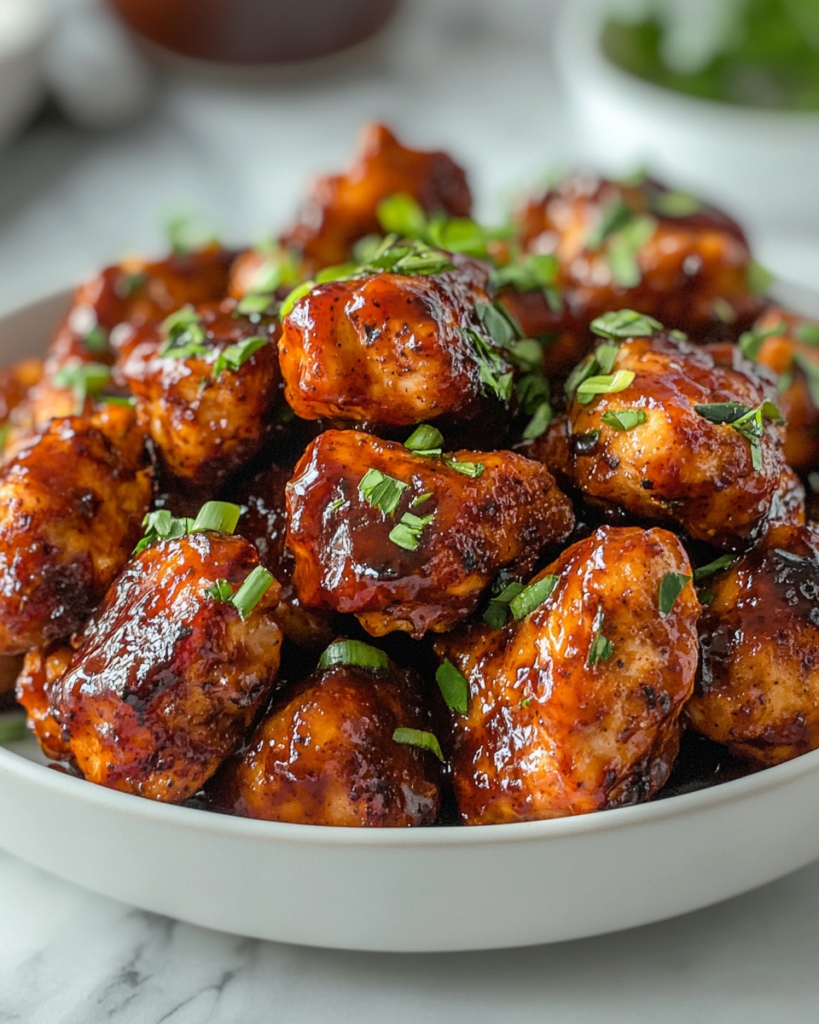
Sweet & Smoky Air Fryer BBQ Chicken Bites 1 Easy Surprising

Posted on

Uncategorized

Difficulty

Prep time

Cooking time

Total time

Servings

Sweet & Smoky Air Fryer BBQ Chicken Bites bring together crisp edges, tender chicken, and a bold barbecue glaze that caramelizes beautifully in the air fryer. Each bite carries a balance of sweet molasses-style depth and gentle smokiness, creating a snack or dinner option that feels satisfying without being heavy.

This recipe works well for quick dinners, party trays, or meal prep boxes. The air fryer gives the chicken a lightly crisp exterior while keeping the inside juicy. The barbecue coating clings to every piece, forming a glossy finish that intensifies as it cooks.

With simple seasoning and a short cooking time, this dish fits easily into busy schedules. The flavor comes from layering spices with sauce rather than complicated steps, which keeps preparation straightforward while still delivering a bold result.


Ingredients Overview

Chicken breast forms the base of this recipe, offering a lean protein that cooks quickly and absorbs flavor well. Cutting it into bite-sized cubes allows even cooking and more surface area for the barbecue coating to cling to.

The seasoning blend usually includes paprika, garlic powder, onion powder, salt, and black pepper. Paprika contributes a mild smoky undertone, while garlic and onion powders deepen savory notes. These spices build a foundation so the barbecue sauce can stand out without overwhelming the chicken.

Barbecue sauce plays the central role in flavor. A thicker sauce works best because it sticks to the chicken during air frying and caramelizes slightly on the edges. It brings sweetness, tang, and smokiness in one layer, reducing the need for additional sauces.

A small amount of oil helps the seasoning adhere and supports browning in the air fryer. Olive oil or avocado oil both work well due to their neutral flavor and heat stability.

Optional add-ins like honey or a pinch of chili flakes can adjust sweetness or heat levels depending on preference. These additions are small but can shift the flavor profile slightly toward either richer sweetness or gentle spice.


Ingredients

1 1/2 pounds chicken breast, cut into bite-sized cubes
2 tablespoons olive oil
1 teaspoon paprika
1 teaspoon garlic powder
1/2 teaspoon onion powder
1/2 teaspoon salt
1/4 teaspoon black pepper
2/3 cup barbecue sauce
1 tablespoon honey (optional)
1/4 teaspoon chili flakes (optional)


Step-by-Step Instructions

Start by preparing the chicken. Pat the cubes dry using paper towels to remove excess moisture. This step helps the seasoning stick and supports browning during cooking.

Place the chicken pieces in a large bowl. Drizzle with olive oil and toss until lightly coated. The oil helps distribute heat evenly and allows spices to adhere properly.

Add paprika, garlic powder, onion powder, salt, and black pepper. Mix thoroughly so every piece is evenly seasoned. The coating should appear lightly tinted with spices without clumps forming.

Preheat the air fryer to 380°F (193°C) for a few minutes. Preheating helps the chicken begin cooking immediately once placed inside, which supports a crisp outer layer.

Arrange the chicken in a single layer inside the air fryer basket. Avoid stacking pieces, as overcrowding can lead to uneven cooking and reduced crisping. If needed, cook in batches.

Cook for 10–12 minutes, shaking the basket halfway through. This movement helps the pieces brown evenly on all sides. The chicken should appear lightly golden and fully cooked inside.

While the chicken cooks, prepare the barbecue coating. In a small bowl, mix barbecue sauce with honey if using. The honey adds slight stickiness and enhances caramelization during the final cooking stage.

Once the chicken is fully cooked, transfer it to a mixing bowl. Pour the barbecue mixture over the hot chicken and toss until each piece is fully coated.

Return the coated chicken to the air fryer basket. Cook for an additional 3–5 minutes at 390°F (199°C). This final step allows the sauce to thicken slightly and form a glossy surface.

Remove the chicken and let it rest for a few minutes before serving. The sauce will continue to settle and cling to the surface as it cools slightly.


Tips, Variations & Substitutions

Chicken thighs can be used instead of chicken breast for a juicier texture. They contain slightly more fat, which adds richness and helps maintain tenderness during air frying.

Different barbecue sauces can shift the flavor profile. Smokier versions create deeper flavor, while honey-based sauces bring more sweetness. A spicy barbecue sauce can also be used for extra heat.

For a lighter spice profile, reduce paprika and skip chili flakes. For stronger seasoning, increase garlic powder slightly or add a pinch of cayenne.

A small dusting of cornstarch before air frying can create a crispier exterior. This step is optional but adds texture contrast to the soft interior.

If preparing ahead of time, season the chicken and store it covered in refrigeration for a few hours before cooking. This allows seasoning to settle into the meat.


Serving Ideas & Occasions

These chicken bites pair well with rice, roasted potatoes, or a fresh salad. The sauce works as both a coating and a light dressing for simple sides.

They also fit well in wraps, sandwiches, or sliders. A soft bun with crisp lettuce and extra barbecue sauce creates a handheld meal option.

For gatherings, these bites work well as a shared platter. Toothpicks or small skewers make them easy to serve in bite-sized portions.

A chilled drink such as iced tea or sparkling water balances the smoky richness of the chicken.


Nutritional & Health Notes

Chicken breast provides a lean source of protein that supports muscle repair and energy balance. It is low in fat compared to darker cuts of poultry.

Barbecue sauce contributes sugar and sodium, so portion size plays a role in overall balance. Choosing a sauce with simpler ingredients can reduce added sweetness levels.

Air frying reduces the need for excess oil compared to traditional frying methods. This results in a lighter texture while still achieving crisp edges.

Spices such as paprika and garlic powder add flavor without adding calories, helping build depth without relying solely on sauce.


FAQs

Can frozen chicken be used for this recipe?

Frozen chicken should be fully thawed before preparation. Cooking directly from frozen can lead to uneven texture and excess moisture, which prevents proper browning. Thawing allows seasoning to adhere and helps the chicken cook evenly inside the air fryer. Once thawed, pat the chicken dry before seasoning to improve texture and flavor absorption.

What barbecue sauce works best?

A thicker barbecue sauce works well because it clings to the chicken during cooking. Smoky varieties bring depth, while honey-based sauces add sweetness. Spicy versions introduce heat. The choice depends on flavor preference, as the recipe adapts easily to different sauce styles without changing the cooking method.

Can this recipe be made without an air fryer?

Yes, the chicken can be baked in an oven at 400°F (204°C). Spread the pieces on a baking tray lined with parchment paper and cook until fully done. The texture will be slightly less crisp compared to air frying, but the flavor remains similar when coated in barbecue sauce.

How can the chicken be made crispier?

For a crispier texture, lightly coat the chicken with cornstarch before seasoning. Avoid overcrowding the air fryer basket, as space between pieces allows hot air to circulate more effectively. Increasing the final cooking stage slightly also helps the sauce caramelize on the surface.

Can other proteins be used?

Yes, turkey breast or pork tenderloin can replace chicken. Cooking times may vary slightly depending on thickness and cut size. The seasoning and barbecue coating remain the same, making the recipe adaptable across different proteins.

How should leftovers be stored?

Leftovers should be placed in a sealed container and kept in refrigeration. When reheating, a short time in the air fryer helps restore texture. Microwaving is also possible, though it results in a softer coating. Adding a small amount of extra barbecue sauce during reheating helps maintain moisture.

Can vegetables be cooked with the chicken?

Vegetables such as bell peppers, onions, or zucchini can be added. They should be cut into similar sizes so they cook evenly. Adding them halfway through cooking prevents over-softening and keeps texture balanced alongside the chicken.

[rank_math_breadcrumb]

Sweet & Smoky Air Fryer BBQ Chicken Bites 1 Easy Surprising

Photo of author
Author: Emma
Published:

Sweet & Smoky Air Fryer BBQ Chicken Bites bring together crisp edges, tender chicken, and a bold barbecue glaze that caramelizes beautifully in the air fryer. Each bite carries a balance of sweet molasses-style depth and gentle smokiness, creating a snack or dinner option that feels satisfying without being heavy.

This recipe works well for quick dinners, party trays, or meal prep boxes. The air fryer gives the chicken a lightly crisp exterior while keeping the inside juicy. The barbecue coating clings to every piece, forming a glossy finish that intensifies as it cooks.

With simple seasoning and a short cooking time, this dish fits easily into busy schedules. The flavor comes from layering spices with sauce rather than complicated steps, which keeps preparation straightforward while still delivering a bold result.


Ingredients Overview

Chicken breast forms the base of this recipe, offering a lean protein that cooks quickly and absorbs flavor well. Cutting it into bite-sized cubes allows even cooking and more surface area for the barbecue coating to cling to.

The seasoning blend usually includes paprika, garlic powder, onion powder, salt, and black pepper. Paprika contributes a mild smoky undertone, while garlic and onion powders deepen savory notes. These spices build a foundation so the barbecue sauce can stand out without overwhelming the chicken.

Barbecue sauce plays the central role in flavor. A thicker sauce works best because it sticks to the chicken during air frying and caramelizes slightly on the edges. It brings sweetness, tang, and smokiness in one layer, reducing the need for additional sauces.

A small amount of oil helps the seasoning adhere and supports browning in the air fryer. Olive oil or avocado oil both work well due to their neutral flavor and heat stability.

Optional add-ins like honey or a pinch of chili flakes can adjust sweetness or heat levels depending on preference. These additions are small but can shift the flavor profile slightly toward either richer sweetness or gentle spice.


Ingredients

1 1/2 pounds chicken breast, cut into bite-sized cubes
2 tablespoons olive oil
1 teaspoon paprika
1 teaspoon garlic powder
1/2 teaspoon onion powder
1/2 teaspoon salt
1/4 teaspoon black pepper
2/3 cup barbecue sauce
1 tablespoon honey (optional)
1/4 teaspoon chili flakes (optional)


Step-by-Step Instructions

Start by preparing the chicken. Pat the cubes dry using paper towels to remove excess moisture. This step helps the seasoning stick and supports browning during cooking.

Place the chicken pieces in a large bowl. Drizzle with olive oil and toss until lightly coated. The oil helps distribute heat evenly and allows spices to adhere properly.

Add paprika, garlic powder, onion powder, salt, and black pepper. Mix thoroughly so every piece is evenly seasoned. The coating should appear lightly tinted with spices without clumps forming.

Preheat the air fryer to 380°F (193°C) for a few minutes. Preheating helps the chicken begin cooking immediately once placed inside, which supports a crisp outer layer.

Arrange the chicken in a single layer inside the air fryer basket. Avoid stacking pieces, as overcrowding can lead to uneven cooking and reduced crisping. If needed, cook in batches.

Cook for 10–12 minutes, shaking the basket halfway through. This movement helps the pieces brown evenly on all sides. The chicken should appear lightly golden and fully cooked inside.

While the chicken cooks, prepare the barbecue coating. In a small bowl, mix barbecue sauce with honey if using. The honey adds slight stickiness and enhances caramelization during the final cooking stage.

Once the chicken is fully cooked, transfer it to a mixing bowl. Pour the barbecue mixture over the hot chicken and toss until each piece is fully coated.

Return the coated chicken to the air fryer basket. Cook for an additional 3–5 minutes at 390°F (199°C). This final step allows the sauce to thicken slightly and form a glossy surface.

Remove the chicken and let it rest for a few minutes before serving. The sauce will continue to settle and cling to the surface as it cools slightly.


Tips, Variations & Substitutions

Chicken thighs can be used instead of chicken breast for a juicier texture. They contain slightly more fat, which adds richness and helps maintain tenderness during air frying.

Different barbecue sauces can shift the flavor profile. Smokier versions create deeper flavor, while honey-based sauces bring more sweetness. A spicy barbecue sauce can also be used for extra heat.

For a lighter spice profile, reduce paprika and skip chili flakes. For stronger seasoning, increase garlic powder slightly or add a pinch of cayenne.

A small dusting of cornstarch before air frying can create a crispier exterior. This step is optional but adds texture contrast to the soft interior.

If preparing ahead of time, season the chicken and store it covered in refrigeration for a few hours before cooking. This allows seasoning to settle into the meat.


Serving Ideas & Occasions

These chicken bites pair well with rice, roasted potatoes, or a fresh salad. The sauce works as both a coating and a light dressing for simple sides.

They also fit well in wraps, sandwiches, or sliders. A soft bun with crisp lettuce and extra barbecue sauce creates a handheld meal option.

For gatherings, these bites work well as a shared platter. Toothpicks or small skewers make them easy to serve in bite-sized portions.

A chilled drink such as iced tea or sparkling water balances the smoky richness of the chicken.


Nutritional & Health Notes

Chicken breast provides a lean source of protein that supports muscle repair and energy balance. It is low in fat compared to darker cuts of poultry.

Barbecue sauce contributes sugar and sodium, so portion size plays a role in overall balance. Choosing a sauce with simpler ingredients can reduce added sweetness levels.

Air frying reduces the need for excess oil compared to traditional frying methods. This results in a lighter texture while still achieving crisp edges.

Spices such as paprika and garlic powder add flavor without adding calories, helping build depth without relying solely on sauce.


FAQs

Can frozen chicken be used for this recipe?

Frozen chicken should be fully thawed before preparation. Cooking directly from frozen can lead to uneven texture and excess moisture, which prevents proper browning. Thawing allows seasoning to adhere and helps the chicken cook evenly inside the air fryer. Once thawed, pat the chicken dry before seasoning to improve texture and flavor absorption.

What barbecue sauce works best?

A thicker barbecue sauce works well because it clings to the chicken during cooking. Smoky varieties bring depth, while honey-based sauces add sweetness. Spicy versions introduce heat. The choice depends on flavor preference, as the recipe adapts easily to different sauce styles without changing the cooking method.

Can this recipe be made without an air fryer?

Yes, the chicken can be baked in an oven at 400°F (204°C). Spread the pieces on a baking tray lined with parchment paper and cook until fully done. The texture will be slightly less crisp compared to air frying, but the flavor remains similar when coated in barbecue sauce.

How can the chicken be made crispier?

For a crispier texture, lightly coat the chicken with cornstarch before seasoning. Avoid overcrowding the air fryer basket, as space between pieces allows hot air to circulate more effectively. Increasing the final cooking stage slightly also helps the sauce caramelize on the surface.

Can other proteins be used?

Yes, turkey breast or pork tenderloin can replace chicken. Cooking times may vary slightly depending on thickness and cut size. The seasoning and barbecue coating remain the same, making the recipe adaptable across different proteins.

How should leftovers be stored?

Leftovers should be placed in a sealed container and kept in refrigeration. When reheating, a short time in the air fryer helps restore texture. Microwaving is also possible, though it results in a softer coating. Adding a small amount of extra barbecue sauce during reheating helps maintain moisture.

Can vegetables be cooked with the chicken?

Vegetables such as bell peppers, onions, or zucchini can be added. They should be cut into similar sizes so they cook evenly. Adding them halfway through cooking prevents over-softening and keeps texture balanced alongside the chicken.

Name

Lorem ipsum dolor sit amet, consectetur adipiscing elit. Suspendisse varius enim in eros elementum tristique. Duis cursus, mi quis viverra ornare, eros dolor interdum nulla, ut commodo diam libero vitae erat.

You Might Also Like...

Classic Creamy Shrimp Alfredo 1 Amazing Surprising Dish

Classic Creamy Shrimp Alfredo 1 Amazing Surprising Dish

Creamy Seafood Shrimp Linguine 7 Amazing Cozy Recipe

Creamy Seafood Shrimp Linguine 7 Amazing Cozy Recipe

Creamy Garlic Butter Shrimp Pasta 7 Amazing Joyful Dinner

Creamy Garlic Butter Shrimp Pasta 7 Amazing Joyful Dinner

Lemon Garlic Shrimp Pasta Skillet 7 Simple Zesty Delight

Lemon Garlic Shrimp Pasta Skillet 7 Simple Zesty Delight

Tags:

You might also like these recipes

Leave a Comment