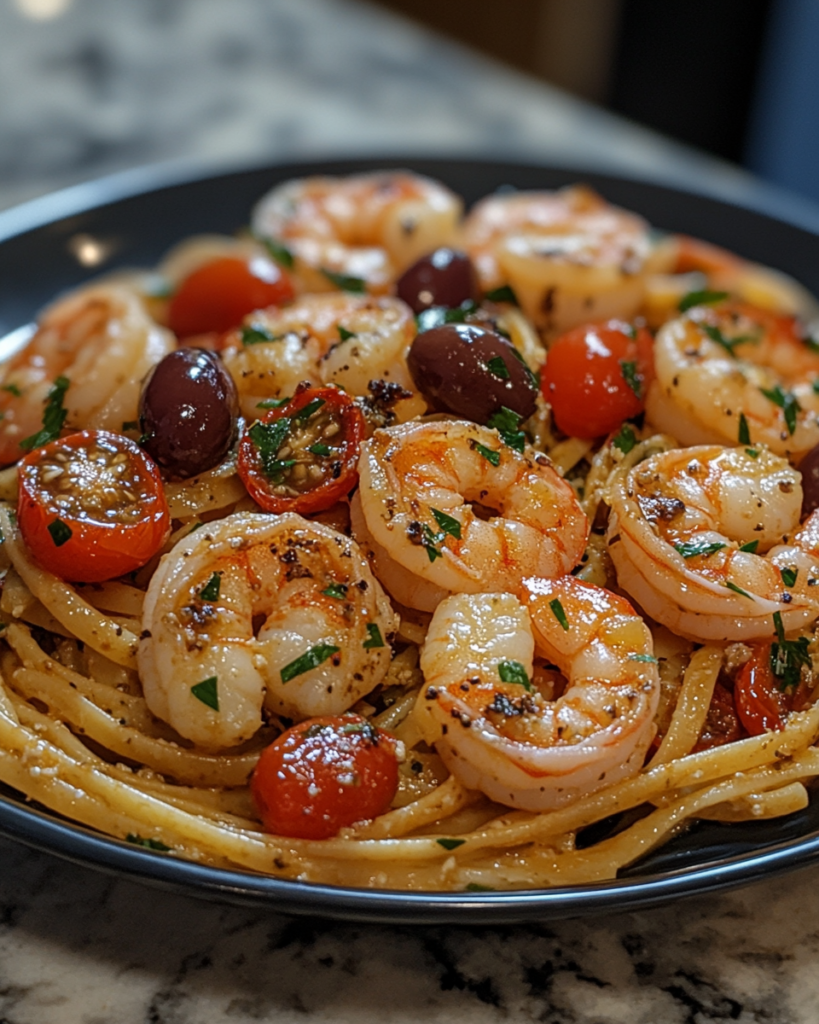
Mediterranean Shrimp Pasta Toss is a light yet satisfying dish that brings together tender shrimp, al dente pasta, olive oil, garlic, and fresh herbs in a bright, coastal-inspired style. The flavors are clean and balanced, with just enough richness to feel comforting without being heavy.
This dish works well for quick dinners or relaxed meals when you want something flavorful without a complicated process. The shrimp cook fast, the pasta holds the sauce nicely, and the Mediterranean ingredients tie everything together in a fresh way.
The combination of lemon, olive oil, garlic, and herbs creates a sauce that coats each strand of pasta lightly. Cherry tomatoes add natural sweetness, while shrimp bring a delicate seafood flavor that blends smoothly into the dish.
It’s a simple approach to pasta that feels vibrant and well-rounded, making it a reliable option for everyday cooking.
Ingredients Overview
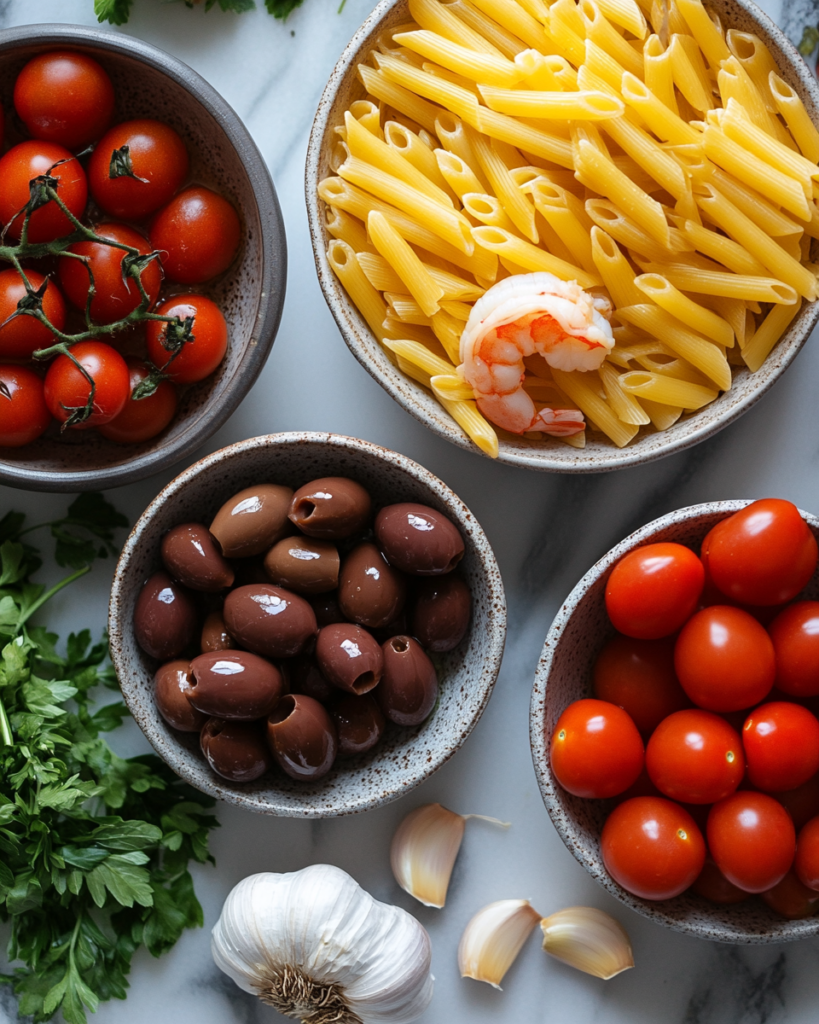
This recipe is built on a small group of ingredients that each play a clear role in flavor and texture. Shrimp are the main protein, offering a tender bite and mild sweetness that pairs well with citrus and herbs. Medium or large shrimp work best because they stay juicy during quick cooking.
Pasta acts as the base, with shapes like linguine, spaghetti, or penne working especially well. These shapes hold onto the light olive oil sauce and help distribute flavor evenly throughout the dish.
Olive oil is the foundation of the sauce, giving it smoothness and a gentle fruitiness. Garlic adds warmth and depth, forming the aromatic base that supports the other ingredients without overpowering them.
Cherry tomatoes bring natural acidity and sweetness. As they warm in the pan, they soften slightly and release juices that blend into the sauce, adding freshness and balance.
Lemon juice and zest provide brightness that lifts the entire dish. They cut through the richness of olive oil and enhance the natural flavor of the shrimp.
Fresh herbs like parsley and basil add color and a clean herbal note that ties everything together. A small amount of red pepper flakes adds gentle heat without overwhelming the dish.
Salt and black pepper are used to season and bring balance. A light sprinkle of Parmesan cheese can be added at the end for a subtle savory finish, though it is optional.
If needed, gluten-free pasta can be used without changing the structure of the recipe. Frozen shrimp also work well as long as they are thawed and patted dry before cooking. Each ingredient plays a focused role, creating a dish that feels cohesive and naturally layered.
Ingredients
12 ounces pasta (spaghetti, linguine, or penne)
1 pound shrimp, peeled and deveined
1 ½ teaspoons salt
1 teaspoon black pepper
3 tablespoons olive oil
4 cloves garlic, minced
1 ½ cups cherry tomatoes, halved
½ teaspoon red pepper flakes
¼ cup fresh lemon juice
1 teaspoon lemon zest
¼ cup chopped fresh parsley
2 tablespoons chopped fresh basil
¼ cup grated Parmesan cheese (optional)
Step-by-Step Instructions
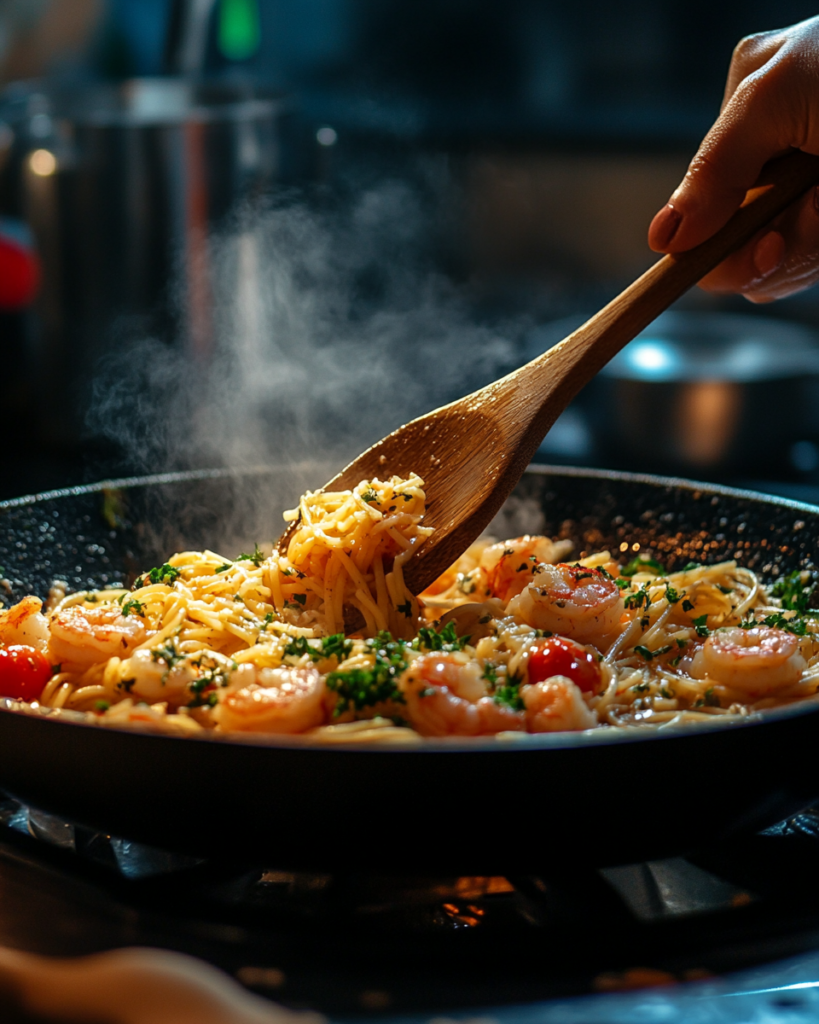
Bring a large pot of salted water to a boil. Cook the pasta until it reaches a firm but tender texture. Reserve about half a cup of the pasta water before draining.
While the pasta cooks, pat the shrimp dry and season them lightly with salt and black pepper. Drying the shrimp helps them sear properly instead of steaming in the pan.
Heat olive oil in a large skillet over medium-high heat. Add the shrimp in a single layer and cook for about 1–2 minutes per side until they turn pink and opaque. Remove them from the skillet and set aside to prevent overcooking.
In the same skillet, reduce the heat slightly and add minced garlic. Cook for about 30 seconds until fragrant, stirring constantly to prevent burning. Add the cherry tomatoes and red pepper flakes, stirring gently as they begin to soften.
As the tomatoes warm, they will release juices that mix with the olive oil and garlic, forming the base of the sauce. Allow them to cook for 3–4 minutes until slightly collapsed but still holding shape.
Return the cooked shrimp to the skillet. Add lemon juice and lemon zest, stirring to combine. The citrus will brighten the sauce and balance the richness of the olive oil.
Add the drained pasta directly into the skillet. Toss everything together so the pasta absorbs the sauce evenly. If the mixture seems dry, add a small splash of reserved pasta water to loosen it.
Sprinkle in fresh parsley and basil, tossing again to distribute the herbs throughout the dish. Taste and adjust seasoning with additional salt or pepper if needed.
Finish with grated Parmesan if using, allowing it to melt lightly into the warm pasta. Serve immediately while the shrimp remain tender and the sauce is fresh and aromatic.
Common mistakes include overcooking shrimp, which can make them rubbery, and skipping pasta water, which helps the sauce cling better. Cooking everything at moderate heat helps maintain texture and flavor balance.
Tips, Variations & Substitutions
For a richer flavor, allow the garlic to gently infuse the olive oil before adding tomatoes. This builds a stronger base without adding extra ingredients.
If you prefer more vegetables, spinach, zucchini, or bell peppers can be added to the skillet with the tomatoes. These blend naturally into the Mediterranean profile.
Whole wheat or gluten-free pasta can be used without changing cooking method. Just monitor texture closely to avoid overcooking.
For extra citrus flavor, add a small splash of lemon juice just before serving. This gives the dish a brighter finish.
If shrimp are unavailable, scallops or cooked chicken can be used as alternatives, though cooking times will differ slightly.
Serving Ideas & Occasions
This pasta pairs well with simple sides like a green salad, roasted vegetables, or warm crusty bread. The light sauce also works well with grilled vegetables on the side.
It is suitable for quick dinners, casual gatherings, or warm-weather meals where lighter flavors are preferred. The dish is best served fresh while the shrimp are tender and the sauce is warm.
A glass of sparkling water with lemon or a mild herbal drink complements the citrus and herb notes without overpowering the dish.
Nutritional & Health Notes
Mediterranean Shrimp Pasta Toss offers a balanced mix of protein, carbohydrates, and healthy fats. Shrimp provide lean protein, while olive oil contributes heart-friendly fats.
Tomatoes and herbs add natural nutrients and freshness without adding heaviness. Lemon juice provides brightness with minimal calories, helping balance the overall flavor profile.
Portion size and pasta type can be adjusted based on dietary preferences. Whole grain pasta increases fiber content, while reducing cheese lowers overall fat and sodium.
This dish fits well into a balanced eating pattern when enjoyed in moderate portions alongside vegetables or salads.
FAQs
Can I use frozen shrimp for this recipe?
Yes, frozen shrimp work well as long as they are fully thawed before cooking. It is important to pat them dry to remove excess moisture, which helps them sear properly in the pan. If shrimp are too wet, they may steam instead of developing a light surface texture. Once thawed and dried, they cook very quickly, usually within a few minutes. This makes frozen shrimp a convenient option for this pasta dish without changing the overall flavor or structure.
What type of pasta works best?
Long pasta shapes like spaghetti or linguine work especially well because they hold onto the light olive oil sauce. Penne is also a good choice if you prefer shorter pasta. The key is choosing a shape that can capture the garlic, tomato juices, and lemon-infused oil. Avoid overly delicate pasta types that may break easily when tossed with shrimp and sauce. Cooking the pasta to a firm texture helps it maintain structure in the final dish.
How do I avoid overcooking shrimp?
Shrimp cook very quickly, often within just a few minutes. They are done when they turn pink and opaque with a slight curl. Cooking them too long can make them firm and dry. It helps to remove them from the pan as soon as they are cooked and add them back later when combining with pasta. This keeps their texture tender and juicy throughout the dish.
Can I make this dish spicy?
Yes, you can adjust the heat level easily. Red pepper flakes add mild warmth, and you can increase or decrease the amount based on preference. For stronger heat, a pinch of cayenne pepper can be added. If you prefer no spice at all, simply omit the red pepper flakes. The dish still retains full flavor from garlic, lemon, and herbs even without heat.
Can I prepare this pasta ahead of time?
This dish is best enjoyed fresh, but it can be prepared ahead with some adjustments. Store the pasta and shrimp separately if possible to maintain texture. When reheating, add a small splash of olive oil or water to loosen the sauce. Gentle reheating over low heat works best to prevent shrimp from becoming overcooked. Fresh herbs should be added after reheating for the best flavor.
What vegetables can I add?
Many vegetables work well in this dish. Spinach, zucchini, bell peppers, and asparagus are all good options. Add firmer vegetables earlier in the cooking process so they soften properly. Leafy greens like spinach should be added at the end so they wilt gently. Vegetables add color, texture, and natural balance to the pasta.
Can I make it dairy-free?
Yes, simply omit the Parmesan cheese. The dish still has strong flavor from olive oil, garlic, lemon, and herbs. If you want a slightly richer finish without dairy, a small drizzle of extra olive oil can be added at the end. The overall structure of the recipe remains the same, and the flavor stays bright and balanced.


