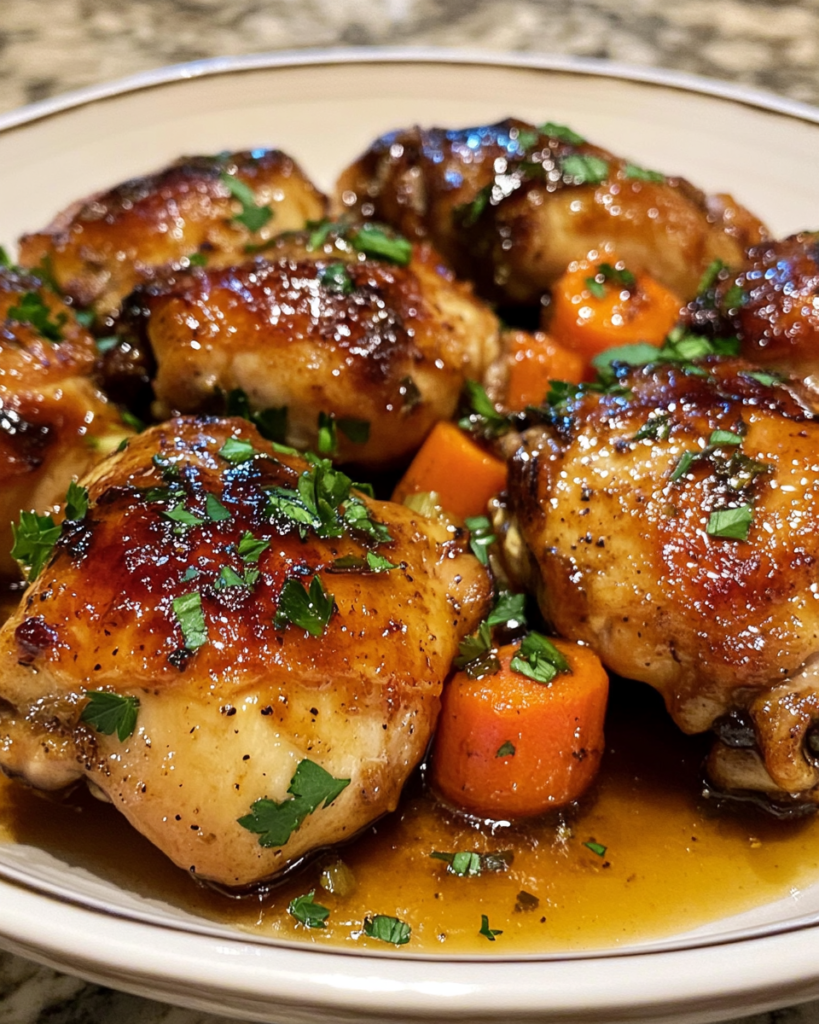
Honey Garlic Chicken & Carrots brings together tender chicken, sweet roasted carrots, garlic, soy sauce, and honey in one skillet dinner suited for busy evenings or relaxed family meals. The sauce turns glossy during cooking and coats every piece with balanced sweetness and savory depth. Carrots soften beside the chicken while soaking up the rich pan juices, creating a side dish within the same pan.
This dish suits cool evenings, meal prep lunches, or casual gatherings around the table. Boneless chicken thighs stay juicy during cooking, while garlic and honey form a rich glaze that clings to every bite. A small splash of soy sauce balances the sweetness and adds gentle depth without overpowering the dish.
The cooking process stays straightforward and practical. A hot skillet creates golden color on the chicken before the sauce reduces into a smooth coating. Carrots roast until tender with lightly caramelized edges, giving the meal texture and natural sweetness.
Ingredients Overview

Chicken thighs serve as the heart of Honey Garlic Chicken & Carrots because they stay moist during high-heat cooking. Boneless skinless thighs work particularly well since they absorb the sauce quickly while remaining tender. Chicken breast also works, though careful timing helps prevent dryness.
Honey brings sweetness and creates the sticky glaze that defines this dish. During cooking, the sugars in honey blend with garlic and soy sauce, forming a glossy coating across the chicken and carrots. Darker honey creates richer flavor, while lighter honey gives softer sweetness.
Fresh garlic gives strong savory depth. Finely minced garlic blends evenly into the sauce and softens during simmering. Garlic powder may substitute in smaller amounts when fresh cloves are unavailable, though fresh garlic creates fuller flavor.
Soy sauce balances the sweetness with salty richness. Low-sodium soy sauce works well since the sauce reduces during simmering. Tamari may replace soy sauce for a wheat-free option.
Carrots add color, texture, and natural sweetness. Thick carrot slices roast evenly and soften without turning mushy. Baby carrots also work, though larger carrots usually caramelize more evenly.
Olive oil helps brown the chicken and roast the carrots. A small amount of butter stirred into the sauce near the end creates smooth texture and gentle richness.
Cornstarch mixed with water thickens the sauce slightly if a thicker glaze is preferred. Fresh parsley or green onion scattered over the finished dish adds freshness and contrast.
Ingredients
1 1/2 pounds boneless skinless chicken thighs
1 pound carrots, peeled and sliced diagonally
4 cloves garlic, minced
1/3 cup honey
1/4 cup low-sodium soy sauce
2 tablespoons olive oil
1 tablespoon butter
1 teaspoon paprika
1/2 teaspoon onion powder
1/2 teaspoon salt
1/4 teaspoon black pepper
1 tablespoon cornstarch
2 tablespoons water
1 tablespoon chopped parsley
1 tablespoon chopped green onion
Step-by-Step Instructions

Pat the chicken thighs dry using paper towels. Dry surfaces brown more evenly and help the sauce cling later during cooking. Season both sides with paprika, onion powder, salt, and black pepper.
Warm the oven to 425 degrees Fahrenheit. Spread the sliced carrots across a baking sheet and drizzle with one tablespoon olive oil. Toss until coated evenly. Roast for about 20 to 25 minutes, stirring halfway through cooking. The carrots should soften while developing lightly browned edges.
During the carrot roasting time, warm a large skillet over medium-high heat. Add the remaining olive oil. Once hot, place the chicken thighs into the skillet in a single layer. Cook for about 5 minutes per side until golden brown. Avoid crowding the pan since overcrowding traps steam and prevents browning.
Transfer the cooked chicken briefly onto a plate while preparing the sauce. Lower the heat slightly and add the minced garlic to the skillet. Stir continuously for about 30 seconds until fragrant. Garlic burns quickly, so constant stirring helps maintain smooth flavor.
Pour the honey and soy sauce into the skillet. Stir carefully while scraping browned bits from the pan. Those browned bits deepen the flavor throughout the sauce. Return the chicken to the skillet and spoon sauce over each piece.
Simmer the chicken in the sauce for about 8 to 10 minutes. Turn the chicken occasionally so the glaze coats every side evenly. The internal temperature should reach 165 degrees Fahrenheit.
For thicker sauce, stir together cornstarch and water in a small bowl until smooth. Pour the mixture slowly into the skillet while stirring. Continue simmering for another 1 to 2 minutes until the glaze thickens slightly.
Add the roasted carrots directly into the skillet. Toss gently so the glaze coats the carrots without breaking them apart. Stir in the butter during the final minute for smooth texture and richer flavor.
Scatter parsley and green onion across the top before serving. The finished sauce should appear glossy and cling lightly to the chicken and carrots without becoming overly thick.
Tips, Variations & Substitutions
Chicken thighs usually provide richer flavor and softer texture, though chicken breast works well when sliced into thick pieces. Shorter cooking time helps prevent dryness with breast meat.
Fresh carrots create fuller flavor than frozen carrots because they roast more evenly and hold their shape during simmering. Parsnips or sweet potatoes may replace part of the carrots for a slightly different flavor profile.
A small amount of grated ginger pairs nicely with garlic and honey for deeper savory flavor. Red pepper flakes also add gentle heat without overpowering the glaze.
For lighter sweetness, reduce the honey slightly and add a splash of chicken broth. The sauce still turns glossy while tasting less sweet.
Rice vinegar or fresh lemon juice brightens the sauce and balances the richness. Stir either ingredient into the skillet near the final cooking stage.
Brown rice, jasmine rice, quinoa, or buttered noodles pair naturally with this dish because the sauce coats grains and pasta beautifully. Meal prep portions also hold well in the refrigerator for several days.
When reheating leftovers, use gentle heat with a small splash of water so the glaze loosens smoothly without becoming sticky or overly thick.
Serving Ideas & Occasions
Honey Garlic Chicken & Carrots suits family dinners, meal prep lunches, and casual weekend gatherings. Since the carrots roast alongside the chicken, the dish feels complete without requiring many additional sides.
Steamed rice absorbs the glossy sauce beautifully and balances the sweet savory flavors. Mashed potatoes create a hearty pairing during cooler weather, while buttered noodles provide softer texture for children or large gatherings.
A crisp green salad with light vinaigrette adds freshness beside the rich glaze. Roasted broccoli or green beans also pair naturally with the savory garlic sauce.
For drinks, sparkling water with lemon works nicely alongside the sweetness of the honey glaze. Unsweetened iced tea also complements the dish without overpowering the garlic and soy flavors.
This meal fits comfortably into weeknight dinner rotation because the cooking process stays practical while still feeling warm and satisfying.
Nutritional & Health Notes
Honey Garlic Chicken & Carrots contains protein, vegetables, and moderate natural sweetness within one balanced meal. Chicken thighs provide iron, protein, and satisfying texture that helps the dish feel filling without requiring large portions.
Carrots contribute fiber, vitamin A, and natural sweetness. Roasting concentrates their flavor while preserving texture. Garlic also adds savory depth without requiring heavy cream or large amounts of butter.
Using low-sodium soy sauce helps control salt levels while still delivering rich savory flavor. The honey glaze adds sweetness, though moderate portions keep the balance comfortable for most meal plans.
Serving the dish with rice or vegetables creates a balanced plate containing protein, carbohydrates, and fiber. For lighter portions, cauliflower rice or steamed vegetables work nicely beneath the chicken and carrots.
Leftovers store well in airtight containers for up to three days in the refrigerator. Gentle reheating keeps the chicken tender while maintaining the smooth glaze.
FAQs
Can I prepare Honey Garlic Chicken & Carrots ahead of time?
Yes. The chicken and carrots may both cook ahead of time and store in separate airtight containers in the refrigerator. During reheating, place everything into a skillet with a small splash of water so the glaze loosens gently. Medium-low heat works particularly well because rapid heat may thicken the honey too much. The flavors often deepen after resting overnight, creating richer savory balance throughout the dish. For meal prep portions, divide rice, carrots, and chicken into containers while the food remains slightly warm. This method helps the glaze coat everything evenly after chilling.
Which chicken cut works well for this recipe?
Boneless skinless chicken thighs usually provide the richest texture because they stay tender during simmering. Chicken breast also works nicely when sliced into thicker pieces and cooked carefully. Bone-in chicken creates deeper flavor but requires longer cooking time. If using drumsticks, additional oven time may help the interior cook fully while allowing the glaze to caramelize properly. Regardless of the cut selected, checking internal temperature remains important. Chicken should reach 165 degrees Fahrenheit before serving. Resting the meat briefly after cooking also helps the juices settle evenly throughout each piece.
Can frozen carrots work in this dish?
Frozen carrots may work during busy evenings, though fresh carrots usually roast more evenly and develop deeper caramelized flavor. Frozen carrots release more moisture during cooking, which may slightly thin the glaze. Roasting them at higher temperature helps reduce excess moisture and encourages browning. If frozen carrots are used, spread them in a single layer and avoid overcrowding the pan. Slightly longer roasting time may also help achieve softer centers and browned edges. Fresh carrots remain the preferred option because their texture stays firmer during the final simmering stage.
How should leftovers be stored?
Place cooled leftovers into airtight containers within two hours after cooking. Refrigerated portions stay fresh for about three days. During reheating, warm the chicken and carrots slowly in a skillet or microwave using medium heat. Adding a spoonful of water helps loosen the glaze and prevents sticky texture. Freezing also works reasonably well for short periods, though the carrots may soften slightly after thawing. Separate meal prep containers help preserve texture and simplify reheating for lunches throughout the week. Stirring gently during reheating keeps the carrots intact and evenly coated.
What side dishes pair nicely with Honey Garlic Chicken & Carrots?
Steamed jasmine rice remains one of the most popular pairings because it absorbs the glossy sauce beautifully. Brown rice or quinoa provide heartier texture and additional fiber. Mashed potatoes also pair nicely with the savory glaze, particularly during cooler weather. For lighter meals, roasted broccoli, green beans, or crisp salad create refreshing contrast beside the sweet savory chicken. Buttered noodles offer soft texture that younger diners often enjoy. Since the carrots already provide one vegetable component, simpler side dishes usually create the most balanced plate overall.
Can the sauce become thicker?
Yes. Cornstarch mixed with cold water thickens the sauce quickly during the final simmering stage. Only a small amount usually becomes necessary because honey naturally thickens as it cooks. Simmering uncovered for several additional minutes also reduces the sauce naturally. Stirring frequently during reduction prevents scorching around the pan edges. A thicker glaze coats rice and vegetables beautifully while creating deeper flavor concentration. However, cooking too long may create overly sticky texture, so gentle simmering works more effectively than aggressive boiling during the final cooking stage.
Is Honey Garlic Chicken & Carrots suitable for meal prep?
This recipe suits meal prep very well because the chicken stays tender after reheating and the glaze remains flavorful for several days. Portioning the dish into containers with rice or vegetables creates practical lunches for busy schedules. Cooling the food slightly before sealing containers helps reduce excess condensation. During reheating, medium heat keeps the sauce smooth while preventing dryness. The carrots continue absorbing flavor during storage, creating richer savory sweetness over time. Fresh parsley or green onion added after reheating brightens the dish and restores fresh texture before serving.


