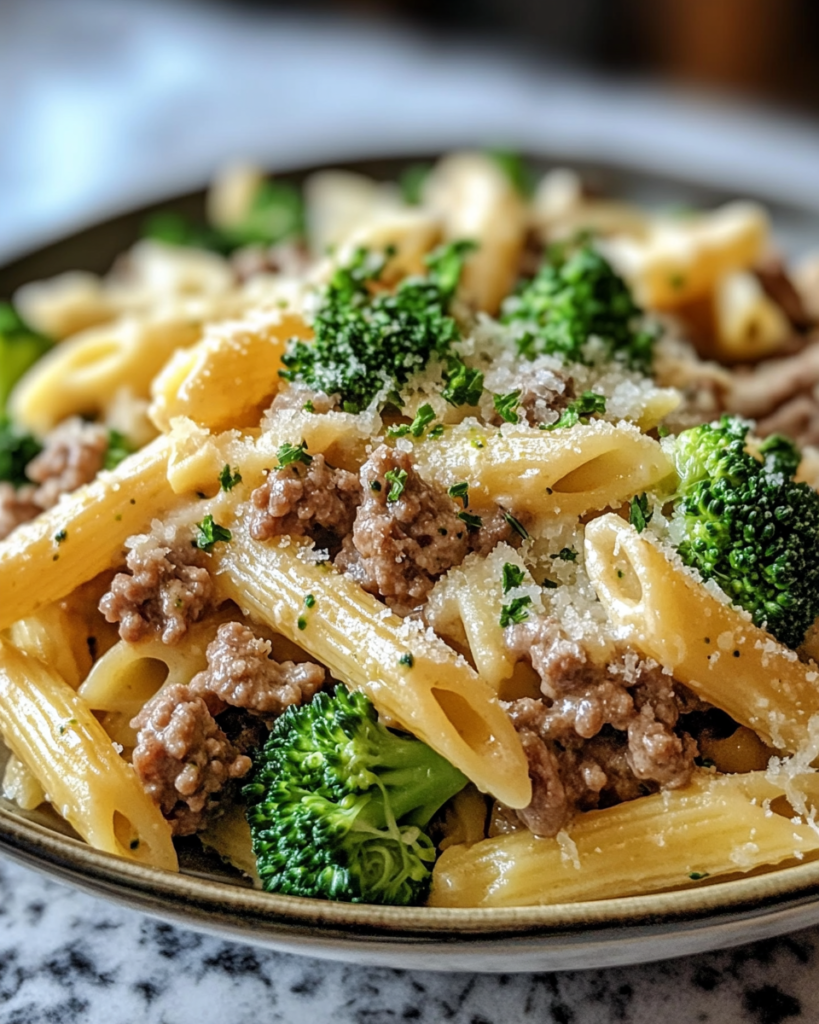
Creamy Broccoli Beef Pasta brings together tender strips of beef, soft pasta, fresh broccoli, and a rich cream sauce that coats every bite. This hearty pasta dinner fits busy weeknights, relaxed family suppers, and casual gatherings with friends. The balance of savory beef, mild broccoli, and silky sauce creates a filling meal with plenty of texture and flavor.
The pasta absorbs the creamy sauce while the broccoli adds freshness and gentle crunch. Thin slices of beef cook quickly, keeping the meat juicy without becoming tough. Parmesan cheese melts into the sauce for a slightly nutty finish that pairs beautifully with garlic and onion.
Another appealing part of Creamy Broccoli Beef Pasta comes from its flexibility. Penne, rotini, or fettuccine all work nicely, and several vegetables blend smoothly into the dish. The recipe also comes together in under an hour, which suits packed schedules without sacrificing comfort or flavor.
Ingredients Overview

The foundation of Creamy Broccoli Beef Pasta starts with sturdy pasta that holds onto the sauce. Short pasta such as penne or rotini traps bits of beef and broccoli inside each bite, while longer pasta creates a softer texture throughout the bowl. Cooking the pasta until just tender prevents it from becoming overly soft once combined with the sauce.
Beef sirloin works particularly well because it cooks rapidly while staying tender. Thin slicing against the grain helps every piece remain easy to chew. Ground beef can also replace sliced steak for a slightly richer texture and a faster preparation process.
Broccoli brings freshness and color while balancing the richness of the cream sauce. Fresh florets keep their structure during cooking, though frozen broccoli may also work when thawed and drained thoroughly beforehand. Garlic and onion provide aromatic depth that supports both the beef and dairy components.
Heavy cream creates the smooth base for the sauce. Parmesan cheese thickens the mixture naturally while adding a salty, savory finish. A small amount of beef broth loosens the sauce and helps everything blend evenly around the pasta.
Italian seasoning, black pepper, and paprika round out the flavor without overpowering the dish. Red pepper flakes may be added for gentle heat. For a lighter version, half-and-half can replace heavy cream, though the sauce may appear slightly thinner.
Ingredients
12 ounces penne pasta
1 pound beef sirloin, thinly sliced
3 cups broccoli florets
2 tablespoons olive oil
1 small yellow onion, finely diced
4 garlic cloves, minced
1 teaspoon Italian seasoning
1/2 teaspoon paprika
1 teaspoon salt
1/2 teaspoon black pepper
2 tablespoons butter
2 tablespoons all-purpose flour
1 1/2 cups beef broth
1 1/2 cups heavy cream
1 cup freshly grated Parmesan cheese
1/4 teaspoon red pepper flakes
2 tablespoons chopped parsley
Step-by-Step Instructions

Bring a large pot of salted water to a gentle boil. Add the pasta and cook until just tender according to package directions. During the final three minutes of cooking, stir in the broccoli florets so they soften slightly while retaining their bright color. Drain the pasta and broccoli together, then set them aside.
Pat the sliced beef dry with paper towels before seasoning with salt, pepper, paprika, and Italian seasoning. Dry meat browns more evenly and develops deeper flavor in the skillet. Heat olive oil in a large heavy pan over medium-high heat.
Place the beef into the skillet in a single layer. Avoid crowding the pan because excess moisture prevents browning. Cook the beef for two to three minutes per side until lightly browned. Transfer the cooked beef onto a plate and keep it nearby.
Reduce the heat to medium. Add butter to the same skillet, followed by the diced onion. Stir frequently until the onion softens and turns lightly golden around the edges. Add the minced garlic and cook for about thirty seconds until fragrant.
Sprinkle the flour into the pan while stirring continuously. The flour thickens the sauce and prevents separation later. Cook the flour mixture for about one minute so the finished sauce avoids a raw flour taste.
Slowly pour in the beef broth while whisking steadily. Continue stirring until the mixture appears smooth with no visible lumps. Add the heavy cream and allow the sauce to simmer gently for several minutes until slightly thickened.
Stir the Parmesan cheese into the sauce gradually. Adding the cheese slowly keeps the sauce smooth rather than grainy. If the sauce thickens too much, stir in a splash of broth or reserved pasta water.
Return the beef to the skillet along with the cooked pasta and broccoli. Toss carefully until every piece becomes coated with the creamy sauce. Sprinkle red pepper flakes across the dish for mild heat if desired.
Allow everything to warm together for two or three additional minutes. The pasta absorbs part of the sauce during this stage, creating a richer texture throughout the skillet. Taste and adjust the seasoning if necessary.
Scatter chopped parsley over the top before serving. Serve the pasta hot while the sauce remains silky and the broccoli still carries slight firmness.
A common issue with creamy pasta dishes comes from overheating the sauce after adding cheese. High heat may cause separation or graininess. Keeping the heat moderate and stirring regularly helps maintain a smooth texture. Another frequent mistake involves overcooking the broccoli. Brief cooking keeps the florets vibrant and pleasantly tender rather than mushy.
Tips, Variations & Substitutions
Several pasta shapes fit smoothly into Creamy Broccoli Beef Pasta. Rotini captures extra sauce inside the spirals, while rigatoni offers a slightly firmer bite. Fettuccine creates a softer and richer texture across the plate.
Chicken breast or turkey strips may replace beef for a lighter version. Ground beef also works nicely when time feels limited. For vegetarian preparation, sautéed mushrooms provide savory depth without meat.
Extra vegetables can easily blend into the skillet. Spinach wilts quickly into the sauce, while peas bring subtle sweetness. Sliced bell peppers add gentle crunch and brighter color throughout the dish.
Fresh Parmesan delivers smoother melting compared to pre-shredded varieties. Freshly grated cheese usually contains fewer anti-caking ingredients, allowing the sauce to stay silky. If Parmesan feels too sharp, Romano or Asiago may replace part of the cheese.
For thicker sauce, allow the cream mixture to simmer slightly longer before adding pasta. For thinner sauce, stir in reserved pasta water gradually until the desired texture appears.
Leftovers store well in the refrigerator for several days. Reheat slowly over medium-low heat with a small splash of broth or cream to restore smooth consistency. Rapid reheating may cause the sauce to separate.
Serving Ideas & Occasions
Creamy Broccoli Beef Pasta pairs nicely with warm garlic bread or crusty artisan bread that can soak up the extra sauce. A crisp green salad with light vinaigrette balances the richness of the cream and cheese.
Roasted vegetables such as carrots, asparagus, or zucchini also complement the savory flavor of the beef. For beverages, sparkling water with lemon, iced tea, or red wine pair pleasantly alongside the creamy sauce.
This pasta dinner suits cool evenings, family gatherings, potluck meals, and casual weekend suppers. Because the recipe cooks in one large skillet after the pasta finishes boiling, it also works well for relaxed entertaining with minimal cleanup afterward.
The hearty combination of beef, pasta, and broccoli creates a filling centerpiece without requiring numerous side dishes. Large serving bowls placed directly at the table encourage relaxed shared dining and second helpings.
Nutritional & Health Notes
Creamy Broccoli Beef Pasta contains protein from beef and Parmesan cheese, carbohydrates from pasta, and fiber alongside vitamins from broccoli. The balance of ingredients creates a satisfying meal that keeps hunger controlled for several hours.
Broccoli contributes vitamin C, potassium, and plant compounds while adding texture without many additional calories. Lean sirloin supplies iron and protein that support balanced meals when paired with vegetables and moderate portions of pasta.
Heavy cream and cheese create the rich sauce, though lighter dairy products may reduce fat content slightly. Whole wheat pasta can also increase fiber while adding a nuttier flavor.
Portion balance plays an important role with creamy pasta dishes. Serving the meal alongside salad or roasted vegetables creates variety across the plate while preventing the dish from feeling overly heavy.
Using fresh ingredients and moderate seasoning allows the natural flavors of the beef, broccoli, and Parmesan to stand out clearly without excessive sodium or added ingredients.
FAQs
Can I prepare Creamy Broccoli Beef Pasta ahead of time?
Creamy Broccoli Beef Pasta may be prepared several hours ahead and reheated shortly before serving. For the smoothest texture, cook the pasta slightly under the package instructions because it continues softening during reheating. Store the sauce separately if possible, then combine everything shortly before dinner. When reheating, place the pasta into a skillet over medium-low heat with a splash of broth or cream. Stir frequently so the sauce returns to a silky consistency. Microwaving at very high temperature sometimes causes cream sauces to separate, so gentler reheating usually produces better texture. Fresh parsley added at the final moment also brightens the finished dish after storage.
Which pasta shape works nicely for this recipe?
Several pasta varieties fit comfortably into this creamy dish. Penne and rotini remain particularly popular because their ridges and curves capture the sauce very effectively. Rigatoni creates a heartier texture, while shells trap small pieces of broccoli and beef inside each bite. Long noodles such as fettuccine or linguine also pair nicely with the creamy sauce, though they create a softer overall texture compared to short pasta. Whichever variety gets selected, cooking the pasta until just tender helps maintain proper structure after combining with the hot sauce. Slightly firm pasta also reheats more successfully for leftovers during the following day.
How do I keep the beef tender during cooking?
Tender beef starts with selecting the proper cut and slicing technique. Sirloin, flank steak, or ribeye all perform nicely when sliced thinly against the grain. Cutting against the grain shortens muscle fibers, creating easier bites after cooking. Another helpful step involves patting the beef dry before placing it into the skillet. Dry meat browns quickly rather than steaming. Cooking the beef over fairly high heat for only a few minutes prevents toughness. Overcrowding the pan should also be avoided because trapped moisture interferes with browning. Allowing the beef to rest briefly before returning it to the sauce helps preserve juiciness.
Can frozen broccoli replace fresh broccoli?
Frozen broccoli works well when fresh broccoli is unavailable. Thawing the florets beforehand and draining excess moisture helps preserve the sauce texture. Adding frozen broccoli directly into the skillet without draining may water down the cream sauce slightly. Frozen broccoli usually softens more rapidly than fresh florets, so shorter cooking time helps maintain structure and color. Stirring the broccoli into the pasta water during the final minutes of boiling remains one of the simplest preparation methods. Although fresh broccoli provides slightly firmer texture, frozen broccoli still delivers pleasant flavor and convenient preparation for busy evenings and quick dinners.
What causes creamy pasta sauce to separate?
Cream sauce separation often occurs from excessive heat or rapid temperature changes. Cheese added over very high heat may turn grainy instead of smooth. Gentle simmering works far better for dairy-based sauces. Another factor involves adding cold dairy products directly into extremely hot liquid. Allowing cream and cheese to warm slightly before stirring them into the skillet may help create smoother texture. Freshly grated Parmesan also melts more evenly compared to packaged shredded cheese. If the sauce thickens excessively, adding small splashes of broth or pasta water while stirring can restore creamy consistency without thinning the flavor too heavily.
How long do leftovers stay fresh?
Leftover Creamy Broccoli Beef Pasta usually stays fresh for about three to four days when refrigerated inside an airtight container. Cream-based sauces should remain chilled promptly after serving rather than sitting at room temperature for extended periods. During reheating, gentle heat prevents the sauce from becoming oily or grainy. Adding a spoonful of cream, milk, or broth while warming helps refresh the texture. Freezing remains possible, though dairy sauces occasionally separate slightly after thawing. Stirring thoroughly during reheating often improves consistency again. Fresh parsley or extra Parmesan scattered across reheated portions can refresh both flavor and appearance before serving.
Can I prepare a lighter variation of this pasta?
Several small adjustments create a lighter version without losing the comforting texture of the dish. Half-and-half may replace heavy cream for reduced richness, though the sauce becomes slightly thinner. Leaner beef cuts also reduce fat while still providing satisfying flavor. Whole wheat pasta increases fiber and creates a nuttier taste that pairs nicely with broccoli and Parmesan. Additional vegetables such as spinach, peas, or zucchini can stretch the recipe further while adding color and texture. Reducing the cheese slightly while keeping strong seasoning from garlic and herbs still creates balanced flavor throughout the finished skillet meal.


