
Beans & Spaghetti Budget Bowl is a pantry-friendly meal built from simple staples that come together into a warm, filling dinner. Tender spaghetti, seasoned beans, and a lightly simmered sauce create a bowl that feels satisfying without requiring expensive ingredients or long preparation.
This recipe works well for busy evenings, end-of-week cooking, and anyone wanting a reliable meal from everyday cupboard items. The combination of pasta and beans creates a hearty texture with balanced flavor, while basic seasonings keep the dish comforting and familiar.
Ingredients Overview

The strength of Beans & Spaghetti Budget Bowl comes from ingredients that are easy to keep on hand and simple to combine. Spaghetti forms the base and gives the bowl structure and bite. Standard dried spaghetti cooks quickly and absorbs flavor from the sauce while staying light enough to pair with beans.
Cannellini beans or pinto beans fit this recipe especially well because they soften into the sauce without losing all texture. Canned beans keep preparation short, though cooked dried beans also work well. Rinsing canned beans removes excess salt and creates a cleaner flavor.
Onion and garlic build the savory foundation. A small amount of olive oil softens these ingredients and helps the flavors blend during cooking. Crushed tomatoes create body and moisture while adding mild acidity that balances the starch from pasta and beans.
Italian seasoning brings gentle herbal notes without overwhelming the dish. Paprika contributes warmth and subtle depth. Salt and black pepper finish the seasoning.
Vegetable broth gives the sauce a richer texture than plain water and helps all components blend into one cohesive bowl. Fresh parsley and grated Parmesan are optional finishing touches that add freshness and a slightly savory finish.
Substitutions are straightforward. Whole wheat spaghetti can replace regular pasta. Black beans can replace white beans. Vegetable broth may be exchanged for water with a pinch of extra seasoning. The recipe remains flexible while staying economical.
Ingredients
8 ounces dried spaghetti
1 tablespoon olive oil
1 medium onion, finely diced
3 cloves garlic, minced
1 teaspoon paprika
1 teaspoon Italian seasoning
1/2 teaspoon salt
1/2 teaspoon black pepper
1 can (15 ounces) cannellini beans, drained and rinsed
1 can (14 ounces) crushed tomatoes
1 cup vegetable broth
2 tablespoons chopped parsley
1/4 cup grated Parmesan cheese (optional)
Step-by-Step Instructions
Bring a large pot of salted water to a boil. Add the spaghetti and cook until just al dente according to package timing, usually 8 to 10 minutes. Reserve about 1 cup of pasta water before draining.
While the pasta cooks, heat olive oil in a wide skillet over medium heat. Add diced onion and cook for 5 to 6 minutes until soft and lightly golden. Stir occasionally so the onion cooks evenly rather than browning too quickly.
Add garlic, paprika, and Italian seasoning. Stir for about 30 seconds until fragrant. Avoid cooking garlic too long because it can turn bitter.
Pour in crushed tomatoes and vegetable broth. Stir well and bring the mixture to a gentle simmer. Add salt and black pepper.
Stir in the drained beans. Reduce heat to medium-low and cook for 8 minutes. During this stage the beans absorb flavor and the sauce thickens slightly.
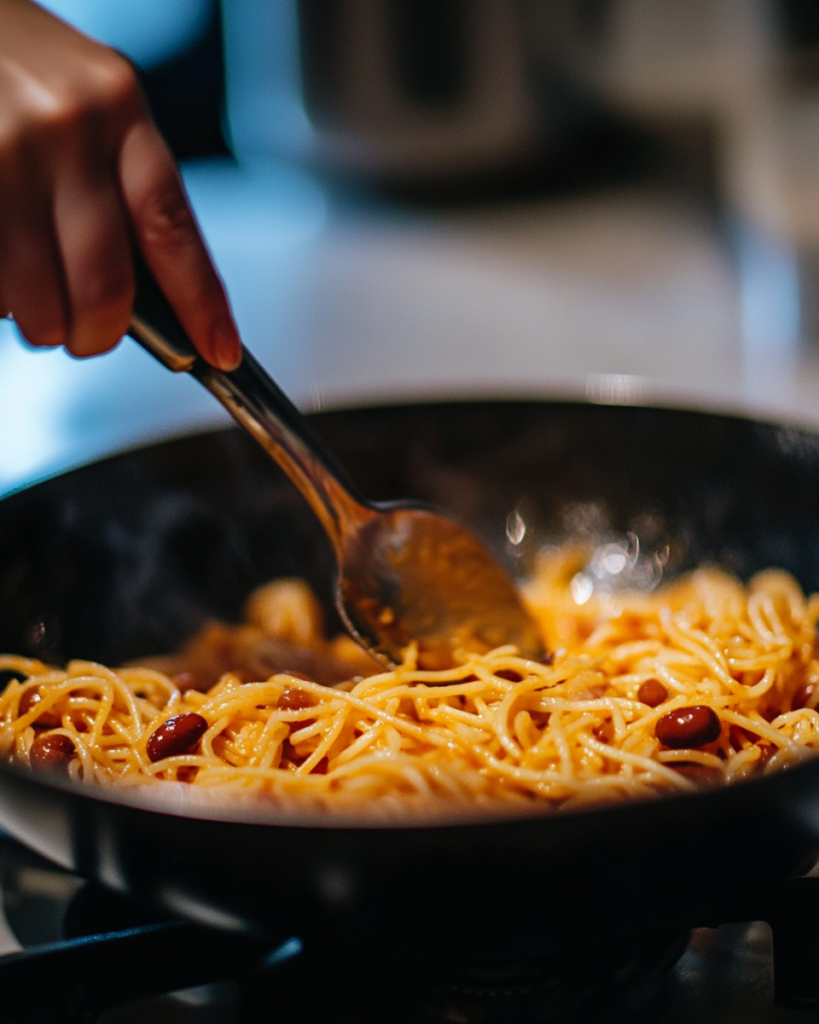
Add the drained spaghetti directly into the skillet. Toss carefully until the noodles are coated. If the mixture feels too thick, add a few tablespoons of reserved pasta water until the bowl reaches a silky consistency.
Continue cooking for another 2 minutes so the spaghetti absorbs some sauce. Taste and adjust seasoning if needed.
Scatter chopped parsley over the top. Add Parmesan if using.
For serving, divide into bowls and spoon extra sauce over each portion.
Common issues are easy to avoid. Overcooked pasta becomes soft and heavy once mixed with sauce, so stop cooking while it still has a slight bite. Too little liquid can leave the bowl dry; reserved pasta water solves this quickly. Under-seasoning can also flatten the dish, so taste before serving.
The finished dish should have tender noodles, creamy beans, and a lightly thick tomato coating rather than standing liquid.
Tips, Variations & Substitutions
For extra texture, toast breadcrumbs in a dry skillet and sprinkle over each bowl before serving.
A pinch of red pepper flakes adds gentle heat without changing the character of the dish. Diced carrots or celery can cook with the onion for additional flavor and extra vegetables.
Whole wheat spaghetti gives a nuttier taste and slightly firmer texture. Gluten-free spaghetti also works if cooked carefully and added immediately before serving.
Black beans create a richer appearance, while chickpeas produce a firmer bite. If using dried beans, cook them fully before adding to the skillet.
Parmesan can be omitted for a dairy-free version. A spoonful of nutritional yeast offers a savory finish.
Leftovers store well in the refrigerator for up to three days. Add a splash of broth during reheating since pasta absorbs liquid as it rests.
Cooking the sauce a few extra minutes creates a thicker result suitable for meal prep containers.
Serving Ideas & Occasions
Beans & Spaghetti Budget Bowl fits casual family dinners, student meals, meal prep lunches, and quiet evenings when simple cooking feels appealing.
Serve it with toasted bread, a crisp green salad, or roasted vegetables. A cucumber salad offers contrast to the warm tomato base.
For drinks, sparkling water with citrus pairs cleanly. Unsweetened iced tea also complements the meal.
This bowl works during cooler months when warm dinners feel comforting, though it remains light enough for year-round cooking. Because the ingredients are affordable and widely available, it also suits larger gatherings and shared meals.
Portions can stretch further with extra vegetables or additional broth served alongside.
Nutritional & Health Notes
Beans & Spaghetti Budget Bowl combines carbohydrates, plant-based protein, and fiber into a balanced meal. The pasta supplies energy while beans contribute fullness and texture.
Tomatoes bring natural acidity and additional nutrients. Onion and garlic add flavor without relying heavily on butter or cream.
Using moderate oil keeps the dish lighter while still delivering satisfying texture. Whole wheat pasta and additional vegetables can increase fiber content.
Portion balance matters. Pairing the bowl with vegetables can round out the meal without changing preparation significantly.
Sodium levels vary depending on canned products and broth, so choosing reduced-sodium options allows greater control over seasoning.
The recipe remains filling while staying based on familiar pantry ingredients.
FAQs
Can I prepare this recipe ahead?
Yes. Cook the sauce and beans in advance and refrigerate separately from the pasta if possible. When ready to serve, cook fresh spaghetti and combine with reheated sauce. This keeps the noodles from becoming too soft. If fully assembled ahead of time, add broth during reheating to restore the texture. Stored properly in sealed containers, the meal keeps well for several days and reheats gently on the stovetop or in a microwave.
Which beans work well besides cannellini?
Several options fit this recipe. Pinto beans create a soft and creamy texture. Black beans produce a richer appearance and slightly earthier flavor. Chickpeas remain firmer and hold their shape well. Kidney beans also work if cooked until tender. Whichever variety you choose, drain and rinse canned beans before cooking for a cleaner result and more balanced seasoning.
Can this bowl include extra vegetables?
Yes. Onion already provides a flavorful base, but diced carrots, celery, zucchini, spinach, or bell peppers blend naturally into the sauce. Add firmer vegetables early so they soften properly. Leafy vegetables should go in near the end of cooking. Extra vegetables stretch portions and add texture while preserving the character of the dish.
How do I keep the spaghetti from becoming soft?
Cook spaghetti only until al dente and avoid leaving it in the sauce for long periods. Reserve pasta water and adjust consistency gradually rather than overcooking. If storing leftovers, keeping sauce and pasta separate produces the most consistent texture after reheating.
Is this recipe suitable for freezing?
The bean and tomato sauce freezes well for up to two months in an airtight container. Pasta texture changes more noticeably after freezing, so freezing the sauce alone usually gives better results. Thaw overnight in the refrigerator and warm gently before combining with freshly cooked spaghetti.
Can I cook this in one pot?
Yes. Break the spaghetti in half and add it directly to simmering sauce with additional broth. Stir frequently during cooking to prevent sticking. The pasta absorbs liquid while releasing starch, creating a slightly thicker consistency. Watch closely and add more broth if necessary.
How can I add more protein?
Additional protein can come from extra beans, cooked lentils, diced grilled chicken, turkey, or plant-based alternatives. Small additions often blend smoothly without changing cooking time significantly. Keeping the seasoning simple allows the bowl to remain balanced while becoming more filling.
………………..


