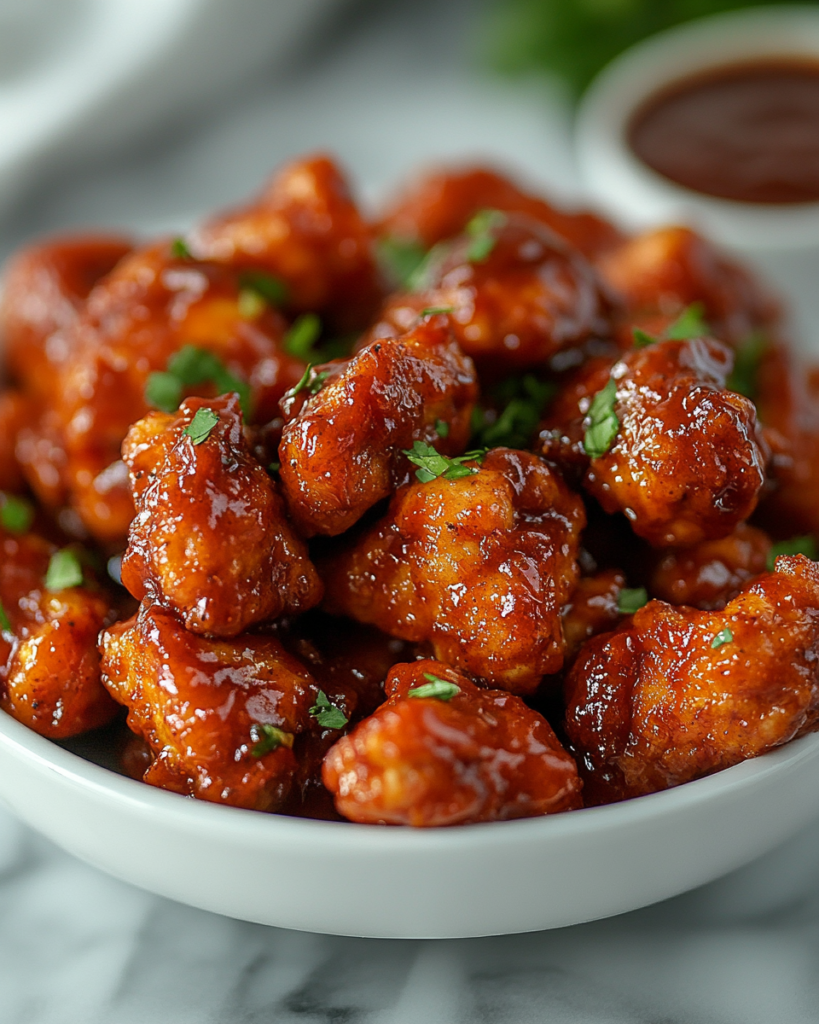
BBQ Air Fryer Chicken Bites (Sticky & Crispy) 5 Simple Delicious Recipe
BBQ air fryer chicken bites bring together crisp edges and a glossy barbecue coating that clings to every piece of tender chicken. Each bite carries a balanced mix of smoky seasoning and gentle sweetness, finished with a lightly caramelized surface achieved inside an air fryer.
This style of preparation keeps the chicken juicy inside while forming a firm outer layer that holds sauce well. The compact size of the pieces allows even heat exposure, creating consistent texture across every batch.
The barbecue coating settles into the surface during the final coating stage, forming a rich layer that adds depth without overpowering the natural poultry flavor. Air circulation inside the cooking chamber supports browning without heavy oil use, giving the bites a lighter profile while still offering satisfying crispness.
These chicken bites fit well into casual gatherings, quick meals, or shared plates. Their compact shape and bold coating make them suitable for dipping sauces or serving alongside grains, vegetables, or fresh salads. The balance between smoky seasoning and caramelized glaze creates a dish that feels hearty yet approachable.
Ingredients Overview

Chicken breast forms the base of this dish, offering a lean protein structure that holds seasoning well. When cut into small cubes, it cooks evenly and develops a firm exterior while remaining tender inside. Thigh meat may also be used for a slightly richer texture due to higher natural fat content.
A light coating mixture helps the seasoning adhere to the surface. Cornstarch or a similar fine starch supports crisping by drawing moisture from the exterior during air circulation. A small amount of oil assists in browning and prevents dryness.
The seasoning blend typically includes smoked paprika, garlic powder, onion powder, salt, and black pepper. These spices create depth without overwhelming the barbecue profile. Smoked paprika adds warmth, while garlic and onion powders introduce savory undertones.
Barbecue sauce plays a central role in the final coating stage. A thicker sauce adheres better to hot chicken pieces, forming a glossy finish. Variations range from sweet to smoky, depending on preference. Honey or brown sugar may be mixed into the sauce for additional caramelization during final heating.
Optional additions such as chili flakes or cayenne introduce mild heat. A touch of vinegar in the sauce can balance sweetness and enhance tanginess. Each component works together to create layered flavor across crispy surfaces and tender interiors.
Ingredients
1 ½ pounds chicken breast, cut into bite-sized cubes
2 tablespoons cornstarch
1 teaspoon smoked paprika
1 teaspoon garlic powder
1 teaspoon onion powder
1 teaspoon salt
½ teaspoon black pepper
1 tablespoon olive oil
½ cup barbecue sauce
1 tablespoon honey
½ teaspoon chili flakes (optional)
Cooking spray for air fryer basket
Step-by-Step Instructions

Begin by preparing the chicken. Cut the breast into evenly sized cubes so each piece cooks at a consistent rate. Place the pieces in a large mixing bowl to allow even coating.
Sprinkle cornstarch over the chicken, followed by smoked paprika, garlic powder, onion powder, salt, and black pepper. Toss gently until every piece carries a light, even layer of seasoning. The surface should appear slightly dusted rather than heavily coated.
Drizzle olive oil over the seasoned chicken. Mix again so the oil helps the spices adhere while supporting browning during cooking. Each piece should appear lightly glossy without excess oil pooling at the bottom of the bowl.
Preheat the air fryer to a medium-high setting. Lightly coat the basket with cooking spray to prevent sticking. Arrange the chicken pieces in a single layer, leaving space between them so air can circulate freely.
Cook the chicken until the exterior becomes firm and lightly golden. Halfway through, shake the basket gently to promote even exposure on all sides. The interior should remain juicy while the outer surface develops a mild crust.
While the chicken cooks, prepare the barbecue coating. In a small bowl, combine barbecue sauce, honey, and optional chili flakes. Stir until the mixture becomes smooth and slightly thick.
Once the chicken reaches a crisp exterior, transfer it to a clean bowl. Pour the barbecue mixture over the hot pieces and toss until each cube is fully coated. The heat from the chicken helps the sauce settle and thicken slightly.
Return the coated chicken to the air fryer for a short finishing stage. This step allows the sauce to set and form a sticky layer without burning. Watch closely as the surface begins to glaze.
Remove the chicken once the coating appears glossy and slightly firm. Let it rest briefly so the sauce stabilizes on the surface. Serve while warm for the strongest contrast between crisp edges and sticky glaze.
Tips, Variations & Substitutions
Chicken thighs can replace breast meat for a richer texture and deeper flavor. The slightly higher fat content keeps the interior moist during air frying.
For a stronger smoky profile, increase smoked paprika or add a small amount of chipotle powder. This creates a deeper barbecue character without altering texture.
A lighter sauce coating can be achieved by reducing honey and using a thinner barbecue sauce. This results in less stickiness but maintains flavor balance.
For added crunch, a second light dusting of cornstarch before air frying can increase surface crisping. Care must be taken to avoid excess coating, which may affect even cooking.
Those preferring milder seasoning can reduce chili flakes or omit them entirely. The barbecue sauce alone provides sufficient flavor depth.
Serving Ideas & Occasions
These chicken bites pair well with simple sides such as steamed rice, roasted vegetables, or soft flatbread. The sticky coating complements neutral bases that absorb extra sauce.
They also work well in shared platters alongside fresh salads or coleslaw, adding contrast between warm, glazed chicken and cool, crisp vegetables.
Dipping sauces such as yogurt-based blends or mild ranch-style sauces provide additional variety in flavor. These bites are commonly served in casual gatherings, quick dinners, or snack-style spreads where finger foods are preferred.
Their compact size and bold coating also suit lunch containers, offering a balanced protein option alongside grains or vegetables.
Nutritional & Health Notes
This dish provides a strong protein base due to the chicken breast content. Protein supports satiety and helps maintain balanced energy intake across meals.
Air frying reduces reliance on heavy oil, which lowers overall fat content compared to traditional frying methods. The starch coating remains light, contributing mainly to texture rather than calorie density.
Barbecue sauce introduces sugars and sodium, which should be considered when planning portions. Adjusting sauce quantity allows control over sweetness and salt levels.
Using chicken thighs increases fat content slightly, while chicken breast maintains a leaner profile. Both options fit within a balanced dietary pattern depending on personal preference.
FAQs
Can chicken thighs be used instead of breast?
Chicken thighs can be used in place of breast meat without altering the structure of the dish. Thigh meat contains more natural fat, which contributes to a juicier interior and slightly richer flavor. When cut into bite-sized pieces, thighs hold seasoning well and remain tender after air frying. Cooking duration may require a small adjustment due to thickness variations, but overall preparation remains similar. The barbecue coating adheres effectively to both cuts, producing a consistent sticky finish.
What type of barbecue sauce works best?
A thicker barbecue sauce tends to perform better because it clings more effectively to hot chicken pieces. Smoky or hickory-style sauces add depth, while sweeter versions create a caramelized glaze. The choice depends on flavor preference, as both directions work well with the seasoning base. A balanced sauce with mild sweetness and gentle smoke provides versatility for different serving styles. Adjusting consistency with a small amount of honey or vinegar can refine texture and flavor balance.
Can the coating be made crispier?
A firmer exterior can be achieved by ensuring even spacing inside the air fryer basket. Proper air circulation allows moisture to escape, supporting surface crisping. A light cornstarch layer also contributes to a drier surface that firms during cooking. Avoid overcrowding, as this can trap steam and soften texture. A short additional heating stage after sauce application helps set the coating without reducing stickiness.
Is it possible to prepare this dish in advance?
Chicken pieces can be seasoned in advance and stored in a covered container until cooking. This allows spices to settle into the surface, improving flavor distribution. The barbecue coating is best applied after air frying to preserve its sticky texture. Reheating cooked pieces in the air fryer can restore firmness, although freshly prepared servings provide the strongest contrast between crisp exterior and tender interior.
What side dishes pair well with this recipe?
Neutral sides such as rice, roasted potatoes, or steamed vegetables pair well with the bold barbecue coating. Fresh salads or slaw provide contrast in texture and temperature. Soft bread or flatbreads can also be served alongside to absorb extra sauce. Each option balances the richness of the chicken while maintaining variety across the plate.
Can the dish be made without cornstarch?
Cornstarch contributes to surface crisping, but the dish can still be prepared without it. In such cases, the exterior will be slightly softer, though flavor remains intact. A light oil coating still supports browning during air frying. For added texture without starch, a thin flour coating may be used as an alternative.
How should leftovers be stored?
Leftover chicken bites should be placed in a sealed container once fully cooled. Refrigeration maintains freshness for a short period. Reheating in an air fryer helps restore surface firmness and reactivates the glaze. Microwave heating may soften texture, so air circulation reheating is preferred for maintaining structure.


