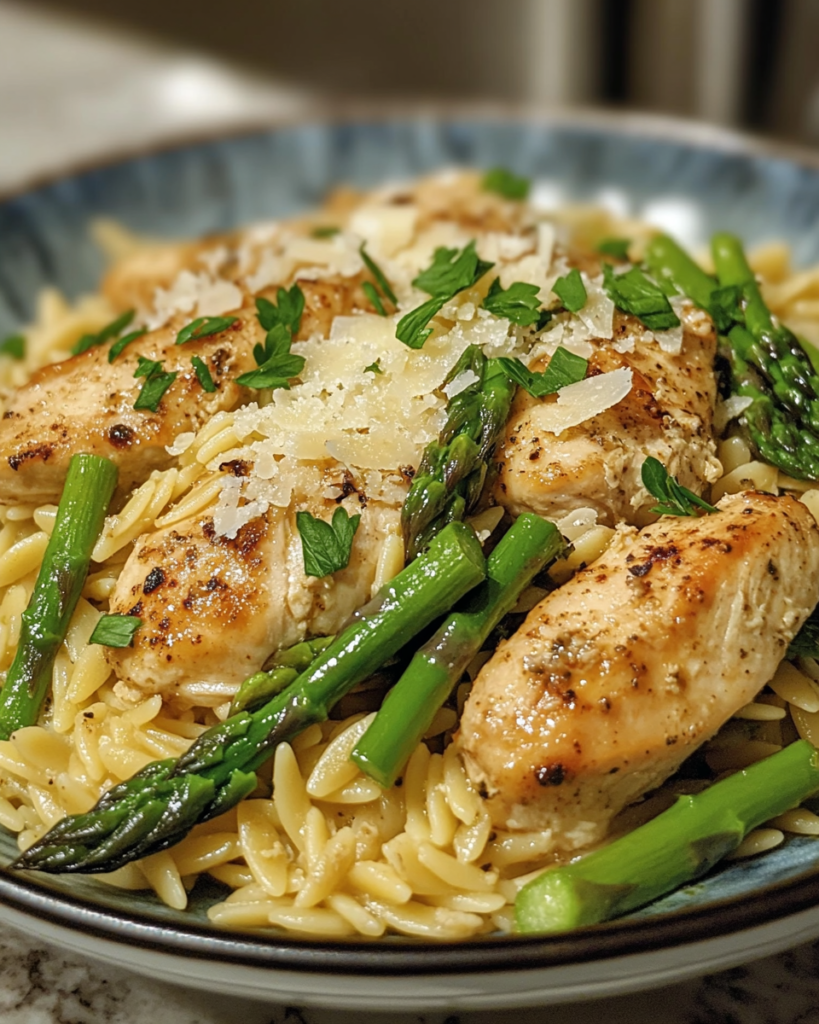
Chicken Orzo with Asparagus brings together tender chicken, small pasta, and crisp spring vegetables in a comforting skillet dinner that feels light yet filling. The creamy texture of the orzo pairs beautifully with juicy chicken and fresh asparagus, creating a balanced meal with plenty of color and flavor in every forkful.
This dish works well during busy weeknights since everything cooks in one pan with simple pantry ingredients. The orzo absorbs chicken broth while cooking, giving the pasta a rich savory taste without heavy cream. Fresh lemon juice brightens the final dish and balances the richness from parmesan cheese.
Chicken Orzo with Asparagus also fits many occasions, from casual family dinners to relaxed gatherings with friends. The combination of herbs, garlic, chicken, and vegetables creates a comforting meal that feels fresh and seasonal at the same time.
Ingredients Overview

The heart of Chicken Orzo with Asparagus comes from a short list of fresh ingredients that blend naturally during cooking. Boneless skinless chicken breasts or thighs provide protein and rich savory flavor. Chicken thighs create a slightly richer dish, while chicken breasts stay lean and tender when cooked carefully.
Orzo serves as the base of the meal. Although it resembles rice, orzo is pasta, giving the dish a silky texture once simmered in broth. As the pasta cooks, it releases starch that lightly thickens the skillet without extra flour or cream.
Fresh asparagus adds crisp texture and earthy sweetness. Thin asparagus spears cook quickly and stay tender without turning mushy. During spring months, asparagus tastes especially sweet and pairs naturally with lemon and parmesan.
Garlic and onion build the aromatic base of the dish. Garlic adds warmth while onion creates subtle sweetness during sautéing. Chicken broth deepens the flavor throughout the pasta as it cooks directly in the skillet.
Parmesan cheese melts into the orzo near the end, giving the pasta a creamy finish and slightly nutty flavor. Fresh lemon juice cuts through the richness and brightens every bite.
Fresh parsley adds color and freshness just before serving. A small amount of butter or olive oil rounds out the skillet and helps the ingredients cook evenly.
Several substitutions work well in this recipe. Spinach or peas can replace asparagus during colder months. Pecorino Romano may stand in for parmesan if a sharper cheese flavor is preferred. Rotisserie chicken also works well for a quicker preparation.
Ingredients
1 1/2 pounds boneless skinless chicken breasts, cut into bite-sized pieces
1 teaspoon salt
1/2 teaspoon black pepper
1 teaspoon Italian seasoning
2 tablespoons olive oil
1 tablespoon butter
1 small yellow onion, finely diced
3 cloves garlic, minced
1 1/2 cups dry orzo pasta
3 cups chicken broth
1 pound fresh asparagus, trimmed and cut into 2-inch pieces
1/2 cup grated parmesan cheese
1 tablespoon fresh lemon juice
1 teaspoon lemon zest
2 tablespoons chopped fresh parsley
1/4 teaspoon red pepper flakes
Extra parmesan for serving
Step-by-Step Instructions

Pat the chicken pieces dry with paper towels before seasoning them with salt, black pepper, and Italian seasoning. Dry chicken browns more evenly and develops deeper flavor during cooking.
Warm a large deep skillet over medium-high heat. Add olive oil and place the chicken pieces into the pan in a single layer. Cook for about 5 to 6 minutes, turning occasionally, until lightly golden and fully cooked through. Transfer the chicken to a plate.
Reduce the heat slightly and add butter to the same skillet. Stir in the diced onion and cook for about 3 minutes until softened. Add the garlic and red pepper flakes, stirring constantly for about 30 seconds so the garlic does not burn.
Add the dry orzo directly into the skillet. Stir for 1 to 2 minutes so the pasta becomes lightly toasted. This small step gives the dish a deeper savory flavor and helps the pasta hold its texture during simmering.
Pour in the chicken broth slowly while scraping any browned bits from the bottom of the skillet. Bring the mixture to a gentle simmer over medium heat. Stir frequently so the orzo cooks evenly and does not stick.
After about 6 minutes, stir in the asparagus pieces. Continue simmering for another 4 to 5 minutes until the orzo becomes tender and the asparagus turns bright green. The liquid should mostly absorb while still leaving the pasta creamy.
Return the cooked chicken to the skillet and stir gently. Add parmesan cheese, lemon juice, and lemon zest. Stir until the cheese melts into the pasta and creates a silky texture.
Taste the skillet and adjust seasoning if needed. Sprinkle fresh parsley across the top before serving.
One common issue with orzo dishes is overcooking the pasta. Orzo continues absorbing liquid after the heat turns off, so removing the skillet from the stove while slightly loose helps maintain the right consistency.
Another mistake involves overcrowding the chicken during browning. Cooking in batches, if necessary, helps the chicken brown instead of steam.
For extra richness, a small splash of half-and-half may be stirred into the finished dish, though the pasta already develops a creamy texture naturally from the starch and cheese.
Tips, Variations & Substitutions
Chicken Orzo with Asparagus adapts easily based on seasonal ingredients and personal preferences. During summer, zucchini or cherry tomatoes can replace asparagus for a lighter flavor profile. In colder months, mushrooms or spinach create a hearty variation with deeper savory notes.
Chicken thighs remain especially juicy during reheating, making them a practical choice for meal preparation. Rotisserie chicken also shortens cooking time significantly since the meat only needs warming near the end.
For extra brightness, additional lemon zest can be stirred into the skillet just before serving. Fresh dill or basil also pairs nicely with the asparagus and parmesan combination.
Whole wheat orzo works well for additional fiber, though it may need slightly more broth and a few extra minutes of cooking. Gluten-free orzo varieties can also be used successfully with careful stirring.
Those who prefer richer flavor can stir in a spoonful of cream cheese or mascarpone near the end of cooking. For a lighter dish, reduce the parmesan slightly and increase the vegetables.
If the skillet thickens too much after resting, a splash of warm broth quickly loosens the pasta without changing the flavor balance.
Leftovers store well in the refrigerator for up to three days. Reheat gently over low heat with a small amount of broth or water to restore the creamy texture.
Serving Ideas & Occasions
Chicken Orzo with Asparagus pairs beautifully with simple side dishes that complement the creamy pasta and fresh vegetables. A crisp green salad with lemon vinaigrette balances the richness of the parmesan and chicken broth. Warm crusty bread also works nicely for soaking up the remaining sauce.
Roasted carrots, green beans, or blistered tomatoes provide additional color and texture alongside the skillet. For drinks, sparkling water with lemon or a chilled white wine pairs naturally with the bright flavors in the dish.
This recipe fits many occasions throughout the year. It works particularly well during spring when asparagus reaches peak freshness. Since the entire meal cooks in one skillet, it also suits busy evenings when fewer dishes are preferred.
The comforting texture of the orzo makes the dish appropriate for relaxed family dinners, while the fresh herbs and vibrant vegetables give it enough elegance for casual entertaining.
Nutritional & Health Notes
Chicken Orzo with Asparagus offers a balanced combination of protein, carbohydrates, and vegetables in one meal. Chicken provides satisfying protein that helps the dish feel filling without becoming overly heavy.
Asparagus contributes fiber, folate, and vitamins while adding freshness and texture. Garlic and onion bring additional flavor without relying heavily on excess butter or cream.
Orzo supplies carbohydrates for energy, while parmesan cheese contributes calcium and savory richness. Using moderate amounts of cheese keeps the dish flavorful while still balanced.
Olive oil provides heart-friendly fats and helps carry the flavors throughout the skillet. Lemon juice brightens the dish naturally, reducing the need for excessive salt.
Those seeking a lighter version may reduce the cheese slightly or increase the asparagus portion for extra vegetables. Whole wheat orzo adds additional fiber and creates a slightly nuttier flavor.
Since the recipe cooks in one skillet, the starch from the orzo naturally thickens the broth, reducing the need for heavy sauces. The final result feels creamy and comforting while still containing plenty of fresh ingredients.
FAQs
Can I use rotisserie chicken in Chicken Orzo with Asparagus?
Rotisserie chicken works very well in this recipe and shortens preparation time considerably. Since the chicken is already cooked, simply shred or dice the meat and stir it into the skillet near the end of cooking. Adding the chicken too early may dry it out while the orzo simmers.
Using rotisserie chicken also adds extra savory flavor because the meat often contains seasoning from roasting. If using highly seasoned chicken, slightly reduce the added salt until tasting the finished skillet.
This shortcut makes Chicken Orzo with Asparagus especially convenient during busy evenings while still producing a comforting homemade meal with balanced flavor and texture.
Can I prepare Chicken Orzo with Asparagus ahead of time?
This dish can be prepared ahead, though the orzo continues absorbing liquid during storage. When reheating, adding a splash of chicken broth or water helps loosen the pasta and restore the creamy consistency.
For meal preparation, slightly undercook the orzo before refrigerating. This prevents the pasta from becoming too soft later. Store the skillet in an airtight container for up to three days in the refrigerator.
Fresh parsley and extra lemon juice taste brightest when added just before serving rather than during storage. These final touches refresh the dish and bring back its lively flavor after reheating.
What can replace asparagus in this recipe?
Several vegetables work beautifully in place of asparagus depending on the season. Fresh spinach, peas, zucchini, broccoli florets, or green beans all pair nicely with the creamy orzo and chicken.
Spinach cooks especially quickly and should be stirred in near the end so it wilts gently without overcooking. Broccoli and green beans may need a few extra minutes to soften fully.
Cherry tomatoes also create a fresh variation with subtle sweetness and acidity. The flexibility of Chicken Orzo with Asparagus allows the recipe to shift naturally throughout the year while keeping the comforting skillet texture intact.
Can I freeze Chicken Orzo with Asparagus?
Freezing is possible, though the texture of the orzo may soften slightly after thawing. For the most pleasant results, cool the dish completely before transferring it into freezer-safe containers.
When reheating frozen portions, thaw overnight in the refrigerator if possible. Warm the pasta slowly over low heat with extra broth added gradually. This helps restore moisture and keeps the sauce from becoming too thick.
Asparagus may soften more after freezing, though the flavor remains pleasant. Fresh herbs and lemon juice added after reheating help refresh the finished dish and brighten the overall flavor.
Which type of chicken works best for this recipe?
Both chicken breasts and chicken thighs work successfully in Chicken Orzo with Asparagus. Chicken breasts create a leaner dish with mild flavor, while thighs remain extra juicy and rich during cooking.
Chicken thighs also tolerate reheating particularly well, making them practical for leftovers. Breasts should be cooked carefully so they stay tender instead of dry.
Cutting the chicken into evenly sized pieces helps everything cook at the same pace. Browning the chicken before simmering the orzo adds savory depth and creates flavorful bits in the skillet that blend naturally into the broth.
How do I keep the orzo from sticking?
Frequent stirring during simmering helps prevent orzo from sticking to the bottom of the skillet. Since orzo is small and starchy, it absorbs liquid quickly and benefits from regular movement while cooking.
Using a deep skillet rather than a shallow pan also improves cooking consistency because the broth distributes more evenly around the pasta. Medium heat works best for gentle simmering without scorching.
If the skillet thickens too quickly before the orzo becomes tender, simply add a small splash of warm broth. Removing the pan from the heat while slightly loose helps maintain a creamy texture as the pasta continues resting.
Can I add extra cheese to Chicken Orzo with Asparagus?
Extra cheese can absolutely be added for richer flavor and creamier texture. Parmesan blends especially well into the warm orzo because it melts smoothly while adding nutty savory notes.
Pecorino Romano provides a sharper taste, while mozzarella creates extra creaminess with mild flavor. Adding cheese gradually while stirring prevents clumping and helps create an even sauce throughout the skillet.
Although additional cheese increases richness, balancing it with lemon juice keeps the dish from tasting overly heavy. Fresh herbs also help maintain brightness and keep the flavors balanced across the creamy pasta and tender chicken.


