
Mediterranean Chicken Sheet Pan brings together tender chicken, roasted vegetables, olive oil, herbs, and bright citrus in a single tray dinner filled with rich flavor and satisfying texture. This hearty oven meal suits busy evenings since nearly everything cooks together without a sink full of cookware afterward.
Juicy chicken thighs roast beside zucchini, bell peppers, red onion, and cherry tomatoes until caramelized around the edges. Garlic, oregano, paprika, and lemon give every bite a sunny coastal character that pairs beautifully with warm pita, rice, or couscous. Since the oven handles most of the work, this recipe suits weeknight cooking while still feeling generous enough for guests.
The balanced combination of vegetables, lean protein, and healthy fats creates a deeply satisfying dinner without heavy sauces or lengthy preparation. Every ingredient contributes texture, aroma, and color, turning a humble tray bake into a memorable family meal.
Ingredients Overview

Chicken thighs bring rich flavor and stay juicy throughout roasting. Boneless skinless thighs suit this recipe particularly well because they remain tender even during high-heat cooking. Chicken breasts also work, though slightly shorter roasting prevents dryness.
Olive oil coats every ingredient and encourages caramelization during roasting. Its fruity richness also ties together the herbs and citrus. Fresh lemon brightens the savory ingredients while balancing the richness from the chicken and olive oil.
Zucchini softens beautifully in the oven while still holding shape. Red onion develops sweetness during roasting, adding depth beside the savory chicken. Bell peppers contribute gentle sweetness and vibrant color. Cherry tomatoes burst during cooking, creating light natural juices across the tray.
Garlic gives the dish its savory backbone. Dried oregano and paprika provide earthy warmth associated with Mediterranean cooking. A small amount of cumin introduces subtle smokiness without overpowering the vegetables.
Feta cheese adds creamy salty contrast scattered across the finished tray. Kalamata olives contribute briny depth that balances the sweet roasted vegetables. Fresh parsley finishes the dish with herbal freshness.
Several ingredient swaps suit this recipe nicely. Eggplant can replace zucchini, while shallots may replace red onion. Boneless turkey thighs also roast well using similar timing. Goat cheese works beautifully instead of feta for a tangier finish.
Ingredients
2 pounds boneless skinless chicken thighs
2 medium zucchini, sliced into thick half-moons
1 large red bell pepper, sliced
1 yellow bell pepper, sliced
1 medium red onion, sliced into wedges
1 pint cherry tomatoes
4 garlic cloves, minced
1/4 cup olive oil
2 tablespoons fresh lemon juice
1 teaspoon lemon zest
1 1/2 teaspoons dried oregano
1 teaspoon paprika
1/2 teaspoon ground cumin
1 teaspoon kosher salt
1/2 teaspoon black pepper
1/2 cup pitted Kalamata olives
1/2 cup crumbled feta cheese
2 tablespoons chopped fresh parsley
Step-by-Step Instructions
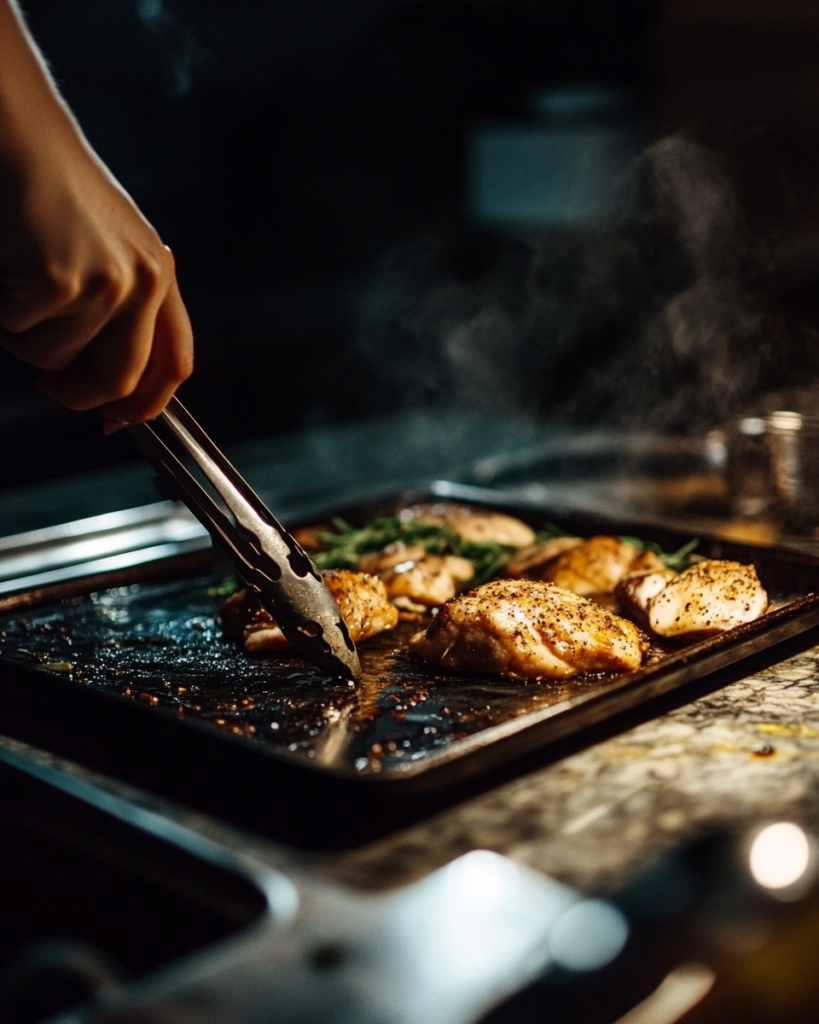
Preheat the oven to 425 degrees Fahrenheit. A fully heated oven encourages caramelized vegetables and properly browned chicken. Line a large sheet pan with parchment paper for simpler cleanup and easier serving.
Pat the chicken thighs dry using paper towels. Dry surfaces roast far more evenly and develop richer color. Place the chicken in a large mixing bowl.
Add olive oil, lemon juice, lemon zest, garlic, oregano, paprika, cumin, salt, and black pepper to the bowl. Toss thoroughly until every piece receives an even coating.
Spread the zucchini, bell peppers, onion, and cherry tomatoes across the prepared sheet pan. Arrange the chicken thighs among the vegetables rather than stacking everything together. Crowded ingredients steam instead of roast, so leaving small gaps helps caramelization.
Roast for 20 minutes. Remove the tray from the oven and gently stir the vegetables using a spatula. Turn the chicken pieces for even browning.
Scatter the olives across the tray and return everything to the oven for another 10 to 15 minutes. Chicken thighs should reach an internal temperature of 165 degrees Fahrenheit. The vegetables should appear lightly charred around the edges while tomatoes soften and release juices.
During the final minutes, watch carefully so the vegetables caramelize without burning. Bell peppers naturally brown quickly due to their sugar content.
Remove the tray from the oven and rest for five minutes before serving. This brief resting period helps juices settle inside the chicken.
Scatter feta cheese and parsley across the warm tray just before serving. The residual heat slightly softens the feta without fully melting it.
Several common mistakes can affect texture. Thin zucchini slices often become mushy, so thicker cuts work best. Overcrowding the tray prevents browning. Another frequent issue involves uneven vegetable sizing, which leads to inconsistent roasting.
For additional color, place the tray beneath the broiler for one or two minutes near the end of cooking. Watch closely throughout broiling since vegetables can darken rapidly.
Warm pita bread, couscous, rice, or roasted potatoes pair beautifully alongside the savory juices collected across the pan.
Tips, Variations & Substitutions
Boneless chicken thighs remain the easiest option for consistent texture, though bone-in thighs deliver slightly deeper flavor. When using chicken breasts, reduce cooking time slightly since lean white meat dries more quickly.
Fresh oregano or thyme can replace dried oregano for brighter herbal flavor. Smoked paprika introduces deeper warmth while sweet paprika keeps the seasoning lighter and milder.
Chickpeas create a hearty vegetarian variation when replacing the chicken. Toss drained chickpeas with the seasoning mixture before roasting. Halloumi cheese also suits this tray bake beautifully because it holds shape during high heat.
For additional richness, scatter artichoke hearts onto the tray during the final roasting stage. Roasted eggplant also pairs naturally with the lemon and garlic flavors.
Meal preparation becomes very simple with this recipe. Slice the vegetables and mix the marinade earlier during the day, then assemble the tray shortly before cooking. Leftovers store well for several days and reheat beautifully in the oven.
A large sturdy sheet pan works far better than a shallow lightweight tray since heavier pans distribute heat more evenly. Rotating the tray halfway through roasting also encourages balanced browning.
Those preferring extra citrus flavor can serve additional lemon wedges alongside the finished dish. A spoonful of plain Greek yogurt also adds cool creamy contrast beside the roasted ingredients.
Serving Ideas & Occasions
Mediterranean Chicken Sheet Pan fits beautifully into casual family dinners, relaxed weekend gatherings, or meal-prep cooking for busy schedules. Since the tray arrives directly from the oven to the table, serving feels warm and inviting without complicated presentation.
Fluffy couscous absorbs the savory juices particularly well. Rice pilaf, quinoa, roasted potatoes, or warm pita bread also pair naturally with the roasted vegetables and herbs. A crisp cucumber salad dressed with olive oil and lemon complements the rich chicken beautifully.
Sparkling water with citrus slices creates a refreshing pairing, while iced herbal tea also balances the savory flavors nicely. For larger gatherings, serve the tray beside hummus, marinated vegetables, and fresh greens for a complete Mediterranean-inspired spread.
This recipe also works wonderfully during warmer months because the bright herbs and citrus create a lighter dinner option without sacrificing satisfaction. During cooler seasons, the roasted vegetables and caramelized chicken provide comforting warmth straight from the oven.
Nutritional & Health Notes
This recipe provides a balanced combination of protein, vegetables, and healthy fats. Chicken thighs contribute satisfying protein and iron, while olive oil supplies heart-friendly unsaturated fats commonly associated with Mediterranean cooking.
Bell peppers and tomatoes contain vitamin C and antioxidants. Zucchini adds fiber and moisture without heaviness. Garlic and herbs contribute deep flavor without relying on large amounts of butter or cream-based sauces.
Feta cheese and olives bring salty richness, so additional salt should remain moderate throughout preparation. Those preferring lighter sodium levels can reduce the olives slightly or choose lower-sodium feta.
Since everything roasts together on one tray, very little added fat becomes necessary. The recipe also suits several eating styles with small adjustments. Serving alongside quinoa or brown rice increases fiber content, while replacing feta with dairy-free alternatives creates a lactose-free variation.
Portion flexibility makes this dish especially practical. Additional vegetables can stretch the recipe for larger groups while still maintaining balanced nutrition and satisfying flavor.
FAQs
Can chicken breasts replace chicken thighs?
Chicken breasts work very well in this recipe, though slight timing adjustments help preserve tenderness. Since chicken breasts contain less fat than thighs, they cook more quickly and can dry out if roasted too long. Cutting large breasts into thick strips or evenly sized portions encourages balanced cooking across the tray.
Checking internal temperature remains especially important when using breast meat. Remove the tray once the thickest section reaches 165 degrees Fahrenheit. Marinating the chicken for thirty minutes before roasting also helps maintain moisture and flavor.
A small drizzle of additional olive oil across the chicken breasts before cooking can improve texture as well. Even with these changes, the bright lemon, herbs, and roasted vegetables still create the same Mediterranean character throughout the dish.
Can this recipe become fully vegetarian?
A vegetarian variation works beautifully using hearty plant-based ingredients. Chickpeas remain one of the easiest substitutions because they roast well and absorb the garlic, lemon, and herb mixture nicely. Firm cubes of halloumi cheese also roast beautifully while adding satisfying texture.
Additional vegetables such as eggplant, mushrooms, cauliflower, or artichoke hearts help create a fuller tray with rich roasted flavor. Since vegetables release moisture during cooking, spreading everything evenly across the pan prevents steaming.
Vegetarian versions pair especially well with couscous, quinoa, or warm pita bread. Feta still adds savory richness, though dairy-free alternatives also suit the recipe nicely for fully plant-based cooking. The bright herbs and citrus remain the central flavor foundation regardless of the protein choice.
How should leftovers be stored?
Leftovers should cool slightly before transferring into airtight containers. Refrigeration keeps the chicken and vegetables fresh for roughly four days. Since the vegetables continue softening during storage, reheating gently helps preserve texture.
An oven set around 350 degrees Fahrenheit reheats leftovers more evenly than a microwave. Spread the ingredients across a baking dish and warm for about fifteen minutes until heated through. A brief broil during the final minute can restore some roasted texture around the edges.
Cold leftovers also work beautifully inside wraps, grain bowls, or salads. Adding fresh parsley and a squeeze of lemon before serving refreshes the flavors after refrigeration. Since the ingredients already contain olive oil and seasoning, leftovers remain flavorful without extra sauces.
Which vegetables roast best in this recipe?
Bell peppers, zucchini, onions, and cherry tomatoes create an excellent balance of texture and moisture. Several additional vegetables also roast beautifully alongside the chicken. Eggplant develops rich silky texture, while cauliflower adds hearty bite and caramelized edges.
Broccoli florets roast nicely though they darken more quickly than softer vegetables. Mushrooms absorb the lemon and garlic flavors particularly well while contributing savory depth.
Vegetables with high water content should remain cut into larger pieces so they hold shape during roasting. Uniform sizing across all vegetables helps everything finish cooking simultaneously. Dense root vegetables such as carrots or potatoes may require smaller cuts or a brief head start in the oven before adding the chicken and softer produce.
Is marinating necessary before roasting?
A long marinating period is not strictly required because the seasoning mixture already coats the chicken thoroughly before cooking. Even so, allowing the chicken to rest in the marinade for thirty minutes can deepen the garlic and herb flavors slightly.
Overnight marination also works nicely, particularly when preparing meals ahead for busy schedules. Lemon juice should remain moderate during extended marination since excessive acidity can affect texture over long periods.
When time feels limited, immediate roasting still produces delicious results because high-heat cooking naturally concentrates flavor across the tray. The olive oil, roasted vegetables, garlic, and herbs combine during cooking to create a rich savory coating around the chicken regardless of marination length.
What side dishes pair well with this meal?
Several simple side dishes complement the roasted flavors beautifully. Couscous remains especially popular because it absorbs the savory juices collected across the tray. Rice pilaf, quinoa, or roasted potatoes also pair naturally with the lemon and herb flavors.
Fresh cucumber salad with olive oil and vinegar creates refreshing contrast beside the warm roasted ingredients. Hummus, tzatziki, or whipped feta dips also suit the Mediterranean flavor profile nicely.
Warm pita bread turns the meal into a relaxed shared dinner spread. During cooler months, lentil soup or roasted sweet potatoes pair wonderfully beside the tray bake. Since the dish already contains vegetables and protein, side dishes can remain very simple without feeling incomplete.
Can this recipe be prepared ahead?
This recipe works very well for advance preparation. Vegetables can be sliced and stored inside containers one day earlier. The chicken may also rest in the seasoning mixture overnight for deeper flavor.
When ready for dinner, simply spread everything across the tray and roast. This preparation style saves substantial evening cooking time while still providing a freshly cooked meal.
Fully cooked leftovers also hold up nicely for meal preparation throughout the week. Portion the chicken and vegetables into containers alongside rice or couscous for convenient lunches. Reheating in the oven maintains the best texture, though microwave reheating still works for quick weekday meals.
Because the flavors continue blending during storage, many people enjoy the leftovers just as much as the freshly roasted version.


