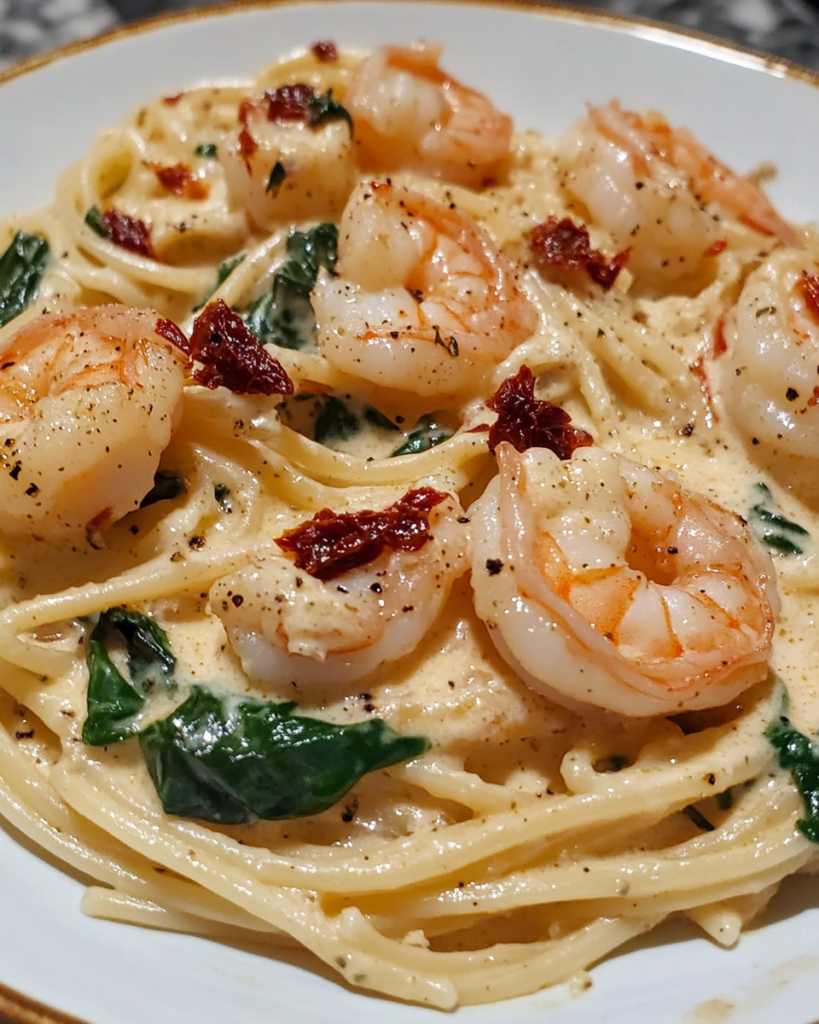
Creamy Tuscan Shrimp Pasta: 30 Amazing Comforting Plates

Posted on

Uncategorized

Difficulty

Prep time

Cooking time

Total time

Servings

Creamy Tuscan Shrimp Pasta brings together tender shrimp, silky sauce, wilted spinach, sweet tomato, garlic, parmesan, and al dente pasta within a rich skillet supper suited for relaxed family dinners or casual gatherings. Each forkful carries buttery seafood flavor balanced through savory herbs and creamy texture without feeling overly heavy.

Tuscan-inspired pasta dishes gained popularity through rustic Italian cooking traditions centered around pantry staples, seafood, fresh greens, olive oil, and aged cheese. This particular version combines restaurant-style richness alongside straightforward preparation suitable for busy weeknights. Shrimp cooks rapidly, allowing dinner preparation within roughly thirty minutes while still delivering deep flavor throughout every bite.

The sauce clings beautifully across pasta strands, while garlic and parmesan create savory depth. Spinach softens gently into the cream, adding freshness alongside vibrant color. Cherry tomatoes burst during cooking, bringing light acidity that balances the richness from dairy and cheese.

Ingredients Overview

Shrimp serves as the central protein throughout Creamy Tuscan Shrimp Pasta. Large shrimp work particularly well because they remain juicy during skillet cooking while carrying savory flavor into the sauce. Fresh or frozen shrimp both function beautifully, although thawed shrimp should receive gentle drying through paper towels before entering the skillet. Excess moisture can dilute sauce texture and prevent proper browning.

Pasta provides structure and carries the creamy sauce evenly. Fettuccine, linguine, or penne all suit this recipe beautifully. Long noodles create luxurious twirls coated through silky cream, while shorter pasta shapes trap bits of spinach, garlic, and parmesan inside every bite. Slightly firm pasta texture remains important because the noodles continue cooking briefly inside the sauce.

Heavy cream forms the base of the sauce, bringing velvety richness without becoming grainy. Parmesan contributes salty depth and helps thicken the skillet mixture naturally. Freshly grated parmesan melts far better compared with pre-shredded varieties, which often contain anti-caking powders.

Garlic and onion create aromatic savory flavor. Cherry tomatoes add gentle brightness and juicy texture, while spinach softens into the cream for freshness and color contrast. Italian seasoning ties everything together through dried herbs such as oregano and basil.

Several substitutions suit varying dietary preferences. Half-and-half creates a lighter sauce, although thickness decreases slightly. Kale can replace spinach for sturdier texture. Chicken works beautifully instead of shrimp, while gluten-free pasta adapts the dish for wheat-free dining.

Ingredients

1 pound large shrimp, peeled and deveined
12 ounces fettuccine pasta
2 tablespoons olive oil
2 tablespoons butter
4 garlic cloves, minced
1 small yellow onion, finely diced
1 cup cherry tomatoes, halved
2 cups fresh spinach
1 1/2 cups heavy cream
1 cup freshly grated parmesan cheese
1 teaspoon Italian seasoning
1/2 teaspoon paprika
1/2 teaspoon kosher salt
1/4 teaspoon black pepper
1/4 teaspoon red pepper flakes
1 tablespoon chopped fresh parsley

Step-by-Step Instructions

Fill a large pot with generously salted water and bring toward a rolling boil. Add the fettuccine and cook until slightly firm according to package directions. Reserve roughly half a cup of pasta water before draining. Set the pasta aside while preparing the sauce.

Pat the shrimp thoroughly dry using paper towels. Dry shrimp browns far better within the skillet and develops richer flavor. Sprinkle the shrimp with paprika, salt, and black pepper across both sides.

Place a large skillet across medium-high heat. Add olive oil alongside butter. Once the butter melts and begins lightly bubbling, arrange the shrimp within the skillet through a single layer. Avoid overcrowding because crowded shrimp steams rather than browns. Cook for roughly two minutes per side until pink and lightly golden. Transfer the shrimp onto a plate immediately once cooked. Overcooked shrimp develops rubbery texture rapidly.

Reduce the skillet heat toward medium. Add diced onion and cook until softened and translucent, roughly four minutes. Stir frequently so the onion cooks evenly without scorching. Add the minced garlic and stir for thirty seconds until fragrant. Garlic burns rapidly, so constant stirring remains important during this stage.

Add the cherry tomatoes alongside Italian seasoning and red pepper flakes. Cook until the tomatoes soften and release juices into the skillet. Gentle pressing using a wooden spoon helps several tomatoes burst naturally, adding brightness throughout the sauce.

Pour the heavy cream into the skillet and stir thoroughly. Allow the mixture to simmer gently for three to four minutes until slightly thickened. Avoid aggressive boiling because high heat can separate dairy sauces. Gradually stir the parmesan into the cream until fully melted and smooth.

Fold the spinach into the sauce and cook briefly until wilted. Return the cooked shrimp alongside any accumulated juices into the skillet. Add the drained pasta and toss thoroughly until every strand receives creamy coating. Splash reserved pasta water into the skillet whenever the sauce appears excessively thick. The starchy liquid helps create glossy texture while helping the sauce cling across the noodles.

Taste the sauce and adjust seasoning if necessary. Scatter chopped parsley across the finished pasta immediately before serving. Creamy Tuscan Shrimp Pasta tastes richest while served piping hot directly from the skillet.

Tips, Variations & Substitutions

Large shrimp typically deliver superior texture because smaller varieties cook excessively fast and can become tough before the sauce finishes thickening. Freshly thawed shrimp should remain refrigerated until immediately before cooking for optimal texture and flavor.

Fresh parmesan melts smoothly into the cream, creating velvety sauce consistency. Pre-packaged grated cheese frequently produces grainy texture because added starches interfere with melting. Grating cheese directly before cooking dramatically improves the final skillet sauce.

Several flavor variations suit different preferences. Crispy bacon adds smoky richness alongside the shrimp. Sun-dried tomatoes contribute concentrated savory sweetness, particularly during cooler seasons. Mushrooms also pair beautifully through earthy flavor that balances the creamy sauce.

Lighter adaptations remain possible without sacrificing flavor. Half-and-half replaces heavy cream successfully, although the sauce remains slightly thinner. Dairy-free cream alternatives based around oat or cashew products can also function beautifully. Gluten-free pasta adapts the recipe for wheat-sensitive diners.

Spice levels remain fully adjustable. Extra chili flakes create deeper warmth, while fresh basil adds brighter herbal character. A squeeze of lemon directly before serving introduces refreshing acidity that balances the richness from cream and parmesan.

Leftovers should remain refrigerated within airtight containers for roughly two days. Reheat gently across low heat with a splash of cream or broth so the sauce regains silky texture without separating.

Serving Ideas & Occasions

Creamy Tuscan Shrimp Pasta suits numerous dining occasions ranging from relaxed weeknight suppers through intimate weekend gatherings. Since preparation moves rapidly, this dish functions beautifully during busy evenings whenever comforting skillet dinners sound appealing without lengthy kitchen effort.

Garlic bread pairs beautifully alongside the creamy sauce because crusty slices soak up every bit of parmesan cream remaining within the bowl. Crisp green salad featuring balsamic vinaigrette also balances the richness through bright acidity and crunchy texture.

Roasted asparagus, zucchini, or broccoli complement the pasta particularly well during spring and summer meals. Sparkling water with lemon slices or chilled white wine such as pinot grigio pairs naturally alongside shrimp and cream-based sauces.

For casual entertaining, serve the pasta directly from a large skillet placed at the center of the table. The vibrant spinach, shrimp, and tomatoes create inviting presentation suited for family-style dining. This pasta also functions beautifully during date nights thanks to its luxurious texture and elegant appearance.

Nutritional & Health Notes

Creamy Tuscan Shrimp Pasta provides balanced nutrition through protein-rich seafood, leafy greens, dairy, and carbohydrates. Shrimp contains lean protein alongside minerals such as selenium and iodine. Since shrimp cooks rapidly, it retains tender texture without requiring heavy breading or frying.

Spinach contributes fiber, iron, and vitamin-rich greens that balance the creamy elements within the dish. Tomatoes provide natural acidity alongside antioxidants, helping brighten the overall flavor profile.

Heavy cream and parmesan create satisfying richness, although portion awareness remains helpful for diners seeking lighter meals. Smaller pasta portions paired alongside salad or roasted vegetables can create balanced dinner plates while still delivering satisfying flavor.

Whole wheat pasta increases fiber content and adds hearty texture. Reduced-sodium parmesan or lighter dairy products can slightly decrease sodium and fat levels while preserving creamy consistency.

Because the recipe relies upon seafood and dairy, proper refrigeration remains important. Leftovers should cool promptly before storage, and reheating should occur gently so the sauce maintains smooth texture without separating.

FAQs

Can frozen shrimp function within Creamy Tuscan Shrimp Pasta?

Frozen shrimp works beautifully within this recipe provided proper thawing occurs beforehand. Place frozen shrimp inside the refrigerator overnight or submerge sealed shrimp beneath cold running water until fully thawed. Thorough drying remains extremely important because excess moisture prevents browning and can thin the sauce unnecessarily.

Raw shrimp generally delivers superior texture compared with pre-cooked shrimp because cooked shrimp can become tough during reheating inside the skillet. Removing tails before cooking also simplifies serving and eating.

Seasoning the shrimp before skillet cooking helps build savory flavor layers throughout the dish. Slight caramelization across the shrimp surface creates deeper flavor that complements the creamy parmesan sauce beautifully.

Which pasta shapes pair successfully alongside this creamy sauce?

Fettuccine remains a classic choice because broad noodles carry creamy sauces beautifully across every strand. Linguine also works wonderfully alongside shrimp because its delicate texture pairs naturally with seafood.

Short pasta varieties such as penne or rigatoni function beautifully as well. Their hollow centers trap bits of spinach, garlic, and parmesan throughout every bite. Rotini creates extra texture because spirals hold the sauce effectively.

Cooking pasta until slightly firm remains important regardless of shape selection. Overcooked noodles soften excessively after combining with the hot sauce. Reserving pasta water also improves final texture because starch helps the sauce cling evenly across the noodles.

How can sauce thickness receive adjustment?

Sauce consistency depends largely upon cream simmering time and parmesan quantity. If the sauce appears thin, allow several additional simmering minutes so excess liquid reduces naturally. Additional parmesan also thickens the mixture gradually.

If the sauce becomes overly thick, reserved pasta water works beautifully for loosening the skillet mixture. Small splashes stirred gradually into the pasta create glossy texture without diluting flavor. Warm broth or milk also functions successfully.

Avoid excessively high heat because dairy sauces can separate or develop grainy texture during rapid boiling. Gentle simmering creates the smoothest consistency throughout Creamy Tuscan Shrimp Pasta.

Can chicken replace shrimp within this recipe?

Chicken functions beautifully within this creamy Tuscan-style sauce. Boneless chicken breast or thigh meat sliced into bite-sized pieces cooks rapidly and absorbs garlic, parmesan, and herb flavors effectively.

Season the chicken similarly using paprika, salt, and pepper before skillet cooking. Chicken requires slightly longer cooking time compared with shrimp, typically six through eight minutes depending upon thickness. Internal temperature should reach safe doneness before combining with the sauce.

Italian sausage also pairs wonderfully through savory richness. Vegetarian adaptations using mushrooms or roasted cauliflower create hearty alternatives while preserving the creamy Tuscan flavor profile.

Which cheeses pair successfully alongside parmesan?

Parmesan remains traditional because its salty nuttiness melts smoothly into cream sauce. Romano cheese creates sharper flavor with slightly stronger savory notes. Asiago contributes buttery richness and creamy texture.

Combining parmesan alongside mozzarella creates stretchier texture, although excessive mozzarella can create heavier sauce consistency. Soft goat cheese introduces tangy flavor that pairs surprisingly well alongside shrimp and spinach.

Freshly grated cheese consistently performs better compared with packaged shredded varieties. Anti-caking powders frequently interfere with smooth melting and can produce grainy sauce texture during cooking.

How should leftovers receive storage and reheating?

Store leftovers within airtight containers inside the refrigerator for roughly two days. Seafood pasta tastes freshest during the initial serving period, although gentle reheating still delivers satisfying texture.

Reheat the pasta slowly across low stovetop heat whenever possible. Add a splash of cream, broth, or milk while stirring frequently so the sauce regains silky consistency. Microwave reheating also functions successfully using short intervals with stirring between each interval.

Avoid prolonged reheating because shrimp toughens rapidly under excessive heat. Gentle warming preserves tenderness while preventing the cream sauce from separating.

Can preparation occur ahead of dinner service?

Several components can receive advance preparation for easier evening cooking. Shrimp can receive peeling and seasoning earlier during the day, while onion, garlic, spinach, and tomatoes can remain refrigerated inside separate containers until skillet cooking begins.

Parmesan can also receive grating ahead of time. Pasta should ideally cook shortly before serving because refrigerated cooked noodles occasionally clump together and absorb sauce unevenly.

For entertaining, the sauce base can simmer slightly ahead of dinner service. Shortly before serving, warm the sauce gently, cook the shrimp, and combine everything with freshly cooked pasta. This approach preserves creamy texture while reducing last-minute kitchen effort.

[rank_math_breadcrumb]

Creamy Tuscan Shrimp Pasta: 30 Amazing Comforting Plates

Photo of author
Author: Emma
Published:

Creamy Tuscan Shrimp Pasta brings together tender shrimp, silky sauce, wilted spinach, sweet tomato, garlic, parmesan, and al dente pasta within a rich skillet supper suited for relaxed family dinners or casual gatherings. Each forkful carries buttery seafood flavor balanced through savory herbs and creamy texture without feeling overly heavy.

Tuscan-inspired pasta dishes gained popularity through rustic Italian cooking traditions centered around pantry staples, seafood, fresh greens, olive oil, and aged cheese. This particular version combines restaurant-style richness alongside straightforward preparation suitable for busy weeknights. Shrimp cooks rapidly, allowing dinner preparation within roughly thirty minutes while still delivering deep flavor throughout every bite.

The sauce clings beautifully across pasta strands, while garlic and parmesan create savory depth. Spinach softens gently into the cream, adding freshness alongside vibrant color. Cherry tomatoes burst during cooking, bringing light acidity that balances the richness from dairy and cheese.

Ingredients Overview

Shrimp serves as the central protein throughout Creamy Tuscan Shrimp Pasta. Large shrimp work particularly well because they remain juicy during skillet cooking while carrying savory flavor into the sauce. Fresh or frozen shrimp both function beautifully, although thawed shrimp should receive gentle drying through paper towels before entering the skillet. Excess moisture can dilute sauce texture and prevent proper browning.

Pasta provides structure and carries the creamy sauce evenly. Fettuccine, linguine, or penne all suit this recipe beautifully. Long noodles create luxurious twirls coated through silky cream, while shorter pasta shapes trap bits of spinach, garlic, and parmesan inside every bite. Slightly firm pasta texture remains important because the noodles continue cooking briefly inside the sauce.

Heavy cream forms the base of the sauce, bringing velvety richness without becoming grainy. Parmesan contributes salty depth and helps thicken the skillet mixture naturally. Freshly grated parmesan melts far better compared with pre-shredded varieties, which often contain anti-caking powders.

Garlic and onion create aromatic savory flavor. Cherry tomatoes add gentle brightness and juicy texture, while spinach softens into the cream for freshness and color contrast. Italian seasoning ties everything together through dried herbs such as oregano and basil.

Several substitutions suit varying dietary preferences. Half-and-half creates a lighter sauce, although thickness decreases slightly. Kale can replace spinach for sturdier texture. Chicken works beautifully instead of shrimp, while gluten-free pasta adapts the dish for wheat-free dining.

Ingredients

1 pound large shrimp, peeled and deveined
12 ounces fettuccine pasta
2 tablespoons olive oil
2 tablespoons butter
4 garlic cloves, minced
1 small yellow onion, finely diced
1 cup cherry tomatoes, halved
2 cups fresh spinach
1 1/2 cups heavy cream
1 cup freshly grated parmesan cheese
1 teaspoon Italian seasoning
1/2 teaspoon paprika
1/2 teaspoon kosher salt
1/4 teaspoon black pepper
1/4 teaspoon red pepper flakes
1 tablespoon chopped fresh parsley

Step-by-Step Instructions

Fill a large pot with generously salted water and bring toward a rolling boil. Add the fettuccine and cook until slightly firm according to package directions. Reserve roughly half a cup of pasta water before draining. Set the pasta aside while preparing the sauce.

Pat the shrimp thoroughly dry using paper towels. Dry shrimp browns far better within the skillet and develops richer flavor. Sprinkle the shrimp with paprika, salt, and black pepper across both sides.

Place a large skillet across medium-high heat. Add olive oil alongside butter. Once the butter melts and begins lightly bubbling, arrange the shrimp within the skillet through a single layer. Avoid overcrowding because crowded shrimp steams rather than browns. Cook for roughly two minutes per side until pink and lightly golden. Transfer the shrimp onto a plate immediately once cooked. Overcooked shrimp develops rubbery texture rapidly.

Reduce the skillet heat toward medium. Add diced onion and cook until softened and translucent, roughly four minutes. Stir frequently so the onion cooks evenly without scorching. Add the minced garlic and stir for thirty seconds until fragrant. Garlic burns rapidly, so constant stirring remains important during this stage.

Add the cherry tomatoes alongside Italian seasoning and red pepper flakes. Cook until the tomatoes soften and release juices into the skillet. Gentle pressing using a wooden spoon helps several tomatoes burst naturally, adding brightness throughout the sauce.

Pour the heavy cream into the skillet and stir thoroughly. Allow the mixture to simmer gently for three to four minutes until slightly thickened. Avoid aggressive boiling because high heat can separate dairy sauces. Gradually stir the parmesan into the cream until fully melted and smooth.

Fold the spinach into the sauce and cook briefly until wilted. Return the cooked shrimp alongside any accumulated juices into the skillet. Add the drained pasta and toss thoroughly until every strand receives creamy coating. Splash reserved pasta water into the skillet whenever the sauce appears excessively thick. The starchy liquid helps create glossy texture while helping the sauce cling across the noodles.

Taste the sauce and adjust seasoning if necessary. Scatter chopped parsley across the finished pasta immediately before serving. Creamy Tuscan Shrimp Pasta tastes richest while served piping hot directly from the skillet.

Tips, Variations & Substitutions

Large shrimp typically deliver superior texture because smaller varieties cook excessively fast and can become tough before the sauce finishes thickening. Freshly thawed shrimp should remain refrigerated until immediately before cooking for optimal texture and flavor.

Fresh parmesan melts smoothly into the cream, creating velvety sauce consistency. Pre-packaged grated cheese frequently produces grainy texture because added starches interfere with melting. Grating cheese directly before cooking dramatically improves the final skillet sauce.

Several flavor variations suit different preferences. Crispy bacon adds smoky richness alongside the shrimp. Sun-dried tomatoes contribute concentrated savory sweetness, particularly during cooler seasons. Mushrooms also pair beautifully through earthy flavor that balances the creamy sauce.

Lighter adaptations remain possible without sacrificing flavor. Half-and-half replaces heavy cream successfully, although the sauce remains slightly thinner. Dairy-free cream alternatives based around oat or cashew products can also function beautifully. Gluten-free pasta adapts the recipe for wheat-sensitive diners.

Spice levels remain fully adjustable. Extra chili flakes create deeper warmth, while fresh basil adds brighter herbal character. A squeeze of lemon directly before serving introduces refreshing acidity that balances the richness from cream and parmesan.

Leftovers should remain refrigerated within airtight containers for roughly two days. Reheat gently across low heat with a splash of cream or broth so the sauce regains silky texture without separating.

Serving Ideas & Occasions

Creamy Tuscan Shrimp Pasta suits numerous dining occasions ranging from relaxed weeknight suppers through intimate weekend gatherings. Since preparation moves rapidly, this dish functions beautifully during busy evenings whenever comforting skillet dinners sound appealing without lengthy kitchen effort.

Garlic bread pairs beautifully alongside the creamy sauce because crusty slices soak up every bit of parmesan cream remaining within the bowl. Crisp green salad featuring balsamic vinaigrette also balances the richness through bright acidity and crunchy texture.

Roasted asparagus, zucchini, or broccoli complement the pasta particularly well during spring and summer meals. Sparkling water with lemon slices or chilled white wine such as pinot grigio pairs naturally alongside shrimp and cream-based sauces.

For casual entertaining, serve the pasta directly from a large skillet placed at the center of the table. The vibrant spinach, shrimp, and tomatoes create inviting presentation suited for family-style dining. This pasta also functions beautifully during date nights thanks to its luxurious texture and elegant appearance.

Nutritional & Health Notes

Creamy Tuscan Shrimp Pasta provides balanced nutrition through protein-rich seafood, leafy greens, dairy, and carbohydrates. Shrimp contains lean protein alongside minerals such as selenium and iodine. Since shrimp cooks rapidly, it retains tender texture without requiring heavy breading or frying.

Spinach contributes fiber, iron, and vitamin-rich greens that balance the creamy elements within the dish. Tomatoes provide natural acidity alongside antioxidants, helping brighten the overall flavor profile.

Heavy cream and parmesan create satisfying richness, although portion awareness remains helpful for diners seeking lighter meals. Smaller pasta portions paired alongside salad or roasted vegetables can create balanced dinner plates while still delivering satisfying flavor.

Whole wheat pasta increases fiber content and adds hearty texture. Reduced-sodium parmesan or lighter dairy products can slightly decrease sodium and fat levels while preserving creamy consistency.

Because the recipe relies upon seafood and dairy, proper refrigeration remains important. Leftovers should cool promptly before storage, and reheating should occur gently so the sauce maintains smooth texture without separating.

FAQs

Can frozen shrimp function within Creamy Tuscan Shrimp Pasta?

Frozen shrimp works beautifully within this recipe provided proper thawing occurs beforehand. Place frozen shrimp inside the refrigerator overnight or submerge sealed shrimp beneath cold running water until fully thawed. Thorough drying remains extremely important because excess moisture prevents browning and can thin the sauce unnecessarily.

Raw shrimp generally delivers superior texture compared with pre-cooked shrimp because cooked shrimp can become tough during reheating inside the skillet. Removing tails before cooking also simplifies serving and eating.

Seasoning the shrimp before skillet cooking helps build savory flavor layers throughout the dish. Slight caramelization across the shrimp surface creates deeper flavor that complements the creamy parmesan sauce beautifully.

Which pasta shapes pair successfully alongside this creamy sauce?

Fettuccine remains a classic choice because broad noodles carry creamy sauces beautifully across every strand. Linguine also works wonderfully alongside shrimp because its delicate texture pairs naturally with seafood.

Short pasta varieties such as penne or rigatoni function beautifully as well. Their hollow centers trap bits of spinach, garlic, and parmesan throughout every bite. Rotini creates extra texture because spirals hold the sauce effectively.

Cooking pasta until slightly firm remains important regardless of shape selection. Overcooked noodles soften excessively after combining with the hot sauce. Reserving pasta water also improves final texture because starch helps the sauce cling evenly across the noodles.

How can sauce thickness receive adjustment?

Sauce consistency depends largely upon cream simmering time and parmesan quantity. If the sauce appears thin, allow several additional simmering minutes so excess liquid reduces naturally. Additional parmesan also thickens the mixture gradually.

If the sauce becomes overly thick, reserved pasta water works beautifully for loosening the skillet mixture. Small splashes stirred gradually into the pasta create glossy texture without diluting flavor. Warm broth or milk also functions successfully.

Avoid excessively high heat because dairy sauces can separate or develop grainy texture during rapid boiling. Gentle simmering creates the smoothest consistency throughout Creamy Tuscan Shrimp Pasta.

Can chicken replace shrimp within this recipe?

Chicken functions beautifully within this creamy Tuscan-style sauce. Boneless chicken breast or thigh meat sliced into bite-sized pieces cooks rapidly and absorbs garlic, parmesan, and herb flavors effectively.

Season the chicken similarly using paprika, salt, and pepper before skillet cooking. Chicken requires slightly longer cooking time compared with shrimp, typically six through eight minutes depending upon thickness. Internal temperature should reach safe doneness before combining with the sauce.

Italian sausage also pairs wonderfully through savory richness. Vegetarian adaptations using mushrooms or roasted cauliflower create hearty alternatives while preserving the creamy Tuscan flavor profile.

Which cheeses pair successfully alongside parmesan?

Parmesan remains traditional because its salty nuttiness melts smoothly into cream sauce. Romano cheese creates sharper flavor with slightly stronger savory notes. Asiago contributes buttery richness and creamy texture.

Combining parmesan alongside mozzarella creates stretchier texture, although excessive mozzarella can create heavier sauce consistency. Soft goat cheese introduces tangy flavor that pairs surprisingly well alongside shrimp and spinach.

Freshly grated cheese consistently performs better compared with packaged shredded varieties. Anti-caking powders frequently interfere with smooth melting and can produce grainy sauce texture during cooking.

How should leftovers receive storage and reheating?

Store leftovers within airtight containers inside the refrigerator for roughly two days. Seafood pasta tastes freshest during the initial serving period, although gentle reheating still delivers satisfying texture.

Reheat the pasta slowly across low stovetop heat whenever possible. Add a splash of cream, broth, or milk while stirring frequently so the sauce regains silky consistency. Microwave reheating also functions successfully using short intervals with stirring between each interval.

Avoid prolonged reheating because shrimp toughens rapidly under excessive heat. Gentle warming preserves tenderness while preventing the cream sauce from separating.

Can preparation occur ahead of dinner service?

Several components can receive advance preparation for easier evening cooking. Shrimp can receive peeling and seasoning earlier during the day, while onion, garlic, spinach, and tomatoes can remain refrigerated inside separate containers until skillet cooking begins.

Parmesan can also receive grating ahead of time. Pasta should ideally cook shortly before serving because refrigerated cooked noodles occasionally clump together and absorb sauce unevenly.

For entertaining, the sauce base can simmer slightly ahead of dinner service. Shortly before serving, warm the sauce gently, cook the shrimp, and combine everything with freshly cooked pasta. This approach preserves creamy texture while reducing last-minute kitchen effort.

Name

Lorem ipsum dolor sit amet, consectetur adipiscing elit. Suspendisse varius enim in eros elementum tristique. Duis cursus, mi quis viverra ornare, eros dolor interdum nulla, ut commodo diam libero vitae erat.

You Might Also Like...

Turkey and Zucchini Stuffed Bell Peppers: 5 Wonderful Happy

Turkey and Zucchini Stuffed Bell Peppers: 5 Wonderful Happy

Ground Beef Tacos with Homemade Seasoning: 5 Authentic, Thrilled Plates

Ground Beef Tacos with Homemade Seasoning: 5 Authentic, Thrilled Plates

Baked Lemon Garlic Salmon with Asparagus: 7 Authentic Devoted Plates

Baked Lemon Garlic Salmon with Asparagus: 7 Authentic Devoted Plates

Slow Cooker Chicken Tortilla Soup: 7 Amazing Happy Bowls

Slow Cooker Chicken Tortilla Soup: 7 Amazing Happy Bowls

Tags:

You might also like these recipes

Leave a Comment