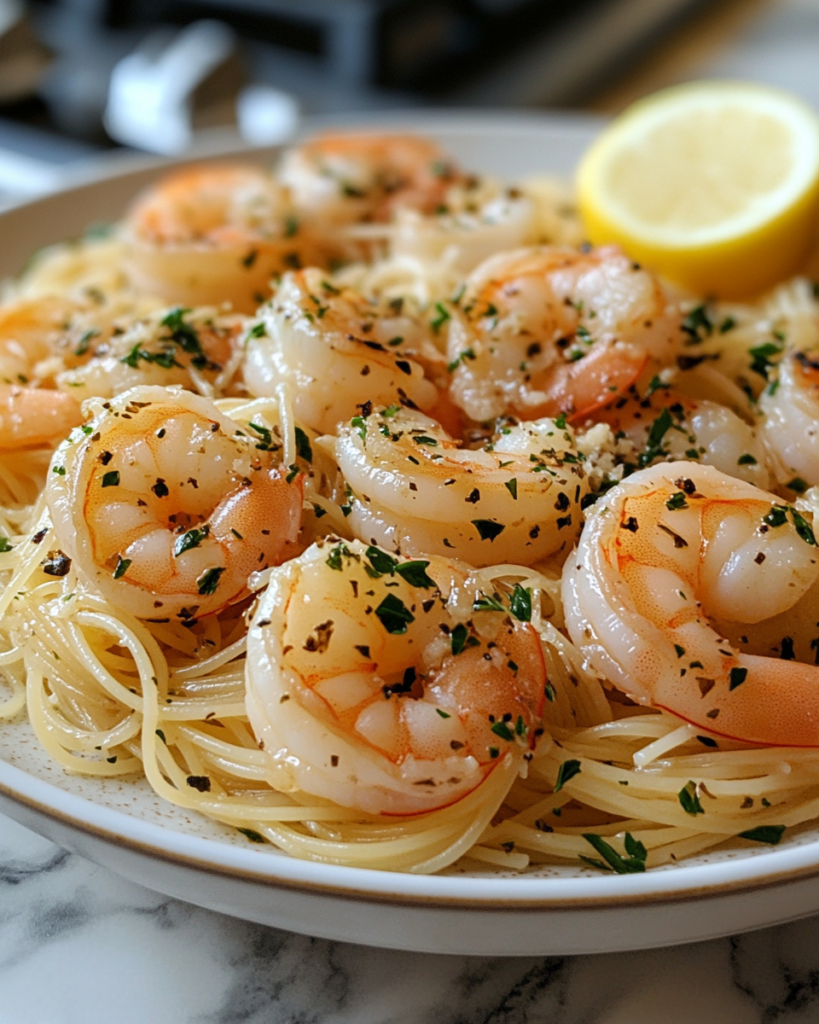
Garlic Lemon Shrimp Angel Hair is a light skillet pasta featuring tender shrimp, thin strands of pasta, and a citrus garlic sauce that coats every bite. The dish carries a bright profile from lemon juice balanced with savory garlic and olive oil, creating a clean seafood pasta suited for weeknight dining or casual gatherings.
This preparation centers on quick-cooking shrimp and delicate angel hair pasta, both finishing at nearly the same time for smooth coordination in a single pan. The sauce forms directly in the skillet, where pasta water, olive oil, and citrus combine into a silky coating. Fresh herbs finish the dish, adding aroma without overpowering the main components.
The overall character leans toward lightness rather than heaviness. Each component keeps its own texture while blending through the sauce. Shrimp remain tender when cooked briefly, and the pasta absorbs the lemon-garlic mixture without becoming dense. The result is a balanced seafood pasta that feels fresh yet satisfying.
Ingredients Overview

Shrimp serves as the central protein in this dish. Medium or large shrimp work best since they retain a juicy texture during quick cooking. Peeled and deveined shrimp reduce preparation time and allow the garlic lemon sauce to coat each piece evenly. Overcooking shrimp leads to a firm texture, so timing plays a key role in maintaining tenderness.
Angel hair pasta is selected for its fine structure and fast cooking time. The thin strands absorb the lemon-garlic sauce efficiently, allowing flavor to cling without weighing down the dish. Because angel hair cooks in only a few minutes, coordination with the shrimp and sauce is important to maintain texture balance.
Garlic provides the savory foundation. When gently sautéed in olive oil, it releases aroma and depth without bitterness. Lemon juice introduces brightness, cutting through the richness of oil and shrimp. Lemon zest adds an extra layer of citrus fragrance that strengthens the overall profile.
Olive oil acts as the base of the sauce, carrying both garlic and lemon throughout the skillet. A small amount of butter can be added for a smoother finish, though the dish remains light without it. Pasta water contributes natural starch, helping the sauce cling to noodles.
Fresh parsley rounds out the flavor with a clean herbal note. Salt and black pepper provide basic seasoning, while optional red pepper flakes can introduce mild heat. All elements combine to form a cohesive skillet pasta that highlights seafood and citrus in a balanced way.
Ingredients
250 g angel hair pasta
450 g medium shrimp, peeled and deveined
3 tablespoons olive oil
2 tablespoons butter
4 garlic cloves, minced
1 lemon, juiced
1 teaspoon lemon zest
1/2 teaspoon salt
1/4 teaspoon black pepper
1/4 teaspoon red pepper flakes (optional)
1/4 cup chopped fresh parsley
1/2 cup pasta cooking water
Step-by-Step Instructions

A large pot of salted water is brought to a steady boil. Angel hair pasta is placed into the water and stirred gently to prevent clumping. Cooking continues until the strands reach a tender texture while still retaining slight firmness. A portion of cooking water is reserved before draining.
A wide skillet is placed over medium heat. Olive oil and butter are added, allowing the butter to melt into the oil. Minced garlic is introduced and stirred gently until fragrant, taking care to avoid browning.
Shrimp are added in a single layer across the skillet surface. Cooking continues briefly until shrimp turn opaque and form a light curl shape. Overcooking is avoided to preserve tenderness. Once cooked, shrimp are temporarily moved aside within the pan.
Lemon juice and zest are poured into the skillet, combining with oil and garlic to form a light sauce base. Reserved pasta water is added gradually, helping emulsify the mixture into a smooth coating. Salt, black pepper, and optional red pepper flakes are stirred in to distribute seasoning evenly.
Drained angel hair pasta is added directly into the skillet. Tongs are used to gently toss strands through the sauce so each piece absorbs flavor. Shrimp are returned fully into the mixture, allowing final blending over low heat.
Chopped parsley is sprinkled across the top, adding freshness and color. The skillet is removed from heat once sauce consistency lightly coats the pasta without pooling at the bottom.
Tips, Variations & Substitutions
Shrimp size can be adjusted depending on preference. Smaller shrimp cook faster, while larger shrimp provide a meatier bite. Either choice should be monitored closely during cooking to avoid toughness.
Angel hair pasta may be replaced with thin spaghetti if desired. Slight adjustments in boiling time may be required depending on pasta thickness. Maintaining slight firmness helps the sauce adhere properly.
Lemon intensity can be adjusted through juice and zest ratio. Additional zest increases aroma without raising acidity. Red pepper flakes can be omitted for a milder profile or increased for sharper heat.
Butter can be excluded for a lighter sauce or increased slightly for a richer texture. Olive oil remains the primary fat source, carrying the citrus and garlic through the dish.
Fresh parsley can be replaced with basil or dill depending on preference. Each herb introduces a different aromatic direction while maintaining freshness.
Serving Ideas & Occasions
Garlic Lemon Shrimp Angel Hair fits well as a main dish for casual evening meals or light gatherings. The citrus-forward profile pairs naturally with simple side dishes that do not overpower the skillet pasta.
Steamed vegetables or a light green salad complement the dish by adding texture contrast. Bread with a crisp crust also pairs well, allowing any remaining sauce to be enjoyed alongside the pasta.
This dish suits warmer seasons due to its light and citrus-driven character, though it also works in cooler periods when a lighter meal is preferred. It serves efficiently for shared plates or individual servings.
Nutritional & Health Notes
Shrimp provides lean protein with minimal fat content, supporting a balanced seafood-based meal. It also contributes key minerals such as selenium and iodine, while maintaining a light caloric profile.
Angel hair pasta supplies carbohydrates that serve as an energy source. Portion control allows flexibility depending on dietary needs. Whole wheat variations can slightly increase fiber content if preferred.
Olive oil contributes heart-healthy fats, while lemon juice adds flavor without increasing calorie density. Garlic contains natural compounds that contribute to overall dietary variety.
This dish remains balanced when paired with vegetables or leafy greens, creating a meal that combines protein, carbohydrates, and fats in moderate proportions.
FAQs
Can frozen shrimp be used in this recipe?
Frozen shrimp can be used effectively after proper thawing. Placing shrimp in cold water allows gradual defrosting while preserving texture. Excess moisture should be removed before cooking to prevent dilution of the skillet sauce. Once thawed, shrimp behave similarly to fresh shrimp during quick sautéing and absorb garlic lemon flavor well.
What type of pasta works besides angel hair?
Thin spaghetti or capellini can replace angel hair without major changes in cooking time. Slightly thicker pasta requires additional boiling time and may absorb sauce differently. The key factor is selecting a pasta that allows light coating rather than heavy sauce absorption, maintaining the dish’s bright profile.
Can this dish be prepared without butter?
Butter can be omitted entirely if a lighter profile is preferred. Olive oil alone provides sufficient fat for sautéing garlic and shrimp. The sauce will remain cohesive when pasta water is added, though butter contributes a smoother finish if included.
How is shrimp kept tender during cooking?
Shrimp should be cooked briefly over medium heat until they turn opaque and form a loose curl shape. Removing shrimp from heat immediately after cooking prevents firmness. Residual heat in the skillet continues gentle cooking during final mixing with pasta.
Can additional vegetables be included?
Yes, vegetables such as spinach, cherry tomatoes, or zucchini can be added. Spinach wilts quickly into the sauce, while tomatoes introduce mild acidity. Vegetables should be added based on cooking time so they retain appropriate texture within the skillet.
What adjusts sauce thickness?
Pasta cooking water controls sauce consistency. Adding small amounts gradually allows starch to bind oil and lemon juice into a light coating. Excess liquid results in a thinner sauce, while reduced liquid produces a thicker coating on pasta strands.
Can this dish be served cold?
This pasta can be chilled and served at a cool temperature, though texture changes slightly as sauce thickens. A small amount of olive oil or lemon juice can refresh the dish before serving after refrigeration.


