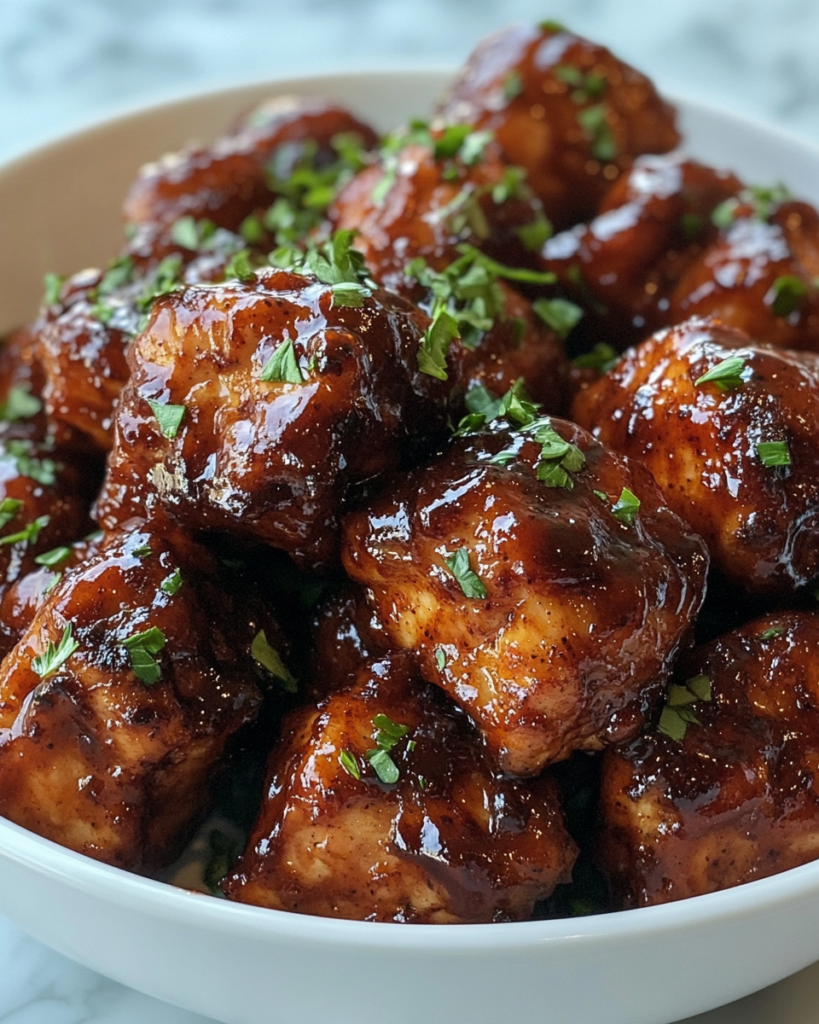
BBQ Air Fryer Chicken Bites bring together smoky barbecue flavor and a crisp golden coating in every bite-sized piece. Cooked in the air fryer, the chicken turns tender inside while the outside develops a lightly crisp texture that pairs well with a thick, glossy barbecue glaze.
This dish works well for quick dinners, party platters, or meal prep. The cooking method keeps things straightforward while still delivering rich flavor and satisfying texture in a short amount of time.
Each piece is coated, air-fried until golden, then tossed in barbecue sauce so the flavor clings to every corner. The result is juicy chicken bites with a sticky finish that feels bold and satisfying without needing deep frying or complicated steps.
Ingredients Overview
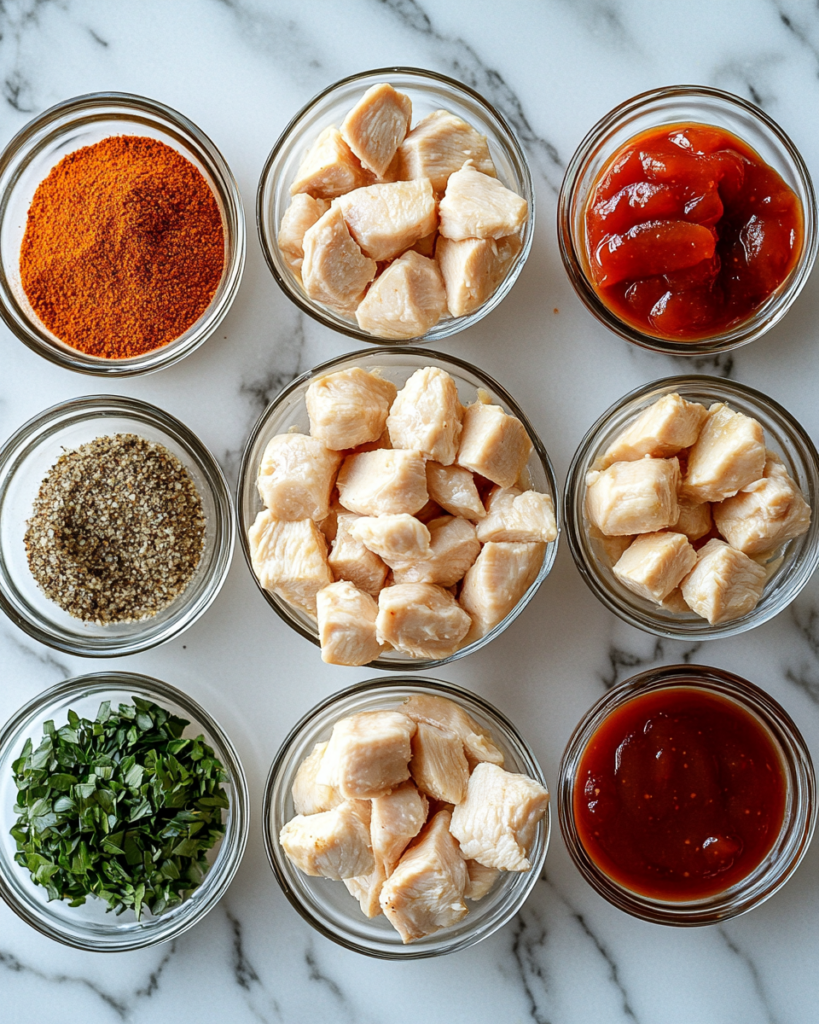
Boneless chicken breast is the base of this recipe, offering a lean protein that cooks quickly in the air fryer. When cut into bite-sized cubes, it cooks evenly and develops a tender texture inside while the outside gets lightly crisp.
A simple coating of flour, cornstarch, and seasoning helps create structure and browning. Cornstarch plays a key role by helping the surface dry slightly during cooking, which supports that crisp finish when air-fried.
Egg acts as the binding layer, helping the coating stick evenly to each piece. Without it, the flour mixture would not cling well, and the texture would be uneven after cooking.
Garlic powder, smoked paprika, salt, and black pepper bring depth and a mild smoky note that pairs naturally with barbecue sauce. Smoked paprika is especially important because it adds a grill-like flavor without needing an actual grill.
Barbecue sauce is the finishing element. It coats the hot chicken bites right after cooking, allowing it to thicken slightly on contact. This creates a glossy, sticky layer that clings to each piece without sliding off.
A small amount of oil spray helps the coating crisp in the air fryer. It is used lightly, just enough to support browning without making the chicken greasy.
Together, these ingredients form a balanced combination of texture and flavor: crisp edges, tender centers, and a rich barbecue coating that ties everything together.
Ingredients
1 ½ pounds boneless chicken breast, cut into bite-sized cubes
1 cup all-purpose flour
½ cup cornstarch
1 teaspoon garlic powder
1 teaspoon smoked paprika
1 teaspoon salt
½ teaspoon black pepper
2 large eggs
1 tablespoon water
Cooking oil spray
¾ cup barbecue sauce
1 tablespoon honey (optional, for added thickness)
1 teaspoon apple cider vinegar
Step-by-Step Instructions
Start by cutting the chicken into evenly sized bite pieces. Keeping the size consistent helps all pieces cook at the same rate, avoiding dry edges or undercooked centers.
In one bowl, mix flour, cornstarch, garlic powder, smoked paprika, salt, and black pepper. This dry mixture forms the coating that will give the chicken its light crust after air frying.
In a second bowl, whisk eggs with water until smooth. The egg mixture helps the dry coating stick to each chicken piece evenly.
Dip each chicken piece into the egg mixture, then coat it in the seasoned flour mixture. Press lightly so the coating sticks well. Place coated pieces on a tray while finishing the batch.
Preheat the air fryer to 380°F. Lightly spray the basket with oil spray so the chicken does not stick during cooking.
Arrange chicken pieces in a single layer in the air fryer basket. Avoid stacking, as overlapping can prevent even browning and reduce crisp texture.
Cook for 10–12 minutes, flipping halfway through. Lightly spray the tops again after flipping to help them brown evenly. The chicken is ready when the exterior is golden and the internal temperature reaches 165°F.
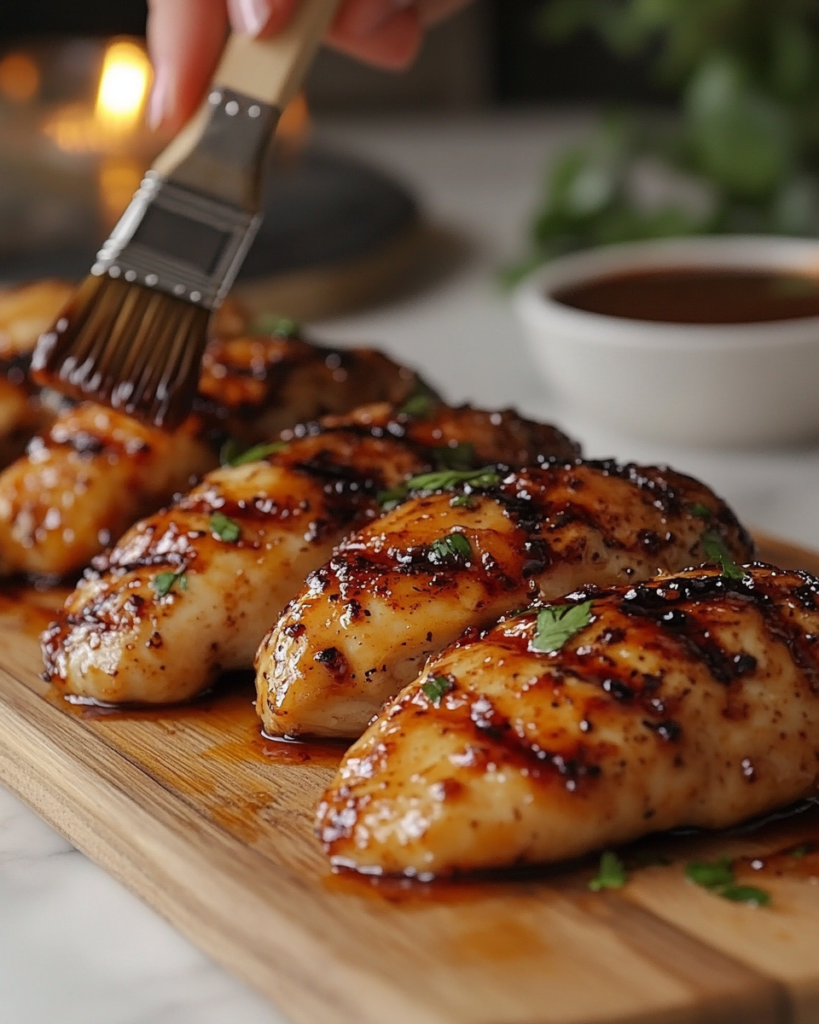
While the chicken cooks, warm the barbecue sauce in a small pan over low heat. Stir in honey and apple cider vinegar if using. This creates a slightly thicker glaze with balanced sweetness and tang.
Once the chicken is done, transfer it to a bowl. Pour warm barbecue sauce over the hot chicken pieces and toss gently until evenly coated. The heat helps the sauce cling and thicken slightly on contact.
Serve immediately while the coating is still slightly crisp and the sauce is glossy.
Tips, Variations & Substitutions
Cutting the chicken into similar sizes is one of the most important steps for even cooking. Uneven pieces may result in some being dry while others are underdone.
For a slightly thicker coating, let the breaded chicken rest for 5–10 minutes before air frying. This helps the coating set and adhere better during cooking.
Chicken thighs can be used instead of breast meat for a juicier result. They contain more fat, which keeps the interior moist even after high-heat cooking.
For extra heat, mix a small pinch of chili powder or cayenne into the flour mixture. This adds warmth without overpowering the barbecue flavor.
Different barbecue sauces can change the final taste significantly. Smoky sauces create deeper flavor, while sweeter versions give a glaze-like finish.
If preparing ahead, cook the chicken without sauce and store it separately. Reheat in the air fryer before tossing in warm barbecue sauce to keep texture intact.
Serving Ideas & Occasions
BBQ Air Fryer Chicken Bites work well as a main dish served with rice, roasted vegetables, or mashed potatoes. The sauce pairs especially well with simple sides that balance its bold flavor.
They also fit well on appetizer trays for gatherings. Toothpicks or small skewers make them easy to serve in bite-sized portions.
For casual meals, they can be wrapped in tortillas with slaw or served over salad for a lighter option.
Cold drinks like iced tea, lemonade, or sparkling water pair nicely with the smoky sweetness of the barbecue glaze.
This dish is often used for quick dinners, game nights, or weekend gatherings where fast cooking and strong flavor are both important.
Nutritional & Health Notes
Chicken breast provides lean protein that supports balanced meals without heavy fat content. Air frying reduces the need for deep oil while still giving a crisp texture.
The flour and cornstarch coating adds carbohydrates that help create structure and browning, but the portion remains moderate per serving.
Barbecue sauce adds sugar and sodium, so portion control plays a role in keeping the dish balanced. Choosing a sauce with lower sugar can slightly reduce overall sweetness.
Using an air fryer helps reduce added fats compared to traditional frying methods, making the dish lighter while still flavorful.
When paired with vegetables or whole grains, this recipe fits well into a balanced eating pattern.
FAQs
Can I use chicken thighs instead of chicken breast?
Chicken thighs work very well in this recipe and often result in a juicier texture. Because thighs contain more natural fat, they stay tender even after air frying at higher temperatures. Cut them into similar bite-sized pieces so they cook evenly. The cooking time may increase slightly by a few minutes depending on thickness. Always check that the internal temperature reaches 165°F before coating in barbecue sauce. The final flavor tends to be richer compared to lean chicken breast.
Why is cornstarch used in the coating?
Cornstarch helps create a lighter and crisp outer layer when combined with flour. It reduces moisture on the surface of the chicken, allowing the coating to brown more effectively in the air fryer. Without cornstarch, the coating may turn denser and less crisp. It also helps the seasoning adhere more evenly to each piece. This ingredient plays a subtle but important role in achieving the desired texture without deep frying.
Can I make this recipe without eggs?
Yes, there are alternatives to eggs if needed. Milk or buttermilk can be used as a substitute for the binding step. These liquids still help the flour mixture stick to the chicken. Another option is using a mixture of flour and water to form a light batter. The texture may differ slightly, but the chicken will still develop a coated exterior when air fried properly.
How do I keep the chicken crispy after adding barbecue sauce?
To maintain texture, toss the chicken in warm barbecue sauce right before serving. The heat helps the sauce cling without soaking into the coating too quickly. Avoid letting the coated chicken sit too long before serving. If preparing ahead, keep sauce separate and combine just before eating. A thicker barbecue sauce also helps maintain a better coating on each piece.
Can I bake these chicken bites instead of using an air fryer?
Yes, baking is possible. Preheat the oven to 400°F and place the coated chicken on a parchment-lined baking sheet. Lightly spray with oil and bake for about 18–22 minutes, flipping halfway through. The texture will be slightly less crisp than air frying, but still flavorful. Make sure the chicken reaches a safe internal temperature before coating with barbecue sauce.
What type of barbecue sauce works best?
A thicker barbecue sauce works best because it clings better to the chicken. Smoky sauces add depth, while sweeter versions create a glaze-like finish. Spicy barbecue sauces can also be used for added heat. If the sauce is too thin, simmer it briefly to reduce excess liquid before coating the chicken.
Can I prepare these chicken bites ahead of time?
Yes, partial preparation works well. You can coat the chicken pieces and store them in the refrigerator for a few hours before cooking. For best texture, cook them just before serving and add barbecue sauce at the end. Fully cooked chicken bites can also be reheated in the air fryer to restore some crispness before tossing in fresh sauce.


