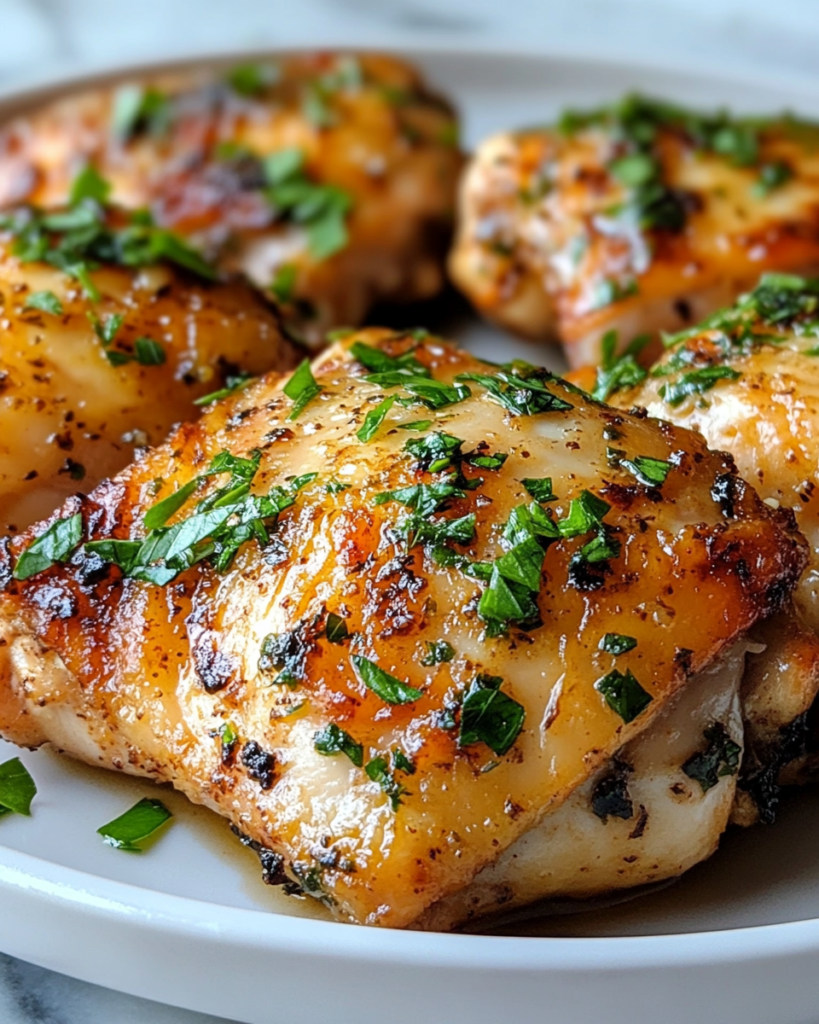
Garlic Herb Baked Chicken Thighs 7 Quick Aromatic Comforting

Posted on

Chicken

Difficulty

Prep time

Cooking time

Total time

Servings

Garlic Herb Baked Chicken Thighs bring together roasted poultry, garlic infusion, and dried herb seasoning in a single oven-baked preparation. The result is tender chicken with crisp skin and a fragrant surface coating that develops during roasting.

This preparation relies on steady oven heat and a balanced seasoning blend that penetrates the meat during resting and baking. The process focuses on even coating, controlled heat, and proper resting after baking so the texture remains juicy and firm.

The dish fits well into routine home cooking because it requires minimal hands-on steps while still producing rich flavor through simple oven roasting. Garlic and herbs form the main flavor profile, while olive oil helps distribute seasoning evenly and supports browning on the surface.


Ingredients Overview
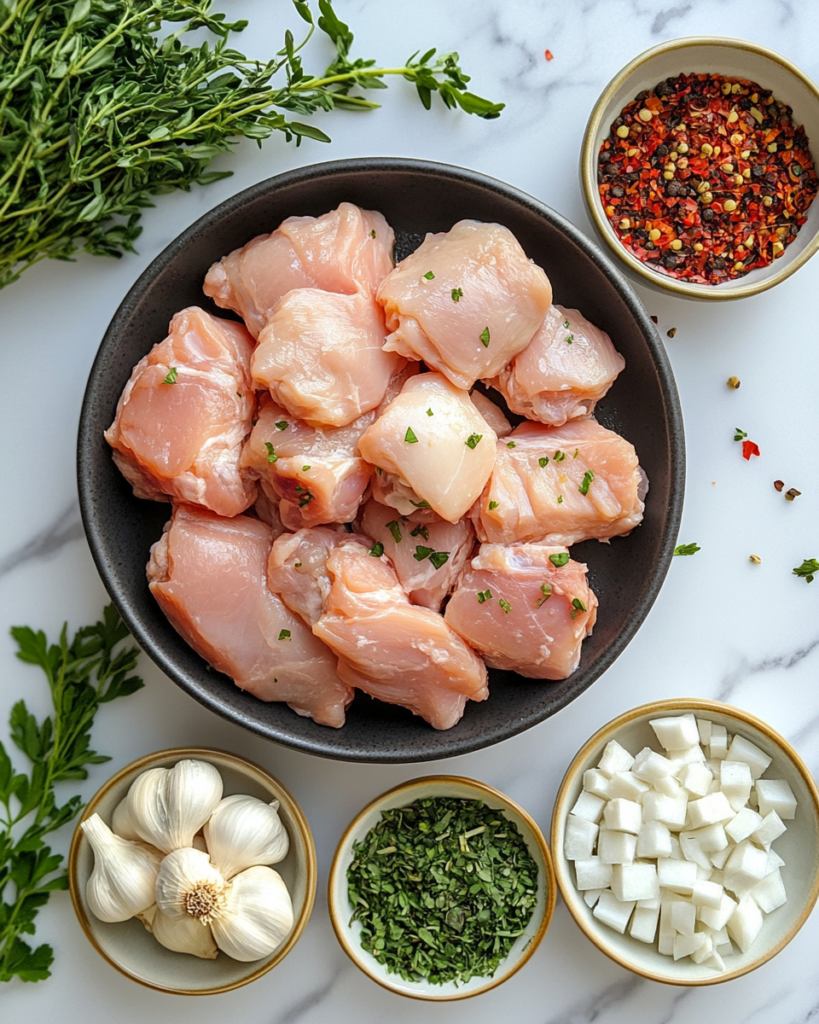
Chicken thighs form the foundation of this dish because they remain tender during oven roasting due to higher fat content compared with lean cuts. Bone-in and skin-on pieces are preferred since the bone supports heat distribution and the skin develops a roasted surface during baking.

Garlic adds a strong aromatic base. Fresh cloves release flavor when mixed with oil and herbs, allowing seasoning to coat the chicken evenly. Dried herbs such as thyme, rosemary, and oregano contribute earthy and slightly floral notes that balance the sharpness of garlic.

Olive oil plays a structural role in the seasoning mixture. It helps herbs and garlic adhere to the chicken surface while also assisting browning during oven exposure. Salt and black pepper are essential for seasoning balance, enhancing natural poultry flavor without overpowering it.

Paprika adds mild warmth and subtle color development on the skin during baking. Lemon juice can be included for light acidity, which helps balance the richness of chicken thighs and oil. Butter can also be added in small amounts for additional richness, although olive oil alone works effectively.

Ingredient substitutions can be made depending on availability. Fresh herbs can replace dried ones using a higher volume ratio, while avocado oil can replace olive oil if desired. Chicken drumsticks may be used instead of thighs with adjusted baking duration.


Ingredients

6 bone-in chicken thighs, skin-on
3 tablespoons olive oil
5 garlic cloves, minced
1 teaspoon dried thyme
1 teaspoon dried rosemary
1 teaspoon dried oregano
1 teaspoon paprika
1 teaspoon salt
1/2 teaspoon black pepper
1 tablespoon lemon juice
1 tablespoon unsalted butter, optional
Fresh parsley for finishing


Step-by-Step Instructions
Begin by preparing the oven environment. Set the oven to 400°F (205°C) and allow it to fully reach temperature before placing the chicken inside. A properly heated oven supports even roasting and consistent skin texture.

Pat chicken thighs dry using paper towels. Removing surface moisture is important because excess moisture prevents browning and can lead to steaming rather than roasting. Place the dried chicken pieces in a large mixing bowl.

In a separate bowl, combine olive oil, minced garlic, thyme, rosemary, oregano, paprika, salt, black pepper, and lemon juice. Stir until the mixture forms a uniform seasoning paste. The oil should fully distribute the herbs and garlic.

Coat each chicken thigh thoroughly with the seasoning mixture. Use hands or a spoon to spread seasoning under the skin when possible, allowing deeper flavor penetration. Place seasoned chicken on a baking tray lined with parchment paper or a lightly greased roasting pan.

Arrange chicken pieces with space between them. Proper spacing allows hot air circulation, which supports even browning across all surfaces. Avoid stacking or overlapping pieces.

Place the tray in the oven and bake for approximately 35 to 45 minutes. Cooking duration may vary depending on thigh size. During baking, the skin will gradually turn golden and edges will begin to crisp.

Check internal doneness using a thermometer inserted into the thickest section of the meat. The safe internal temperature for poultry is 165°F (74°C). If a thermometer is not available, cut into the thickest piece and check that juices run clear and meat appears opaque.

For additional surface crisping, switch the oven to broil mode for 2 to 3 minutes at the end of baking. Watch carefully during this step to avoid over-browning.

Remove chicken from oven and allow it to rest for 5 to 10 minutes. Resting allows internal juices to redistribute throughout the meat, supporting tenderness and moisture retention.

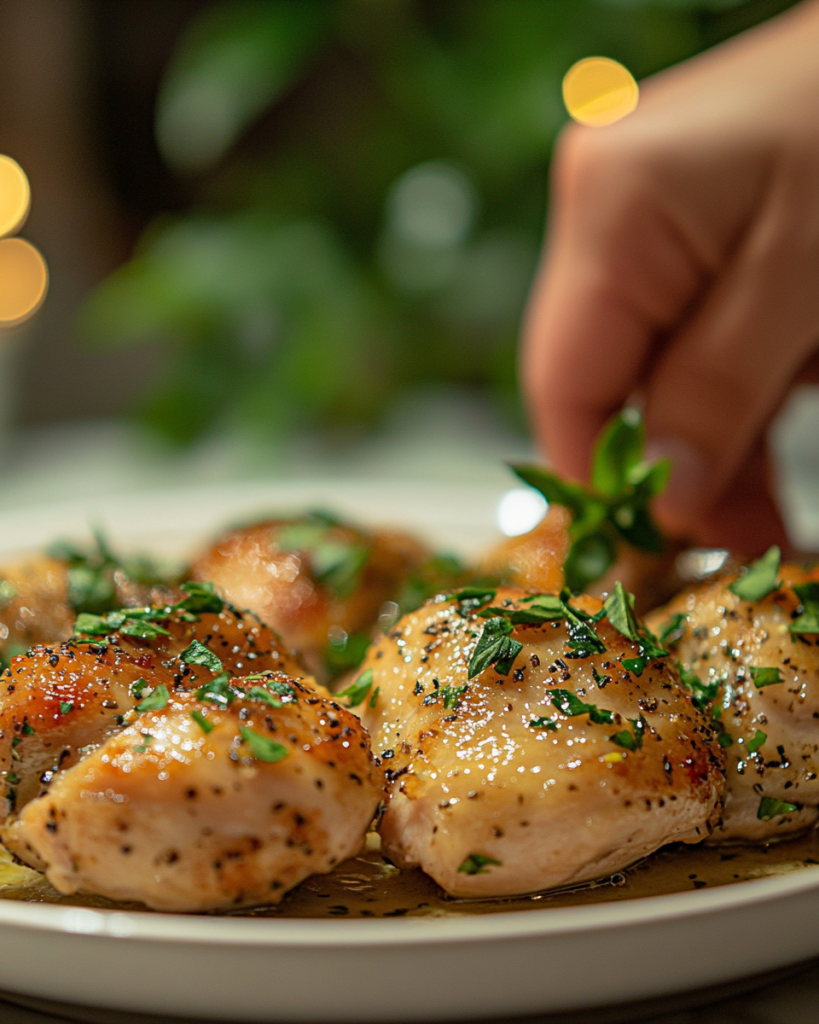
Optional butter can be brushed over the surface immediately after baking for added richness. Sprinkle fresh parsley before serving for mild herbal brightness.


Tips, Variations & Substitutions

Drying chicken thoroughly before seasoning remains one of the most important steps for achieving crisp skin. Moisture on the surface can delay browning and affect texture.

For stronger herb presence, increase rosemary or thyme slightly while keeping oregano balanced. Garlic intensity can also be adjusted depending on preference, though excessive garlic may dominate the herbal profile.

Smoked paprika can replace standard paprika for deeper flavor with light smokiness. Chili flakes can be added for mild heat without altering structure of the dish.

Chicken drumsticks or split chicken breasts can replace thighs. Drumsticks require similar baking duration, while larger breast cuts may require additional oven duration to reach safe internal temperature.

A dairy-free version simply omits butter finishing. Olive oil alone provides sufficient roasting performance and flavor balance.

For citrus variation, orange zest can replace lemon juice, adding subtle sweetness to the seasoning base.


Serving Ideas & Occasions

Garlic herb baked chicken thighs pair well with roasted vegetables such as carrots, potatoes, or zucchini. The roasted drippings from chicken can lightly flavor accompanying vegetables when baked in the same tray.

Rice or quinoa can serve as a neutral base that absorbs seasoning oils and juices. Mashed potatoes also complement the texture contrast between crisp chicken skin and soft starch.

This dish fits into weeknight dinner preparation due to its straightforward baking process and minimal active cooking steps. It also works well for batch cooking, since leftovers reheat effectively while maintaining texture.

Light salads with citrus-based dressing pair well for contrast, especially when balancing the richness of roasted poultry.


Nutritional & Health Notes

Chicken thighs provide a balance of protein and fat, supporting satiety and flavor depth. The skin contributes additional fat content, while also enhancing texture during roasting.

Garlic and herbs contribute small amounts of antioxidants and micronutrients without adding significant calories. Olive oil supplies monounsaturated fats that support balanced dietary intake when used in moderation.

This dish contains minimal carbohydrates unless paired with starch-based sides. Sodium levels depend on salt usage and can be adjusted according to dietary preference.

Portion control allows this dish to fit into a variety of eating patterns, especially when paired with vegetable-forward sides.


FAQs

Can chicken breasts be used instead of thighs?

Chicken breasts can replace thighs in this preparation. Since breast meat contains less fat, baking duration may be shorter to avoid dryness. Monitoring internal temperature is important, as breast meat reaches doneness faster than thigh meat. A small amount of olive oil or butter helps maintain moisture during roasting.

What type of pan works best for baking?

A metal roasting pan or heavy baking sheet works well because it distributes heat evenly. Avoid overcrowding the pan, as spacing supports proper air circulation. Parchment paper can be used for easier cleanup, although lightly greasing the pan also works effectively.

Can fresh herbs replace dried herbs?

Fresh herbs can replace dried herbs, though quantity should be increased since fresh herbs have lighter concentration. Rosemary, thyme, and oregano all work well in fresh form. Chopping herbs finely helps distribute flavor evenly across chicken surfaces.

Why is resting after baking important?

Resting allows juices inside the chicken to redistribute throughout the meat. Cutting immediately after baking can cause juices to escape, resulting in drier texture. A short resting period supports moisture retention and balanced bite texture.

How can crispier skin be achieved?

Drying chicken thoroughly before seasoning is essential. Broiling at the end of baking for a short period also increases crispness. Keeping space between chicken pieces allows hot air circulation that promotes even surface browning.

Can this dish be prepared ahead of baking?

Chicken can be seasoned several hours in advance and stored in refrigeration before baking. This resting period allows seasoning to absorb into the surface layers of the meat, improving flavor distribution during roasting.

What side dishes pair well with this recipe?

Roasted vegetables, mashed potatoes, rice, or quinoa pair well with this dish. Lighter options such as green salads also complement the richness of baked chicken thighs. Side selection can vary based on texture and flavor balance preferences.

[rank_math_breadcrumb]

Garlic Herb Baked Chicken Thighs 7 Quick Aromatic Comforting

Photo of author
Author: Emma
Published:

Garlic Herb Baked Chicken Thighs bring together roasted poultry, garlic infusion, and dried herb seasoning in a single oven-baked preparation. The result is tender chicken with crisp skin and a fragrant surface coating that develops during roasting.

This preparation relies on steady oven heat and a balanced seasoning blend that penetrates the meat during resting and baking. The process focuses on even coating, controlled heat, and proper resting after baking so the texture remains juicy and firm.

The dish fits well into routine home cooking because it requires minimal hands-on steps while still producing rich flavor through simple oven roasting. Garlic and herbs form the main flavor profile, while olive oil helps distribute seasoning evenly and supports browning on the surface.


Ingredients Overview

Chicken thighs form the foundation of this dish because they remain tender during oven roasting due to higher fat content compared with lean cuts. Bone-in and skin-on pieces are preferred since the bone supports heat distribution and the skin develops a roasted surface during baking.

Garlic adds a strong aromatic base. Fresh cloves release flavor when mixed with oil and herbs, allowing seasoning to coat the chicken evenly. Dried herbs such as thyme, rosemary, and oregano contribute earthy and slightly floral notes that balance the sharpness of garlic.

Olive oil plays a structural role in the seasoning mixture. It helps herbs and garlic adhere to the chicken surface while also assisting browning during oven exposure. Salt and black pepper are essential for seasoning balance, enhancing natural poultry flavor without overpowering it.

Paprika adds mild warmth and subtle color development on the skin during baking. Lemon juice can be included for light acidity, which helps balance the richness of chicken thighs and oil. Butter can also be added in small amounts for additional richness, although olive oil alone works effectively.

Ingredient substitutions can be made depending on availability. Fresh herbs can replace dried ones using a higher volume ratio, while avocado oil can replace olive oil if desired. Chicken drumsticks may be used instead of thighs with adjusted baking duration.


Ingredients

6 bone-in chicken thighs, skin-on
3 tablespoons olive oil
5 garlic cloves, minced
1 teaspoon dried thyme
1 teaspoon dried rosemary
1 teaspoon dried oregano
1 teaspoon paprika
1 teaspoon salt
1/2 teaspoon black pepper
1 tablespoon lemon juice
1 tablespoon unsalted butter, optional
Fresh parsley for finishing


Step-by-Step Instructions

Begin by preparing the oven environment. Set the oven to 400°F (205°C) and allow it to fully reach temperature before placing the chicken inside. A properly heated oven supports even roasting and consistent skin texture.

Pat chicken thighs dry using paper towels. Removing surface moisture is important because excess moisture prevents browning and can lead to steaming rather than roasting. Place the dried chicken pieces in a large mixing bowl.

In a separate bowl, combine olive oil, minced garlic, thyme, rosemary, oregano, paprika, salt, black pepper, and lemon juice. Stir until the mixture forms a uniform seasoning paste. The oil should fully distribute the herbs and garlic.

Coat each chicken thigh thoroughly with the seasoning mixture. Use hands or a spoon to spread seasoning under the skin when possible, allowing deeper flavor penetration. Place seasoned chicken on a baking tray lined with parchment paper or a lightly greased roasting pan.

Arrange chicken pieces with space between them. Proper spacing allows hot air circulation, which supports even browning across all surfaces. Avoid stacking or overlapping pieces.

Place the tray in the oven and bake for approximately 35 to 45 minutes. Cooking duration may vary depending on thigh size. During baking, the skin will gradually turn golden and edges will begin to crisp.

Check internal doneness using a thermometer inserted into the thickest section of the meat. The safe internal temperature for poultry is 165°F (74°C). If a thermometer is not available, cut into the thickest piece and check that juices run clear and meat appears opaque.

For additional surface crisping, switch the oven to broil mode for 2 to 3 minutes at the end of baking. Watch carefully during this step to avoid over-browning.

Remove chicken from oven and allow it to rest for 5 to 10 minutes. Resting allows internal juices to redistribute throughout the meat, supporting tenderness and moisture retention.

Optional butter can be brushed over the surface immediately after baking for added richness. Sprinkle fresh parsley before serving for mild herbal brightness.


Tips, Variations & Substitutions

Drying chicken thoroughly before seasoning remains one of the most important steps for achieving crisp skin. Moisture on the surface can delay browning and affect texture.

For stronger herb presence, increase rosemary or thyme slightly while keeping oregano balanced. Garlic intensity can also be adjusted depending on preference, though excessive garlic may dominate the herbal profile.

Smoked paprika can replace standard paprika for deeper flavor with light smokiness. Chili flakes can be added for mild heat without altering structure of the dish.

Chicken drumsticks or split chicken breasts can replace thighs. Drumsticks require similar baking duration, while larger breast cuts may require additional oven duration to reach safe internal temperature.

A dairy-free version simply omits butter finishing. Olive oil alone provides sufficient roasting performance and flavor balance.

For citrus variation, orange zest can replace lemon juice, adding subtle sweetness to the seasoning base.


Serving Ideas & Occasions

Garlic herb baked chicken thighs pair well with roasted vegetables such as carrots, potatoes, or zucchini. The roasted drippings from chicken can lightly flavor accompanying vegetables when baked in the same tray.

Rice or quinoa can serve as a neutral base that absorbs seasoning oils and juices. Mashed potatoes also complement the texture contrast between crisp chicken skin and soft starch.

This dish fits into weeknight dinner preparation due to its straightforward baking process and minimal active cooking steps. It also works well for batch cooking, since leftovers reheat effectively while maintaining texture.

Light salads with citrus-based dressing pair well for contrast, especially when balancing the richness of roasted poultry.


Nutritional & Health Notes

Chicken thighs provide a balance of protein and fat, supporting satiety and flavor depth. The skin contributes additional fat content, while also enhancing texture during roasting.

Garlic and herbs contribute small amounts of antioxidants and micronutrients without adding significant calories. Olive oil supplies monounsaturated fats that support balanced dietary intake when used in moderation.

This dish contains minimal carbohydrates unless paired with starch-based sides. Sodium levels depend on salt usage and can be adjusted according to dietary preference.

Portion control allows this dish to fit into a variety of eating patterns, especially when paired with vegetable-forward sides.


FAQs

Can chicken breasts be used instead of thighs?

Chicken breasts can replace thighs in this preparation. Since breast meat contains less fat, baking duration may be shorter to avoid dryness. Monitoring internal temperature is important, as breast meat reaches doneness faster than thigh meat. A small amount of olive oil or butter helps maintain moisture during roasting.

What type of pan works best for baking?

A metal roasting pan or heavy baking sheet works well because it distributes heat evenly. Avoid overcrowding the pan, as spacing supports proper air circulation. Parchment paper can be used for easier cleanup, although lightly greasing the pan also works effectively.

Can fresh herbs replace dried herbs?

Fresh herbs can replace dried herbs, though quantity should be increased since fresh herbs have lighter concentration. Rosemary, thyme, and oregano all work well in fresh form. Chopping herbs finely helps distribute flavor evenly across chicken surfaces.

Why is resting after baking important?

Resting allows juices inside the chicken to redistribute throughout the meat. Cutting immediately after baking can cause juices to escape, resulting in drier texture. A short resting period supports moisture retention and balanced bite texture.

How can crispier skin be achieved?

Drying chicken thoroughly before seasoning is essential. Broiling at the end of baking for a short period also increases crispness. Keeping space between chicken pieces allows hot air circulation that promotes even surface browning.

Can this dish be prepared ahead of baking?

Chicken can be seasoned several hours in advance and stored in refrigeration before baking. This resting period allows seasoning to absorb into the surface layers of the meat, improving flavor distribution during roasting.

What side dishes pair well with this recipe?

Roasted vegetables, mashed potatoes, rice, or quinoa pair well with this dish. Lighter options such as green salads also complement the richness of baked chicken thighs. Side selection can vary based on texture and flavor balance preferences.

Name

Lorem ipsum dolor sit amet, consectetur adipiscing elit. Suspendisse varius enim in eros elementum tristique. Duis cursus, mi quis viverra ornare, eros dolor interdum nulla, ut commodo diam libero vitae erat.

You Might Also Like...

Classic Creamy Shrimp Alfredo 1 Amazing Surprising Dish

Classic Creamy Shrimp Alfredo 1 Amazing Surprising Dish

Creamy Seafood Shrimp Linguine 7 Amazing Cozy Recipe

Creamy Seafood Shrimp Linguine 7 Amazing Cozy Recipe

Creamy Garlic Butter Shrimp Pasta 7 Amazing Joyful Dinner

Creamy Garlic Butter Shrimp Pasta 7 Amazing Joyful Dinner

Lemon Garlic Shrimp Pasta Skillet 7 Simple Zesty Delight

Lemon Garlic Shrimp Pasta Skillet 7 Simple Zesty Delight

Tags:

You might also like these recipes

Leave a Comment