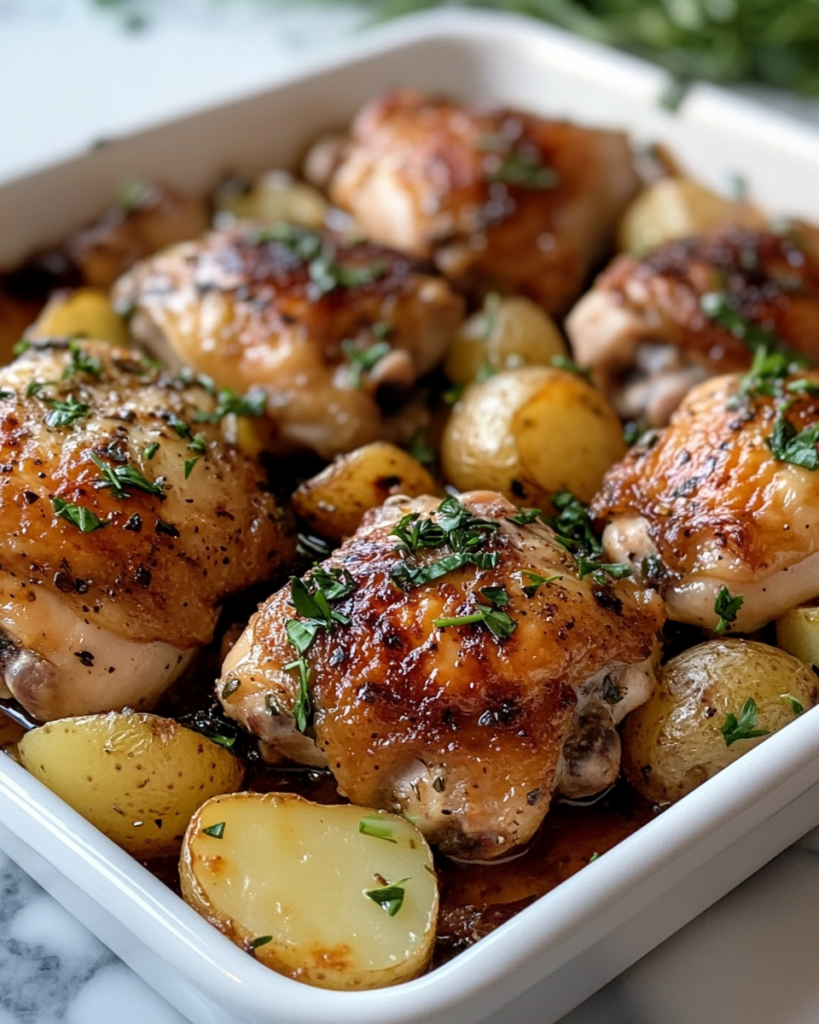
Baked chicken thighs with potatoes 7 Ultimate Cozy Dinner

Posted on

Uncategorized

Difficulty

Prep time

Cooking time

Total time

Servings

Baked chicken thighs with potatoes brings together tender roasted poultry and golden potatoes in a single pan that fills the kitchen with deep savory aroma. This dish works well for weeknight cooking or relaxed weekend meals when oven roasting fits the pace of the day.

Chicken thighs cook with rich flavor and remain juicy due to their natural fat content, while potatoes absorb the drippings and seasonings during roasting. The combination creates a balanced meal with crisp edges, soft centers, and a satisfying contrast of textures.

Simple pantry seasonings carry the dish, allowing the natural ingredients to stand out without complexity. As everything cooks together, the flavors blend into a unified pan of roasted comfort.

Ingredients Overview

Baked chicken thighs with potatoes relies on a short list of ingredients that each serve a clear purpose in building flavor and texture. Chicken thighs are the foundation of the dish, chosen for their higher fat content compared to breast meat. This fat renders during roasting, helping keep the meat tender while also coating the potatoes below.

Potatoes act as both a side and a flavor sponge. As they roast, they absorb seasoned chicken juices and oil, developing a crisp exterior and soft interior. Waxy potatoes hold their shape well, while starchy varieties offer a fluffier bite.

Olive oil helps carry seasoning and promotes browning on both chicken and potatoes. Salt and black pepper provide base seasoning, while garlic and herbs add aromatic depth. Paprika contributes a warm color and mild smoky note without overpowering the dish.

Fresh or dried herbs such as thyme or rosemary pair naturally with roasted poultry. Onion slices can be added for subtle sweetness as they soften in the oven. A touch of lemon juice or wedges served at the end adds brightness that balances the roasted richness.

Ingredient substitutions are flexible. Sweet potatoes can replace regular potatoes for a slightly sweeter profile. Boneless thighs may be used but require reduced cooking time. Avocado oil can replace olive oil if preferred. Herb choices can shift based on availability, keeping the core structure intact while adjusting flavor direction.

Ingredients

6 bone-in chicken thighs, skin on
1.5 pounds Yukon Gold potatoes, cut into chunks
3 tablespoons olive oil
4 cloves garlic, minced
1 teaspoon salt
1/2 teaspoon black pepper
1 teaspoon paprika
1 teaspoon dried thyme
1 teaspoon dried rosemary
1 medium onion, sliced
1 tablespoon lemon juice
Fresh parsley, chopped for finishing

Step-by-Step Instructions
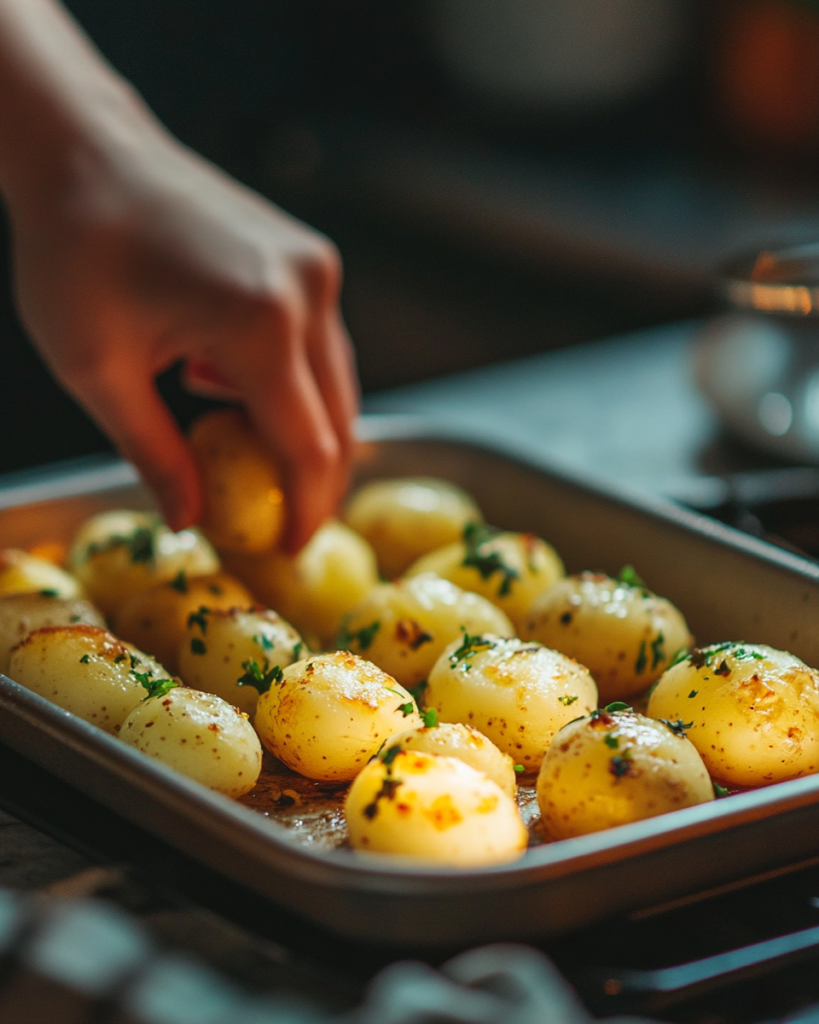
Start by heating the oven to 425°F (220°C). A hot oven is important for developing color on both chicken skin and potatoes. While the oven warms, prepare a large baking tray or roasting dish that allows ingredients to sit in a single layer without overcrowding.

Pat chicken thighs dry using paper towels. Removing surface moisture helps the skin brown instead of steaming. Place the chicken in a large bowl and drizzle with olive oil, making sure each piece is lightly coated. Add salt, black pepper, paprika, thyme, rosemary, and minced garlic. Rub the seasoning evenly over the chicken so every surface is covered.

Place potato chunks and sliced onion in a separate bowl. Add remaining olive oil, a pinch of salt, and a small portion of black pepper. Toss until potatoes are coated evenly. This step helps potatoes roast evenly and prevents dry spots.

Arrange potatoes and onions across the baking tray. Spread them in a single layer to allow proper heat circulation. Place seasoned chicken thighs on top of the potatoes, skin side facing upward. Positioning chicken above allows rendered fat to drip down and flavor the potatoes during roasting.

Transfer the tray into the oven and roast for approximately 35 to 45 minutes. Cooking time may vary depending on size of chicken thighs and potato chunks. Halfway through roasting, gently rotate the tray for even heat exposure. Avoid flipping chicken skin to preserve crisp texture.

Check doneness by confirming that chicken reaches an internal temperature of 165°F (74°C). The skin should appear golden with crisp edges, while potatoes should be tender when pierced with a fork and show light browning on edges.

During the final minutes of cooking, a light squeeze of lemon juice can be added over the tray for subtle brightness. Once finished, remove from oven and allow a short resting period of about 5 minutes. This helps juices settle within the chicken.

Sprinkle chopped parsley over the top before serving. The fresh herb adds color contrast and a light herbal finish that balances roasted flavors.

Common mistakes include overcrowding the pan, which can lead to steaming instead of roasting, and skipping the drying step for chicken skin, which reduces crispness. Keeping spacing consistent and using a hot oven helps maintain proper roasting conditions.

Tips, Variations & Substitutions

For deeper flavor, chicken thighs can be marinated for several hours in olive oil, garlic, and herbs before cooking. This allows seasoning to penetrate more fully into the meat.

Different potato types change texture. Red potatoes hold shape firmly, while russet potatoes become softer inside. Mixing both can create a varied bite across the dish.

Smoked paprika can replace regular paprika for a stronger roasted aroma. Adding crushed red pepper flakes introduces gentle heat without overpowering the base flavors.

Vegetable additions such as carrots or parsnips can be included alongside potatoes. These vegetables roast well and absorb seasoning in a similar way.

For a lighter version, skinless chicken thighs may be used, though they will not produce the same crisp surface. Reducing oil slightly can also adjust richness while maintaining roasting performance.

Fresh herbs such as oregano or basil can be used at the end instead of parsley for a different aromatic finish.

Serving Ideas & Occasions

Baked chicken thighs with potatoes pairs well with simple side dishes such as green salads, steamed vegetables, or roasted greens. The roasted pan juices can also be spooned over rice or crusty bread for added flavor.

This dish works well for family dinners, casual gatherings, or meal preparation for several days. Its one-pan structure makes it convenient for serving multiple portions without complex plating.

A light citrus-based beverage or herbal tea complements the roasted flavors without overpowering them. The dish also fits well in cooler weather meals when warm oven cooking is especially appealing.

Nutritional & Health Notes

Baked chicken thighs with potatoes provides a balanced combination of protein, carbohydrates, and fats. Chicken thighs offer protein and natural fats that contribute to satiety and flavor depth. Potatoes supply carbohydrates and fiber, especially when skin is included.

Olive oil adds monounsaturated fats, which support balanced nutrition when used in moderate amounts. Garlic and herbs contribute flavor without adding significant calories or sodium when used appropriately.

Portion control can adjust overall energy intake, with smaller servings still providing satisfying nourishment. Adding extra vegetables can increase fiber content and volume without significantly changing calorie density.

This dish fits well into a balanced eating pattern when paired with fresh vegetables or salads.

FAQs

Can chicken thighs be used without skin?

Yes, skinless chicken thighs can be used in baked chicken thighs with potatoes. The texture will differ slightly since the skin contributes crispness and helps protect the meat during roasting. Without skin, the chicken may cook faster and will benefit from a light coating of olive oil to maintain moisture. Monitoring internal temperature is important to avoid overcooking, as skinless thighs can dry out more quickly.

What type of potatoes work best?

Yukon Gold and red potatoes work well because they hold structure during roasting while developing a soft interior. Yukon Gold provides a creamy texture, while red potatoes stay firmer. Russet potatoes can also be used, though they become softer and may break apart slightly. Cutting potatoes into even chunks helps them cook at the same rate as the chicken thighs.

Can fresh herbs replace dried herbs?

Fresh herbs can be used instead of dried herbs in baked chicken thighs with potatoes. When using fresh thyme or rosemary, slightly larger amounts are needed since dried herbs are more concentrated. Fresh herbs should be added toward the end of cooking or as a finishing touch to preserve their aromatic qualities. This helps maintain a balanced herb profile throughout the dish.

Why are my potatoes not browning?

Potatoes may not brown if the pan is overcrowded or if moisture levels are too high. Proper spacing allows heat to circulate and encourages browning. Drying potatoes after washing and ensuring enough oil coverage also helps. Using a hot oven temperature supports caramelization on the surface, giving potatoes a golden roasted appearance.

Can other vegetables be added?

Yes, additional vegetables such as carrots, zucchini, or bell peppers can be included in baked chicken thighs with potatoes. Root vegetables like carrots and parsnips work especially well due to similar cooking times. Softer vegetables should be added later in the roasting process to prevent over-softening. Cutting all vegetables into similar sizes helps maintain even cooking.

How do I know chicken thighs are fully cooked?

Chicken thighs are fully cooked when the internal temperature reaches 165°F (74°C). The juices should run clear when pierced near the bone, and the meat should no longer appear pink. Using a food thermometer provides the most accurate result. Visual cues such as crisp skin and firm texture also indicate proper doneness.

Can this dish be prepared ahead of time?

Yes, baked chicken thighs with potatoes can be prepared in advance by seasoning the chicken and cutting vegetables ahead of time. These components can be stored separately in the refrigerator until ready to cook. When ready to bake, assembling everything on the tray takes only a short time. Leftovers also reheat well in an oven to restore texture.

[rank_math_breadcrumb]

Baked chicken thighs with potatoes 7 Ultimate Cozy Dinner

Photo of author
Author: Emma
Published:

Baked chicken thighs with potatoes brings together tender roasted poultry and golden potatoes in a single pan that fills the kitchen with deep savory aroma. This dish works well for weeknight cooking or relaxed weekend meals when oven roasting fits the pace of the day.

Chicken thighs cook with rich flavor and remain juicy due to their natural fat content, while potatoes absorb the drippings and seasonings during roasting. The combination creates a balanced meal with crisp edges, soft centers, and a satisfying contrast of textures.

Simple pantry seasonings carry the dish, allowing the natural ingredients to stand out without complexity. As everything cooks together, the flavors blend into a unified pan of roasted comfort.

Ingredients Overview

Baked chicken thighs with potatoes relies on a short list of ingredients that each serve a clear purpose in building flavor and texture. Chicken thighs are the foundation of the dish, chosen for their higher fat content compared to breast meat. This fat renders during roasting, helping keep the meat tender while also coating the potatoes below.

Potatoes act as both a side and a flavor sponge. As they roast, they absorb seasoned chicken juices and oil, developing a crisp exterior and soft interior. Waxy potatoes hold their shape well, while starchy varieties offer a fluffier bite.

Olive oil helps carry seasoning and promotes browning on both chicken and potatoes. Salt and black pepper provide base seasoning, while garlic and herbs add aromatic depth. Paprika contributes a warm color and mild smoky note without overpowering the dish.

Fresh or dried herbs such as thyme or rosemary pair naturally with roasted poultry. Onion slices can be added for subtle sweetness as they soften in the oven. A touch of lemon juice or wedges served at the end adds brightness that balances the roasted richness.

Ingredient substitutions are flexible. Sweet potatoes can replace regular potatoes for a slightly sweeter profile. Boneless thighs may be used but require reduced cooking time. Avocado oil can replace olive oil if preferred. Herb choices can shift based on availability, keeping the core structure intact while adjusting flavor direction.

Ingredients

6 bone-in chicken thighs, skin on
1.5 pounds Yukon Gold potatoes, cut into chunks
3 tablespoons olive oil
4 cloves garlic, minced
1 teaspoon salt
1/2 teaspoon black pepper
1 teaspoon paprika
1 teaspoon dried thyme
1 teaspoon dried rosemary
1 medium onion, sliced
1 tablespoon lemon juice
Fresh parsley, chopped for finishing

Step-by-Step Instructions

Start by heating the oven to 425°F (220°C). A hot oven is important for developing color on both chicken skin and potatoes. While the oven warms, prepare a large baking tray or roasting dish that allows ingredients to sit in a single layer without overcrowding.

Pat chicken thighs dry using paper towels. Removing surface moisture helps the skin brown instead of steaming. Place the chicken in a large bowl and drizzle with olive oil, making sure each piece is lightly coated. Add salt, black pepper, paprika, thyme, rosemary, and minced garlic. Rub the seasoning evenly over the chicken so every surface is covered.

Place potato chunks and sliced onion in a separate bowl. Add remaining olive oil, a pinch of salt, and a small portion of black pepper. Toss until potatoes are coated evenly. This step helps potatoes roast evenly and prevents dry spots.

Arrange potatoes and onions across the baking tray. Spread them in a single layer to allow proper heat circulation. Place seasoned chicken thighs on top of the potatoes, skin side facing upward. Positioning chicken above allows rendered fat to drip down and flavor the potatoes during roasting.

Transfer the tray into the oven and roast for approximately 35 to 45 minutes. Cooking time may vary depending on size of chicken thighs and potato chunks. Halfway through roasting, gently rotate the tray for even heat exposure. Avoid flipping chicken skin to preserve crisp texture.

Check doneness by confirming that chicken reaches an internal temperature of 165°F (74°C). The skin should appear golden with crisp edges, while potatoes should be tender when pierced with a fork and show light browning on edges.

During the final minutes of cooking, a light squeeze of lemon juice can be added over the tray for subtle brightness. Once finished, remove from oven and allow a short resting period of about 5 minutes. This helps juices settle within the chicken.

Sprinkle chopped parsley over the top before serving. The fresh herb adds color contrast and a light herbal finish that balances roasted flavors.

Common mistakes include overcrowding the pan, which can lead to steaming instead of roasting, and skipping the drying step for chicken skin, which reduces crispness. Keeping spacing consistent and using a hot oven helps maintain proper roasting conditions.

Tips, Variations & Substitutions

For deeper flavor, chicken thighs can be marinated for several hours in olive oil, garlic, and herbs before cooking. This allows seasoning to penetrate more fully into the meat.

Different potato types change texture. Red potatoes hold shape firmly, while russet potatoes become softer inside. Mixing both can create a varied bite across the dish.

Smoked paprika can replace regular paprika for a stronger roasted aroma. Adding crushed red pepper flakes introduces gentle heat without overpowering the base flavors.

Vegetable additions such as carrots or parsnips can be included alongside potatoes. These vegetables roast well and absorb seasoning in a similar way.

For a lighter version, skinless chicken thighs may be used, though they will not produce the same crisp surface. Reducing oil slightly can also adjust richness while maintaining roasting performance.

Fresh herbs such as oregano or basil can be used at the end instead of parsley for a different aromatic finish.

Serving Ideas & Occasions

Baked chicken thighs with potatoes pairs well with simple side dishes such as green salads, steamed vegetables, or roasted greens. The roasted pan juices can also be spooned over rice or crusty bread for added flavor.

This dish works well for family dinners, casual gatherings, or meal preparation for several days. Its one-pan structure makes it convenient for serving multiple portions without complex plating.

A light citrus-based beverage or herbal tea complements the roasted flavors without overpowering them. The dish also fits well in cooler weather meals when warm oven cooking is especially appealing.

Nutritional & Health Notes

Baked chicken thighs with potatoes provides a balanced combination of protein, carbohydrates, and fats. Chicken thighs offer protein and natural fats that contribute to satiety and flavor depth. Potatoes supply carbohydrates and fiber, especially when skin is included.

Olive oil adds monounsaturated fats, which support balanced nutrition when used in moderate amounts. Garlic and herbs contribute flavor without adding significant calories or sodium when used appropriately.

Portion control can adjust overall energy intake, with smaller servings still providing satisfying nourishment. Adding extra vegetables can increase fiber content and volume without significantly changing calorie density.

This dish fits well into a balanced eating pattern when paired with fresh vegetables or salads.

FAQs

Can chicken thighs be used without skin?

Yes, skinless chicken thighs can be used in baked chicken thighs with potatoes. The texture will differ slightly since the skin contributes crispness and helps protect the meat during roasting. Without skin, the chicken may cook faster and will benefit from a light coating of olive oil to maintain moisture. Monitoring internal temperature is important to avoid overcooking, as skinless thighs can dry out more quickly.

What type of potatoes work best?

Yukon Gold and red potatoes work well because they hold structure during roasting while developing a soft interior. Yukon Gold provides a creamy texture, while red potatoes stay firmer. Russet potatoes can also be used, though they become softer and may break apart slightly. Cutting potatoes into even chunks helps them cook at the same rate as the chicken thighs.

Can fresh herbs replace dried herbs?

Fresh herbs can be used instead of dried herbs in baked chicken thighs with potatoes. When using fresh thyme or rosemary, slightly larger amounts are needed since dried herbs are more concentrated. Fresh herbs should be added toward the end of cooking or as a finishing touch to preserve their aromatic qualities. This helps maintain a balanced herb profile throughout the dish.

Why are my potatoes not browning?

Potatoes may not brown if the pan is overcrowded or if moisture levels are too high. Proper spacing allows heat to circulate and encourages browning. Drying potatoes after washing and ensuring enough oil coverage also helps. Using a hot oven temperature supports caramelization on the surface, giving potatoes a golden roasted appearance.

Can other vegetables be added?

Yes, additional vegetables such as carrots, zucchini, or bell peppers can be included in baked chicken thighs with potatoes. Root vegetables like carrots and parsnips work especially well due to similar cooking times. Softer vegetables should be added later in the roasting process to prevent over-softening. Cutting all vegetables into similar sizes helps maintain even cooking.

How do I know chicken thighs are fully cooked?

Chicken thighs are fully cooked when the internal temperature reaches 165°F (74°C). The juices should run clear when pierced near the bone, and the meat should no longer appear pink. Using a food thermometer provides the most accurate result. Visual cues such as crisp skin and firm texture also indicate proper doneness.

Can this dish be prepared ahead of time?

Yes, baked chicken thighs with potatoes can be prepared in advance by seasoning the chicken and cutting vegetables ahead of time. These components can be stored separately in the refrigerator until ready to cook. When ready to bake, assembling everything on the tray takes only a short time. Leftovers also reheat well in an oven to restore texture.

Name

Lorem ipsum dolor sit amet, consectetur adipiscing elit. Suspendisse varius enim in eros elementum tristique. Duis cursus, mi quis viverra ornare, eros dolor interdum nulla, ut commodo diam libero vitae erat.

You Might Also Like...

Classic Creamy Shrimp Alfredo 1 Amazing Surprising Dish

Classic Creamy Shrimp Alfredo 1 Amazing Surprising Dish

Creamy Seafood Shrimp Linguine 7 Amazing Cozy Recipe

Creamy Seafood Shrimp Linguine 7 Amazing Cozy Recipe

Creamy Garlic Butter Shrimp Pasta 7 Amazing Joyful Dinner

Creamy Garlic Butter Shrimp Pasta 7 Amazing Joyful Dinner

Lemon Garlic Shrimp Pasta Skillet 7 Simple Zesty Delight

Lemon Garlic Shrimp Pasta Skillet 7 Simple Zesty Delight

Tags:

You might also like these recipes

Leave a Comment