
Juicy chicken thighs cooked in garlic butter paired with soft rice create a comforting plate with rich aroma and deep savory flavor. Garlic Butter Chicken Thighs with Rice brings together crisp seared skin, tender meat, and buttery sauce that soaks into every grain of rice.
The skillet method builds a golden crust on the chicken while garlic slowly infuses the butter. The rice absorbs pan juices, giving each bite a rich finish that feels satisfying and balanced.
This dish fits well for a quiet dinner or a shared meal at the table. Each component works together in a straightforward cooking process that delivers consistent results with minimal steps.
Ingredients Overview
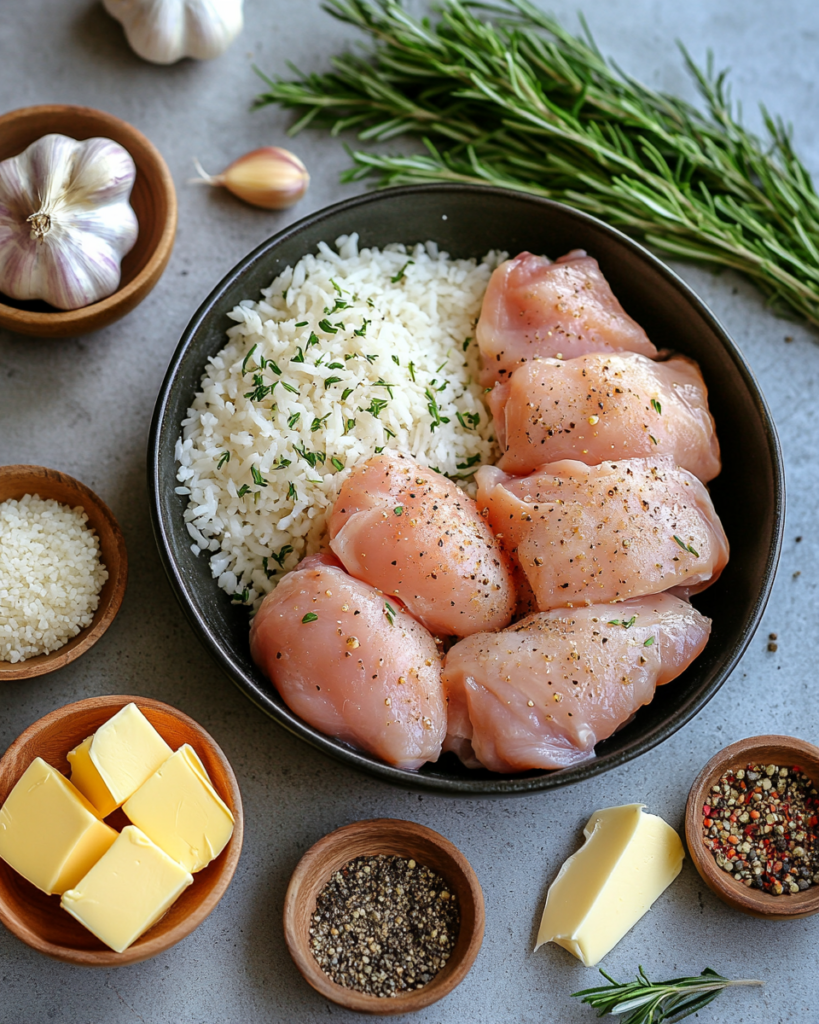
Chicken thighs bring deep flavor and tender texture, especially when cooked with the skin on. The fat renders during searing, creating a rich base for the garlic butter sauce. Bone-in thighs hold moisture and give a juicier bite compared to boneless cuts.
Garlic forms the backbone of aroma in this dish. When gently cooked in butter, it releases a warm savory scent without turning bitter. Butter adds smooth richness and helps carry the garlic flavor across the chicken and rice.
Rice acts as the foundation of the plate. Long grain rice works well because it stays fluffy and separates easily, allowing it to absorb the pan juices without turning mushy. Chicken broth or stock can be used during rice cooking for deeper savory notes.
Olive oil helps with the initial sear, preventing the butter from burning too quickly. A small amount of salt and black pepper balances seasoning across both chicken and rice. Optional herbs such as parsley or thyme add a light aromatic layer without overpowering the dish.
Substitutions are flexible. Chicken drumsticks can replace thighs, though cooking duration may vary slightly. Jasmine or basmati rice can be used instead of long grain rice depending on texture preference. Ghee can replace butter for a slightly nuttier profile.
Ingredients
6 bone-in chicken thighs, skin-on
2 cups long grain rice
4 cups chicken broth
6 cloves garlic, minced
3 tablespoons unsalted butter
2 tablespoons olive oil
1 teaspoon salt
1/2 teaspoon black pepper
1 teaspoon paprika
1/2 teaspoon dried thyme
2 tablespoons chopped parsley
1/2 medium onion, finely diced
Step-by-Step Instructions

Pat chicken thighs dry using paper towels to promote crisp skin during searing. Season both sides with salt, black pepper, and paprika. Let them rest briefly so seasoning adheres evenly to the surface.
Place a large skillet over medium heat. Add olive oil and allow it to warm until it spreads easily across the pan. Lay chicken thighs skin-side down and cook until the skin turns deep golden brown. Flip and cook the other side until lightly browned. Remove chicken and set aside.
Lower heat slightly and add butter to the same skillet. Once melted, add diced onion and cook until softened. Stir in minced garlic and dried thyme, letting the mixture release aroma without browning too quickly.
Add rice to the skillet and stir gently so each grain is coated in the garlic butter mixture. Pour in chicken broth and stir once to distribute ingredients evenly across the pan.
Return chicken thighs to the skillet, placing them on top of the rice. Cover with a lid and reduce heat to low. Allow rice to cook slowly while absorbing broth and pan juices. Avoid lifting the lid frequently so steam remains trapped.
Check rice texture after the cooking period. Grains should appear tender and separate, while chicken reaches full doneness with juices running clear. If liquid remains, let it sit covered off heat for a few minutes.
Sprinkle chopped parsley across the top before serving. The herb adds a light contrast to the rich butter sauce and completes the presentation.
Tips, Variations & Substitutions
Dry chicken skin plays an important role in achieving crisp texture during searing. Removing surface moisture helps the skin brown evenly without steaming. A cast iron skillet works well for consistent heat distribution.
For deeper flavor, chicken broth can be replaced with a mixture of broth and a small amount of onion powder. This adds depth without changing the core profile of the dish.
Brown rice can replace white rice for a firmer bite, though cooking duration must be extended and additional broth may be required. Stirring should remain minimal to prevent breaking grains.
Smoked paprika can replace regular paprika for a subtle smoky layer. Adding mushrooms during the onion stage introduces earthy tones that blend well with garlic butter.
For lighter fat content, reduce butter slightly and increase broth seasoning. The dish will remain flavorful while having a lighter mouthfeel.
Serving Ideas & Occasions
Garlic Butter Chicken Thighs with Rice pairs well with simple vegetable sides such as steamed green beans or roasted carrots. These sides balance the richness of the chicken and butter sauce.
A crisp salad with lemon-based dressing offers contrast and freshness alongside the warm rice base. Bread can also accompany the dish for soaking extra sauce from the skillet.
This dish suits relaxed evening meals or casual gatherings where a single-pan style preparation works well. It also reheats well, making it suitable for prepared meals across a few days.
Nutritional & Health Notes
Chicken thighs provide protein along with natural fats that contribute to satiety. Skin-on cuts contain higher fat content, which adds richness and flavor.
Rice supplies carbohydrates that support energy levels. When cooked with broth, it gains additional minerals and savory depth.
Garlic contributes aromatic compounds commonly associated with traditional cooking practices. Butter adds saturated fat, so portion balance may be considered depending on dietary preferences.
This meal offers a combination of protein, carbohydrates, and fats in a single dish, creating a balanced plate when paired with vegetables.
FAQs
Can chicken breast replace chicken thighs?
Chicken breast can replace thighs in this dish, though texture will differ. Breast meat contains less fat, resulting in a leaner bite. Cooking duration should be shorter to avoid dryness. Monitoring internal temperature closely helps maintain tenderness. Searing still applies to build surface color before combining with rice. Broth absorption remains similar, so rice preparation does not require major adjustment. The final result will be lighter in richness compared to thighs but still carries garlic butter flavor across the rice base.
What type of rice works well for this dish?
Long grain rice works well due to its ability to stay separate after cooking. Jasmine rice also performs well with a slightly floral aroma. Basmati rice can be used for a firmer texture and light fragrance. Short grain rice is less suitable because it tends to become sticky under broth absorption. Rinsing rice before cooking removes excess starch and helps maintain structure. Each variety absorbs garlic butter flavor differently, allowing slight variation in final texture while keeping the dish consistent.
Can the dish be prepared without chicken broth?
Water can replace chicken broth if needed, though flavor intensity will decrease. Adding a small amount of salt and garlic powder helps compensate for reduced savory depth. Vegetable broth can also serve as an alternative with mild aromatic changes. The rice will still cook properly, absorbing liquid from the skillet. Chicken thighs will continue releasing natural juices during cooking, which contributes additional flavor even without broth. The final result remains satisfying, though slightly lighter in taste complexity.
How can rice texture be kept fluffy?
Rinsing rice before cooking removes surface starch that can cause clumping. Using correct liquid ratio helps grains cook evenly without excess moisture. Keeping the lid closed during simmering prevents steam loss, which is important for consistent texture. After cooking, allowing rice to rest off heat for a short period helps excess moisture distribute evenly. Avoiding frequent stirring also preserves grain structure. These steps contribute to fluffy rice that supports the garlic butter sauce without becoming dense.
Can herbs be changed in this recipe?
Parsley and thyme can be replaced with other herbs depending on preference. Rosemary adds a stronger aromatic note, while oregano provides a slightly earthy flavor. Basil can be added at the end for a softer herbal tone. Fresh herbs generally work better when added after cooking to preserve aroma. Dried herbs perform well during simmering stages. Herb selection can shift the flavor profile slightly without changing the core structure of chicken, garlic, butter, and rice combination.
Can this dish be cooked in advance?
This dish can be prepared in advance and stored for later consumption. Chicken and rice hold texture well when cooled and refrigerated. Reheating should be done with a small amount of added liquid to restore moisture. Oven or stovetop reheating works better than microwave for maintaining texture. Garlic butter flavor remains present after storage, though slight mellowing may occur. Separation into portions helps maintain consistency across servings.
What sides pair well with this dish?
Vegetable sides pair well to balance richness from butter and chicken fat. Steamed broccoli, roasted zucchini, or sautéed spinach work effectively. Light salads with citrus dressing add contrast to the savory base. Simple cucumber slices or tomato-based sides provide freshness alongside the warm rice. Bread can be served to collect remaining sauce from the skillet. Side selection should focus on light textures to complement the richness of chicken and rice.


