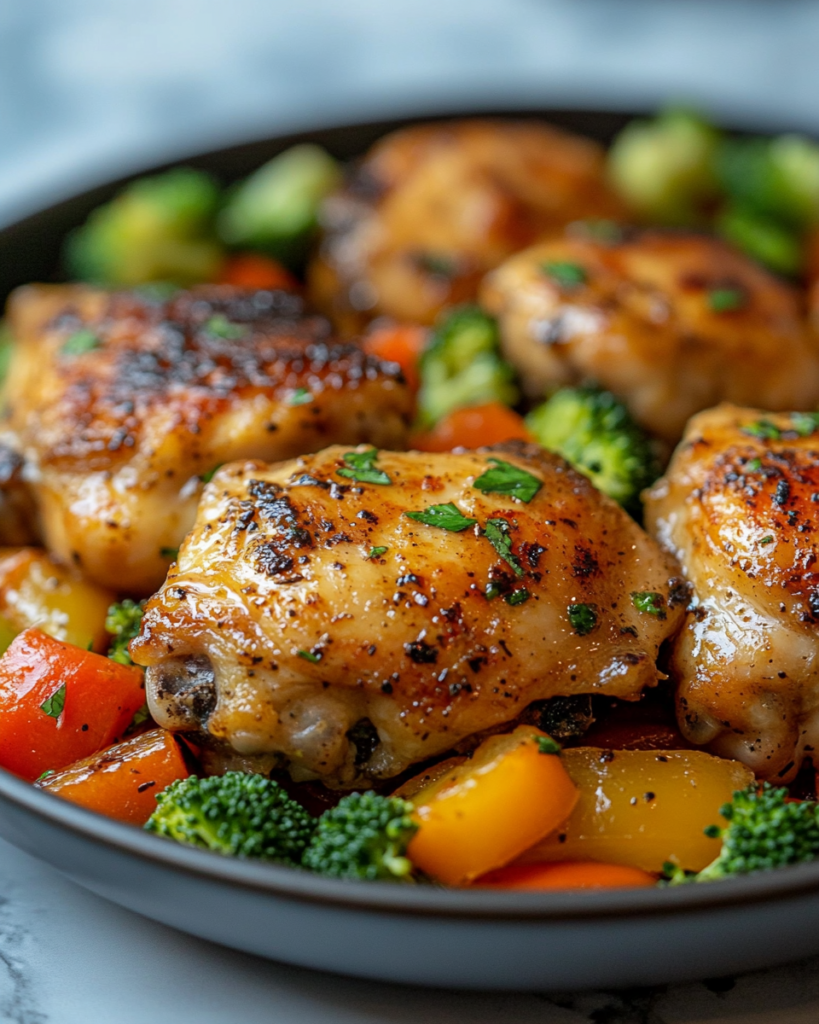
Chicken thighs with veggies pan is a comforting, one-pan meal that brings together tender, juicy chicken and perfectly roasted vegetables. It’s the kind of dish that fills the kitchen with rich aromas while keeping preparation simple and cleanup minimal.
This recipe relies on bone-in or boneless chicken thighs, which stay moist during cooking and develop a golden, flavorful exterior. Paired with a mix of colorful vegetables, everything cooks together in one pan, allowing the flavors to blend naturally.
Whether prepared for a weeknight dinner or a relaxed weekend meal, chicken thighs with veggies pan offers a balanced combination of protein and vegetables without complicated steps.
Ingredients Overview
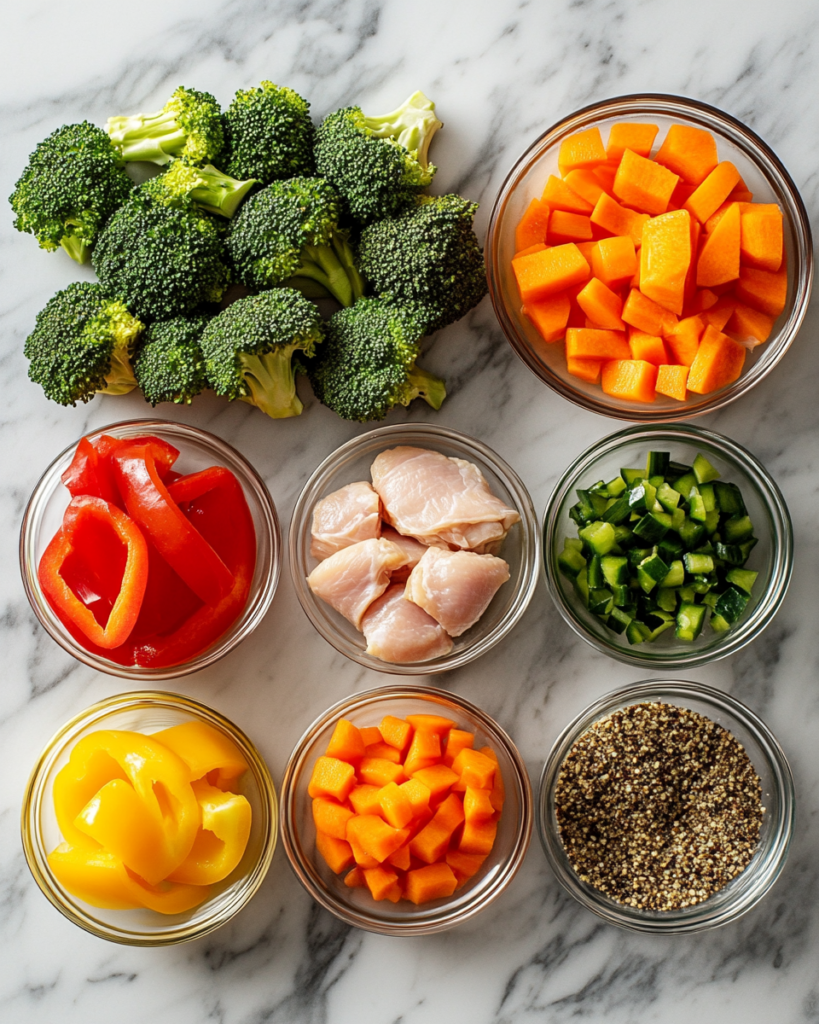
The heart of chicken thighs with veggies pan lies in its simple yet thoughtful ingredient selection. Chicken thighs are naturally rich and tender due to their slightly higher fat content compared to chicken breast. This makes them ideal for roasting, as they remain juicy even when cooked at higher temperatures.
Vegetables play an equally important role. A mix of root vegetables like potatoes and carrots provides structure and heartiness, while softer vegetables like zucchini or bell peppers add contrast and color. As they roast, the vegetables absorb the chicken juices and seasoning, creating layers of flavor in every bite.
Olive oil helps coat everything evenly, promoting caramelization and preventing sticking. Garlic adds depth, while herbs like thyme, rosemary, or oregano bring a fragrant, savory note that complements both the chicken and vegetables.
Salt and black pepper are essential for balance, while optional additions like paprika or lemon juice can introduce subtle brightness or warmth.
For substitutions, sweet potatoes can replace regular potatoes, and green beans or broccoli can be used instead of zucchini. Boneless, skinless chicken thighs cook slightly faster, while bone-in thighs provide deeper flavor. The recipe remains flexible, allowing adjustments based on what is available while maintaining its comforting appeal.
Ingredients
6 bone-in, skin-on chicken thighs
1 pound baby potatoes, halved
2 medium carrots, sliced into chunks
1 zucchini, sliced
1 red bell pepper, chopped
1 yellow onion, cut into wedges
4 cloves garlic, minced
3 tablespoons olive oil
1 teaspoon salt
1/2 teaspoon black pepper
1 teaspoon paprika
1 teaspoon dried thyme
1 teaspoon dried rosemary
1 tablespoon lemon juice
Step-by-Step Instructions
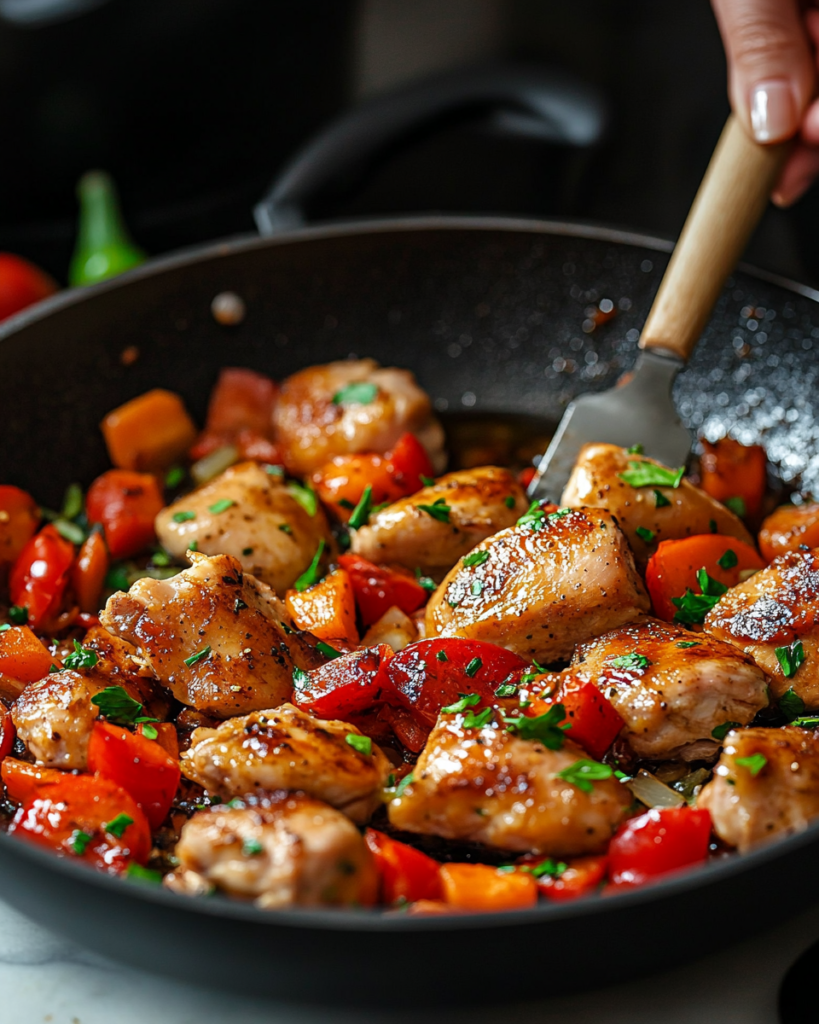
Start by preheating the oven to 400°F (200°C). A properly heated oven is essential for achieving crispy chicken skin and well-roasted vegetables.
Pat the chicken thighs dry with paper towels. This step helps the skin crisp up during cooking. Place them in a large mixing bowl and drizzle with half of the olive oil. Season with salt, pepper, paprika, thyme, and rosemary, rubbing the mixture evenly over each piece.
In another bowl, combine the potatoes, carrots, zucchini, bell pepper, and onion. Add the remaining olive oil, garlic, salt, and pepper. Toss until the vegetables are evenly coated.
Spread the vegetables in a single layer on a large baking sheet or roasting pan. Make space between them to allow proper roasting rather than steaming. Place the chicken thighs on top of the vegetables, skin side up.
Transfer the pan to the oven and roast for about 35–45 minutes. Halfway through cooking, gently stir the vegetables to promote even browning, but leave the chicken undisturbed so the skin stays crisp.
Check for doneness by ensuring the chicken reaches an internal temperature of 165°F (74°C). The skin should be golden and slightly crisp, and the vegetables should be tender with lightly browned edges.
In the final few minutes, drizzle lemon juice over the entire pan for a fresh finish. Let the dish rest for 5 minutes before serving, allowing the juices to settle.
Avoid overcrowding the pan, as this can cause steaming instead of roasting. If needed, use two pans to maintain proper spacing.
Tips, Variations & Substitutions
For extra crispiness, place the pan under the broiler for 2–3 minutes at the end of cooking. Watch carefully to prevent burning.
If a different flavor profile is desired, try swapping the herbs for Italian seasoning or adding a pinch of chili flakes for gentle heat. A sprinkle of grated Parmesan during the last few minutes can add a savory finish.
Boneless chicken thighs can be used for quicker cooking, typically reducing the time by about 5–10 minutes. Skinless thighs work as well, though they won’t develop the same crisp texture.
Vegetable combinations can vary depending on the season. Brussels sprouts, green beans, or butternut squash all roast beautifully in this dish. Just keep in mind that denser vegetables should be cut smaller to cook evenly.
For a lighter version, reduce the amount of oil slightly and focus on herbs and lemon for flavor. For a richer taste, add a small pat of butter to the vegetables before roasting.
Serving Ideas & Occasions
Chicken thighs with veggies pan pairs well with simple sides that complement its roasted flavors. A slice of crusty bread works well for soaking up the juices, while a light green salad adds freshness.
For a more filling meal, serve it alongside rice, quinoa, or mashed potatoes. These options help stretch the dish for larger gatherings.
This recipe fits naturally into weeknight dinners because of its simplicity, but it also works for casual entertaining. Everything cooks in one pan, making it easy to serve directly from the oven.
It’s especially popular during cooler months when hearty, warm meals are preferred, though it can be adapted year-round with seasonal vegetables.
Nutritional & Health Notes
Chicken thighs provide a rich source of protein along with essential nutrients like iron and zinc. While they contain more fat than chicken breast, much of that fat contributes to flavor and satiety.
The variety of vegetables in this dish adds fiber, vitamins, and antioxidants. Carrots bring beta-carotene, while bell peppers offer vitamin C. Potatoes contribute potassium and help make the meal more satisfying.
Using olive oil introduces healthy fats that support overall balance. Adjusting the quantity allows control over calorie intake without sacrificing flavor.
This dish naturally avoids processed ingredients, making it a wholesome option for those focusing on home-cooked meals. Portion size and ingredient choices can be adjusted to suit different dietary preferences.
FAQs
Can I use boneless chicken thighs instead?
Yes, boneless chicken thighs work very well in this recipe. They cook slightly faster than bone-in pieces, usually finishing in about 30–35 minutes. Keep an eye on the internal temperature to avoid overcooking, as boneless cuts can dry out more quickly. While they won’t have the same depth of flavor as bone-in thighs, they still remain tender and absorb the seasoning nicely. Adjust cooking time and check for doneness earlier to maintain juiciness.
How do I keep the vegetables from becoming soggy?
The key is spacing. Spread the vegetables in a single layer with enough room between them so they roast instead of steam. Using a large baking sheet helps a lot. Also, avoid adding too much oil, as excess moisture can prevent browning. Stirring the vegetables halfway through cooking promotes even roasting. Cutting them into similar sizes also helps them cook evenly and develop a lightly crisp texture.
Can I prepare this dish ahead of time?
Yes, you can prep everything ahead. Chop the vegetables and season the chicken, then store them separately in the refrigerator for up to 24 hours. When ready to cook, assemble everything on the pan and roast as directed. This makes it a convenient option for busy days. Avoid assembling too early with salt on the vegetables, as it can draw out moisture and affect texture during cooking.
What vegetables work best in this recipe?
Root vegetables like potatoes and carrots are excellent because they hold their shape and develop a caramelized exterior. Softer vegetables like zucchini and bell peppers add contrast. You can also include broccoli, green beans, or Brussels sprouts. The key is balancing cooking times by cutting denser vegetables smaller so everything finishes cooking at the same time.
How do I know when the chicken is fully cooked?
The most reliable method is using a meat thermometer. The internal temperature should reach 165°F (74°C). Visually, the juices should run clear, and the skin should appear golden and slightly crisp. Avoid cutting into the chicken too early, as this can release juices and lead to dryness. Letting the chicken rest briefly after cooking helps retain moisture.
Can I cook this on the stovetop instead of the oven?
While this recipe is designed for oven roasting, it can be adapted for the stovetop using a large covered skillet. Sear the chicken first until browned, then add the vegetables and cover to cook through. However, the vegetables may not develop the same roasted texture. The oven method remains the best choice for achieving even cooking and caramelization.
How should leftovers be stored and reheated?
Store leftovers in an airtight container in the refrigerator for up to 3 days. To reheat, place everything in the oven at 350°F (175°C) until warmed through. This helps maintain the texture better than using a microwave. If using a microwave, heat in short intervals and cover loosely to prevent drying. Adding a small splash of broth can help restore moisture.


